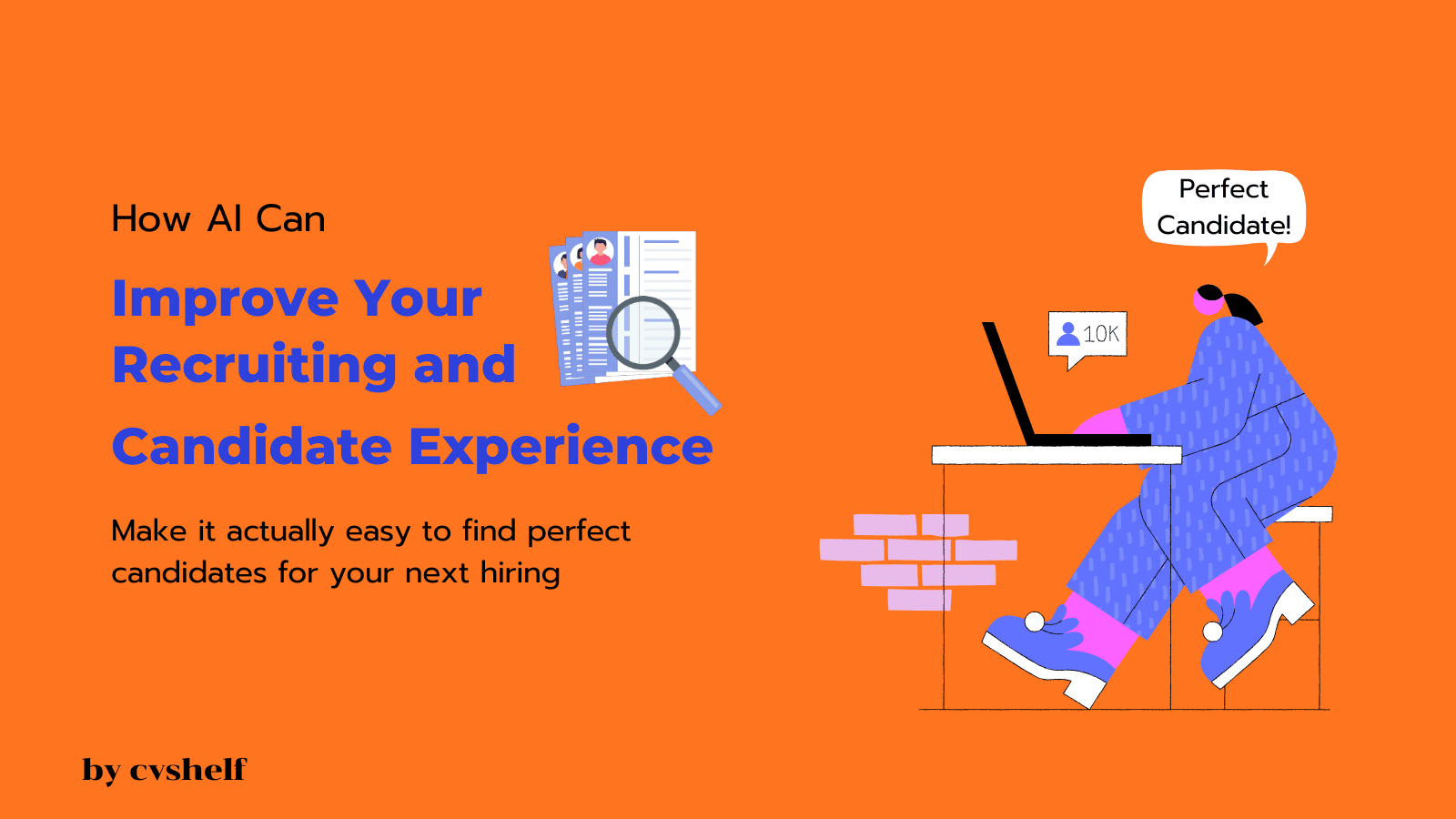

AI recruiting tools transform hiring by automating time-consuming tasks like resume screening, reducing unconscious bias, and improving candidate communication. This allows recruiters to focus on relationship-building while cutting time-to-hire and creating better experiences for applicants. This guide covers practical AI applications, real-world use cases, and a simple 3-step framework to get started without overhauling your entire recruiting process.
Every recruiter has been there. It’s Tuesday morning, you’ve got 247 resumes for a single role, and your hiring manager wants a shortlist by Friday. Meanwhile, three promising candidates from last week haven’t heard back and are probably accepting offers elsewhere.
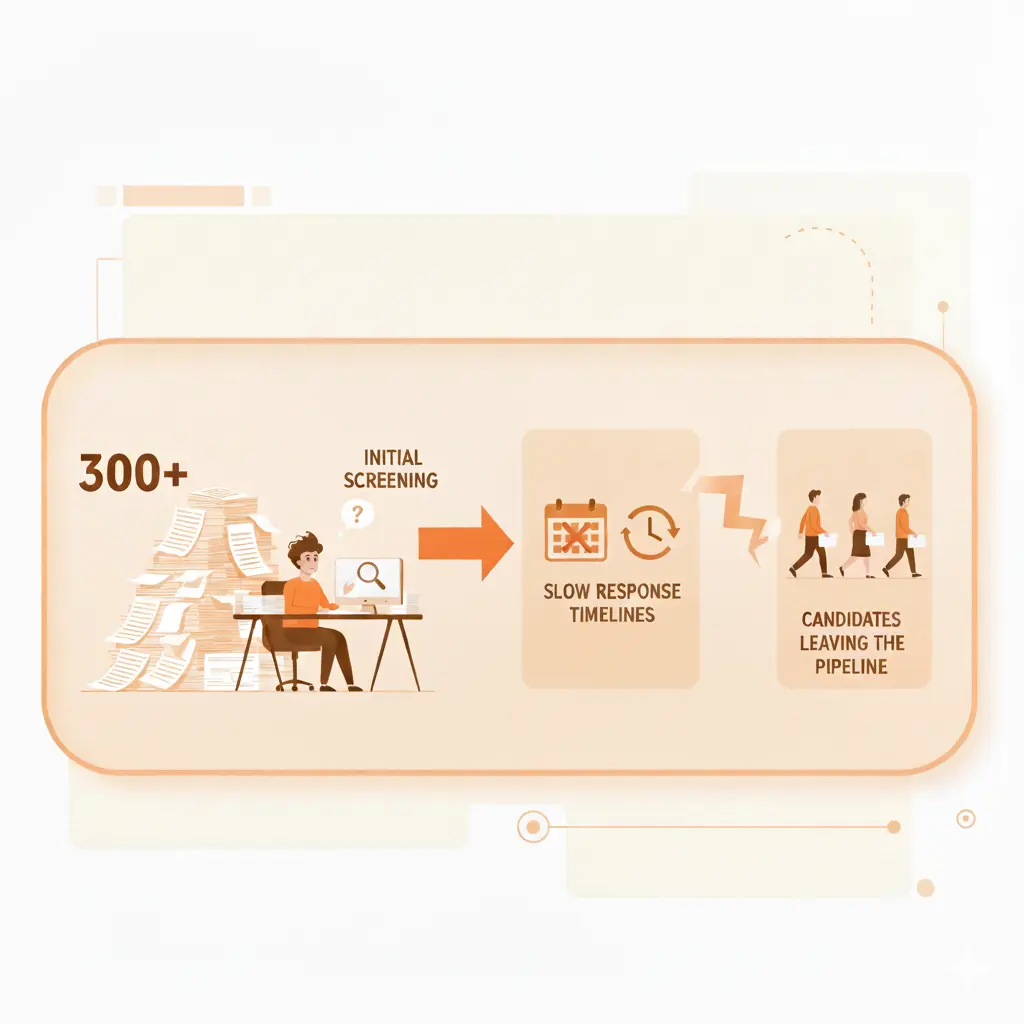
This isn’t just your problem. It’s the recruiting bottleneck that’s been building for years. Candidates now expect the same speed and personalization they get from Netflix and Amazon, but most recruiting processes still run like it’s 2010.
The good news? AI is solving real recruiting problems right now, in ways that don’t require you to become a data scientist or overhaul your entire process.
The Recruiting Bottleneck: Why Traditional Hiring Struggles to Keep Up
A single job posting can pull in hundreds of applications. You’re expected to review them all while scheduling interviews, updating candidates, and handling everything else on your plate.
The speed trap is real. According to a CareerBuilder study, 60% of job seekers lose interest if they don’t hear back within two weeks. In competitive markets, you don’t even have two weeks.
Unconscious bias creeps into resume screening. Candidates with certain names, universities, or employment gaps get filtered out before anyone realizes it’s happening.
Then candidate experience falls apart. Radio silence for weeks, generic responses that make it obvious nobody read their application. Every bad experience gets shared on Glassdoor and spreads through professional networks.
The real problem: The traditional recruiting model doesn’t scale. Manual screening made sense with 30 applications. At 300, it’s physically impossible to do well.
What Does AI Actually Do in Recruiting?
AI in recruiting isn’t about replacing recruiters, it’s about handling repetitive, time-consuming work so recruiters can focus on building relationships and making judgment calls.
- Resume parsing extracts information automatically. Skills, experience, education, job history, all pulled out and structured in seconds instead of minutes.
- Candidate matching understands what matters for specific roles. AI spots that someone’s project management experience in healthcare might transfer well to tech, even if job titles don’t match perfectly.
- Predictive scoring flags candidates who share similar backgrounds with successful hires. If your best sales reps came from customer service backgrounds, AI weights that experience more heavily.
All this happens before you open the first resume. AI handles volume, so when you start reviewing, you’re looking at a focused list of people who actually match your requirements.
Why Candidate Experience Matters More Than Ever

Good candidates have options. LinkedIn’s Global Talent Trends report found that 83% of talent says a negative interview experience can change their mind about a role or company they once liked.
Speed matters because the average job seeker applies to multiple roles simultaneously. If your process takes three weeks, they’ve moved forward with other companies already.
Fairness isn’t just about ethics, it’s business. When bias creeps into screening, you lose people who could’ve been excellent hires.
Your employer brand lives in hiring process details. Even rejected candidates are potential customers, referrers, or future applicants. How you treat them shapes how they talk about you.
5 Ways AI Improves Recruiting and Candidate Experience
1. Automating Resume Screening for Faster Shortlists
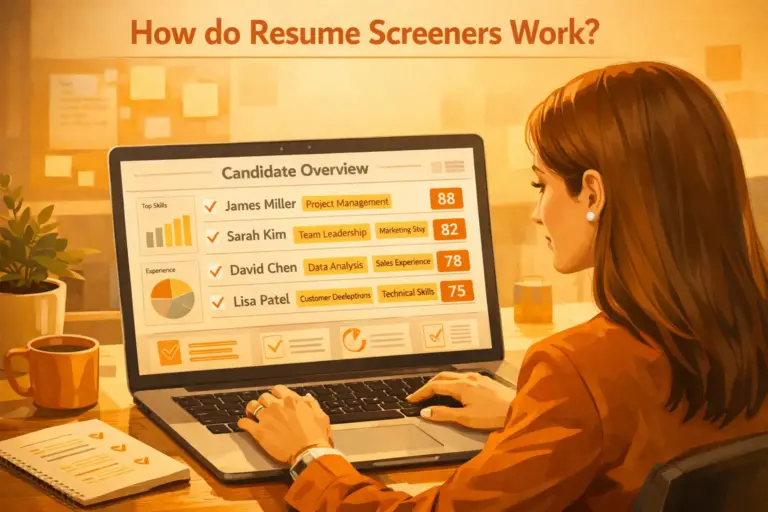
AI analyzes resumes against job requirements, extracts qualifications, and ranks candidates based on fit. What used to take 10-15 hours per role now takes less than one.
The bigger win is consistency, every candidate gets evaluated against the same criteria, with the same attention to their qualifications.
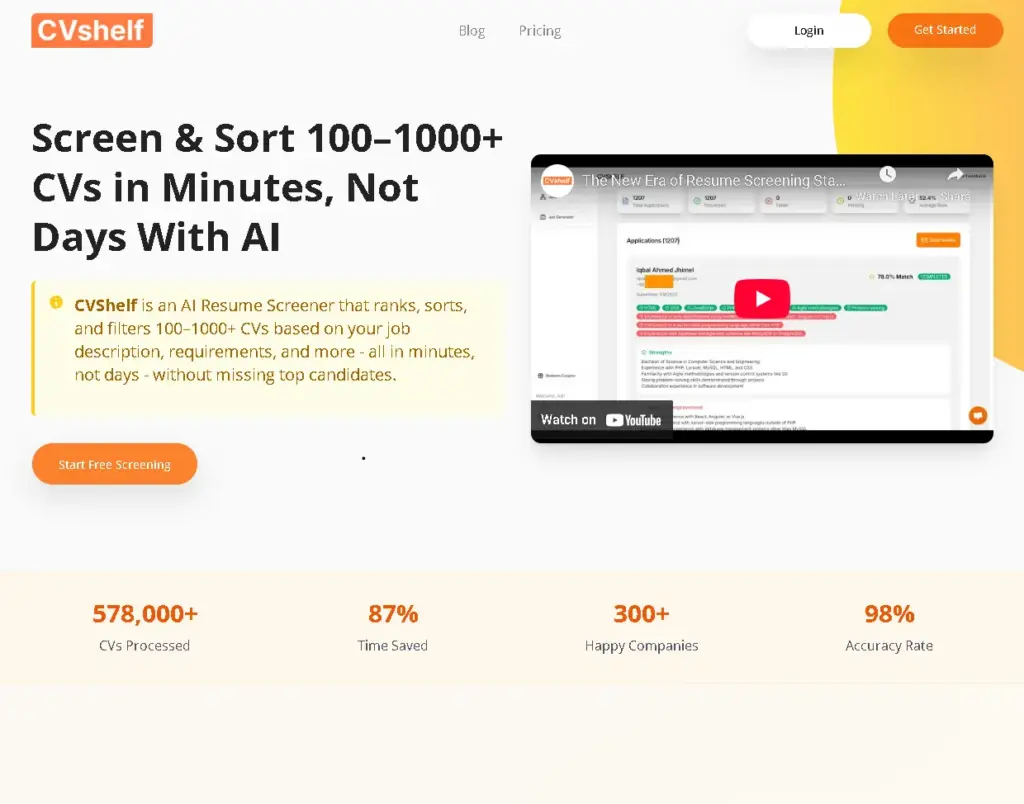
Tools like CVShelf make this even easier. Just drop in your resumes and job description, and it instantly scores, filters, and ranks candidates with consistent criteria.
2. Reducing Bias in Hiring Decisions
When AI screens resumes, it focuses on qualifications without getting distracted by names, photos, or alma maters. It evaluates every candidate against the same rubric.
This doesn’t eliminate bias completely. AI systems need careful building to avoid baking in historical biases but it creates a more level playing field than manual screening.
3. Improving Communication with AI-Powered Updates
Radio silence is the number one complaint from job seekers. AI-powered communication systems automatically update candidates at key stages: application received, under review, moving to next round, not selected.
This happens automatically without recruiters manually sending hundreds of emails.
4. Enhancing Personalization with Predictive Insights
AI surfaces talking points, shared connections, or relevant experience before interviews. If a candidate has rare technical skills, AI flags that so recruiters know to dig deeper.
This makes candidates feel seen and transforms interviews from generic conversations into tailored discussions.
5. Saving Recruiter Time for Better Human Connection
When AI handles screening, scheduling, and routine communication, recruiters get time back for relationship-building, understanding what motivates candidates, and selling them on why your company is worth joining.
These human elements don’t get replaced, AI creates space for them.
What’s the Difference Between Traditional and AI-Powered Recruiting?
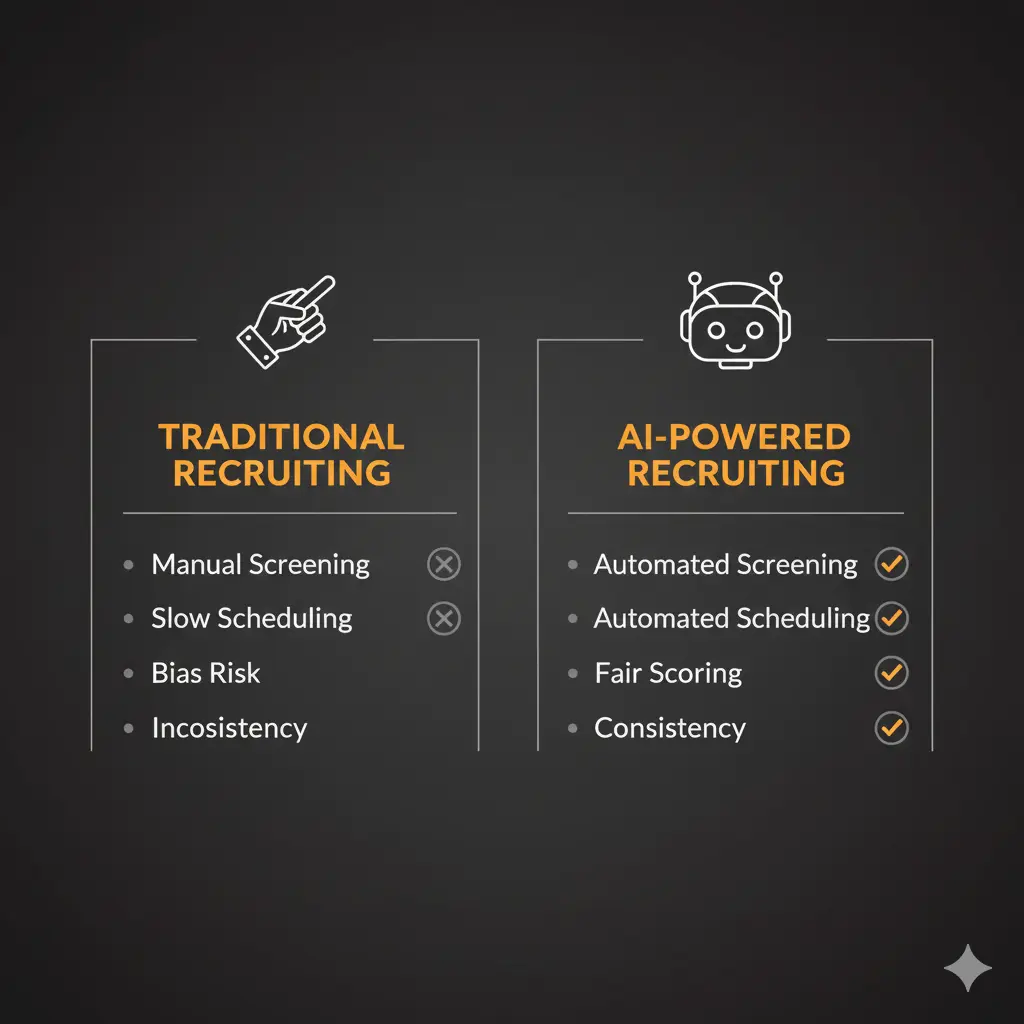
The goal of hiring hasn’t changed, but the process has. Manual recruiting and AI-driven recruiting approach candidate evaluation differently and those differences impact speed, accuracy, and consistency.
How Traditional Recruiting Works (and Its Limitations)
Traditional recruiting follows a familiar pattern: post a job, applications pour in, someone starts opening resumes one by one. They skim for obvious requirements, right degree, right experience, keywords from the job description.
This manual screening is slow and inconsistent. Different screeners notice different things. Someone reviewing resumes at 4 PM Friday isn’t bringing the same attention as 9 AM Monday. Qualified candidates get missed because their resume formatting was odd or they used different language than the job posting.
Scheduling is email tennis. 15+ emails per interview to coordinate calendars.
Throughout all this, candidates wait. Days turn into weeks. The best candidates leave the pipeline first.
How AI-Powered Recruiting Transforms the Process
AI-powered recruiting flips the funnel. Applications come in, AI analyzes them immediately, and within minutes you have a ranked shortlist of candidates who match requirements.
The screening is comprehensive. AI reads every resume completely, catches relevant experience buried in descriptions, spots transferable skills that aren’t obvious. Nothing slips through.
Time-to-hire drops. Quality improves because you’re evaluating more candidates consistently. Candidate experience improves because people aren’t left hanging. Recruiter burnout decreases.
Practical AI Use Cases for Recruiters in 2025
Resume screening at scale: When each role generates 200+ applications, AI screeners process them in bulk and deliver organized shortlists.
Interview scheduling: AI-powered tools integrate with calendars, offer candidates available slots, and book interviews automatically. No more back-and-forth emails.
Chatbots for candidate questions: “What’s the salary range?” “What are the next steps?” Chatbots answer instantly, 24/7.
Skills assessments: AI evaluates technical abilities before interview time. For coding roles, AI reviews code samples. For writing roles, it analyzes samples for clarity and tone.
Tools like CVshelf let you upload dozens or hundreds of resumes at once, set evaluation criteria, and get back a scored, prioritized list.
The best part: You don’t need to rebuild your entire tech stack. Start with the biggest bottleneck, usually resume screening and candidate communication.
How to Get Started With AI Recruiting
- Identify your biggest time sink. Where are you spending the most time on work that doesn’t require human judgment? For most teams, it’s resume screening.
- Test AI on one role. Pick a single high-volume role and use AI to screen candidates. Compare your AI shortlist against what you would’ve selected manually. Learn what works before scaling.
- Measure what changes. Track time-to-hire, candidate satisfaction, and quality of hire. If time-to-hire drops and experience improves, you’re on the right track.
For resume screening, start with tools that handle batch processing. Upload resumes, set qualifications, and let AI surface candidates worth your attention.
Fix the bottleneck. Then expand to the next problem. You don’t need to revolutionize recruiting, just stop spending time on work AI handles better and faster.