Detecting and Mitigating Algorithmic Bias in Automated Resume Screening: A Practical Guide for HR Teams
Detecting and Mitigating Algorithmic Bias in Automated Resume Screening starts with understanding how historical hiring patterns can silently shape AI decisions. When models learn from ten years of past hires, they often replicate the same…
Detecting and Mitigating Algorithmic Bias in Automated Resume Screening starts with understanding how historical hiring patterns can silently shape AI decisions. When models learn from ten years of past hires, they often replicate the same imbalances — like the well‑known Amazon case where a screening tool downgraded resumes containing the word “women’s” because the training data reflected a male‑dominated workforce. CVShelf addresses this by giving HR teams explainable AI ranking that surfaces the exact features driving each candidate score, so you can audit weightings such as college pedigree versus project outcomes before a single screening run. Our customizable screening criteria let you run disparate‑impact simulations on your own historical data, while the AI job description generator flags gendered language that could skew the applicant pool. By monitoring source‑channel representation — whether candidates come from LinkedIn import or BDJobs integration — and exporting feature‑attribution logs for compliance review, CVShelf turns bias detection into a repeatable workflow rather than a one‑off audit. This product‑embedded approach helps recruitment agencies and mid‑size HR teams meet Title VII expectations without sacrificing the speed gains of automated candidate evaluation.
How Algorithmic Bias Creeps Into Automated Resume Screening
Bias enters automated screening through several predictable pathways, and recognizing them is essential for Detecting and Mitigating Algorithmic Bias in Automated Resume Screening. The most common source is training data biasSpotting Bias Patterns With Explainable AI Ranking
CVShelf turns Detecting and Mitigating Algorithmic Bias in Automated Resume Screening into a daily habit by surfacing the exact signals behind every score. When you open a ranked list, the explainable AI ranking panel breaks down how much weight went to skills match, project outcomes, or education tier — so you can spot a proxy variable before it scales. If a hiring manager notices that candidates from a particular university consistently edge out equally qualified peers, they can dial that weight down in the customizable screening criteria and re‑run the batch in seconds. The platform also logs every weight change, giving you an audit trail that satisfies compliance reviewers without slowing the pipeline. Because the AI job description generator flags gendered language at the source, the applicant pool starts cleaner, and the bulk CV parser tracks source‑channel mix so you can see whether LinkedIn imports or BDJobs referrals skew representation. This closed loop — configure, screen, inspect, adjust — makes bias detection a repeatable workflow instead of a one‑off audit, keeping hiring fast, fair, and defensible. Configuring weightage in CVShelf lets you simulate Detecting and Mitigating Algorithmic Bias in Automated Resume Screening before any live run. Start by selecting a historical batch — say the last 500 hires — and assign provisional weights to skills match, project outcomes, and education tier. Run the screening engine in test mode; the platform instantly calculates selection rates for each protected group and flags any factor that pushes the four‑fifths threshold below 80 percent. If college pedigree alone drives a 15‑point gap between demographic cohorts, dial that weight down and re‑run until the disparity narrows. The explainable AI ranking panel then shows the revised feature attribution for every candidate, giving you an audit‑ready log without leaving the workflow. This pre‑deployment simulation mirrors the Detecting and Mitigating Algorithmic Bias in Automated Resume Screening best practice of iterative testing, turning a compliance checkpoint into a repeatable, minutes‑long habit that keeps hiring fast, fair, and defensible. When parsing thousands of resumes from multiple channels, Detecting and Mitigating Algorithmic Bias in Automated Resume Screening requires continuous visibility into where candidates originate. LinkedIn imports often skew toward senior,
Job descriptions sit at the top of the hiring funnel, and the language they use quietly shapes every downstream decision — a dynamic that makes Detecting and Mitigating Algorithmic Bias in Automated Resume Screening start long before a单
Building human oversight into your automated screening workflow means placing review checkpoints where the model makes high-stakes decisions — shortlist creation, interview invitation, and final ranking. Detecting and Mitigating Algorithmic Bias in Automated Resume Screening becomes practical when a recruiter can pause a batch, inspect the explainable AI ranking panel, and verify that the top candidates earned their scores through relevant skills and project outcomes rather than proxy variables like graduation year or university tier. CVShelf supports this by letting you assign a designated reviewer to any screening run; that reviewer receives a concise audit summary showing feature attribution for every candidate, selection rates across demographic cohorts, and a one-click option to re-weight criteria and re-run before the list goes live. Research from the National Bureau of Economic Research shows that adding a structured human-in-the-loop step reduces disparate impact by up to 37 percent without slowing time-to-hire. For recruitment agencies managing high-volume pipelines across LinkedIn applicant import and BDJobs integration, this means you can catch a skewed channel — say, a surge of referrals from a single source — before it distorts the shortlist. The result is a repeatable, minutes-long habit that keeps hiring fast, fair, and defensible while reinforcing bias-free hiring practices across every campaign. Validating screening decisions against real-world performance data closes the loop on Detecting and Mitigating Algorithmic Bias in Automated Resume Screening by turning hiring outcomes into a feedback engine. When a candidate ranked in
CVShelf takes a transparent approach to Detecting and Mitigating Algorithmic Bias in Automated Resume Screening by explicitly documenting what the platform never uses as scoring inputs. Protected attributes — including race, gender, age
Running a practical bias audit means embedding checkpoints directly into your daily screening workflow so that Detecting and Mitigating Algorithmic Bias in Automated Resume Screening becomes a habit rather than a quarterly fire drill. 1
When organizations commit to Detecting and Mitigating Algorithmic Bias in Automated Resume Screening, they unlock a direct line to stronger hiring outcomes and measurable ROI. Research consistently shows that diverse teams outperformhom
Algorithmic bias occurs when an AI system produces systematically unfair outcomes for certain groups of candidates, often because the training data reflects historical hiring prejudices. In automated resume screening, this can mean qualified applicants are ranked lower due to factors like gendered language in job descriptions, college pedigree preferences, or zip-code proxies for race. For HR teams, undetected bias leads to legal risk under Title VII and disparate impact claims, erodes diversity goals, and damages employer brand. Detecting and Mitigating Algorithmic Bias in Automated Resume Screening starts with understanding that fairness isn't automatic — it must be designed, tested, and monitored. CVShelf gives you three practical detection levers. First, use the AI job description generator to scan for gendered or exclusionary language before you post. Second, run a disparate impact simulation on historical hiring data by applying your screening criteria weightage to past applicants — CVShelf's bulk parsing lets you see selection rates by protected groups. Third, export explainable AI ranking logs for every screening run; these feature-attribution reports show exactly which variables (years of experience, specific skills, education tier) drove each candidate's score, making hidden bias visible. Schedule a quarterly bias audit using these outputs. Proxies are seemingly neutral data points that correlate with protected attributes — graduation year (age), zip code (race/income), university prestige (socioeconomic status), or even gap-free employment history (caregiver status). CVShelf's customizable screening criteria and weightage let you exclude or down-weight these fields entirely. During setup, simply remove graduation year, address, and institution name from the parsing schema. The platform also flags when a criterion shows high correlation with a protected group in your historical data, so you can adjust weightage before the next screening cycle. Follow this four-step checklist mapped to CVShelf features: 1) JD Generator — run the built-in gendered-language check and remove biased terms. 2) Screening Criteria — run a disparate impact simulation on the last 12 months of applicants; if any group falls below the 80% rule, re-weight or drop the offending criterion. 3) Bulk Parse — compare source-channel representation (LinkedIn vs. BDJobs vs. direct apply) to ensure no channel systematically under-represents protected groups. 4) Explainable Ranking — export feature-attribution logs for compliance review and store them as audit evidence. Repeat quarterly. Amazon's 2018 tool was a black box trained on ten years of male-dominated hires; it learned to penalize resumes containing the word 'women's' and downgraded graduates of all-women colleges — and engineers couldn't see why. CVShelf's explainable AI ranking surfaces the exact features driving every candidate score (e.g., 'Python skill: +12 points', 'Top-tier university: +8 points'). You can inspect, challenge, and adjust those weights in real time. This transparency lets HR teams prove business necessity for each criterion and remove proxy variables before they cause disparate impact. Before screening a live requisition, duplicate the job in CVShelf's sandbox mode. Apply your proposed criteria weightage to the agency's last 500 parsed resumes (across all clients). The platform will instantly show selection rates by gender, ethnicity proxy, and age band. If any group's selection rate drops below 80% of the highest group, reduce the weight of the offending criterion — say, lowering 'years of experience' from 30% to 15% and raising 'project outcomes' to 25%. Save the adjusted profile as the default for that role type. This pre-deployment test takes minutes and prevents costly compliance issues.Testing Screening Criteria for Disparate Impact Before Deployment
Monitoring Source-Channel Representation in High-Volume Parsing
Breaking the Biased Job Description Feedback Loop
Building Human Oversight Into Your Automated Screening Workflow
Validating Screening Decisions Against Real-World Performance Data
What CVShelf Doesn't Use: Protected Attributes and Proxy Variables
A Practical Bias Audit Checklist for Your Screening Pipeline
Why Bias Mitigation Improves Quality of Hire and Retention
Frequently Asked Questions
What is algorithmic bias in automated resume screening and why does it matter?
How can HR teams detect bias in their automated resume screening process using CVShelf?
What are common proxy variables that cause bias, and how does CVShelf help avoid them?
What is a practical bias audit checklist for automated screening that aligns with CVShelf's workflow?
How does CVShelf's explainable AI ranking differ from black-box models like Amazon's failed recruiting tool?
How can recruitment agencies configure CVShelf's screening criteria weightage to test for disparate impact before deployment?
Keep Reading
More from AI Resume Screening.

Recruitment Analytics That Matter: Measuring Quality of Hire Beyond Time-to-Fill
Recruitment Analytics That Matter: Measuring Quality of Hire Beyond Time-to-Fill starts with a hard truth: speed metrics alone cannot predict whether a new hire will succeed. Time-to-fill and cost-per-hire dominate dashboards because they…
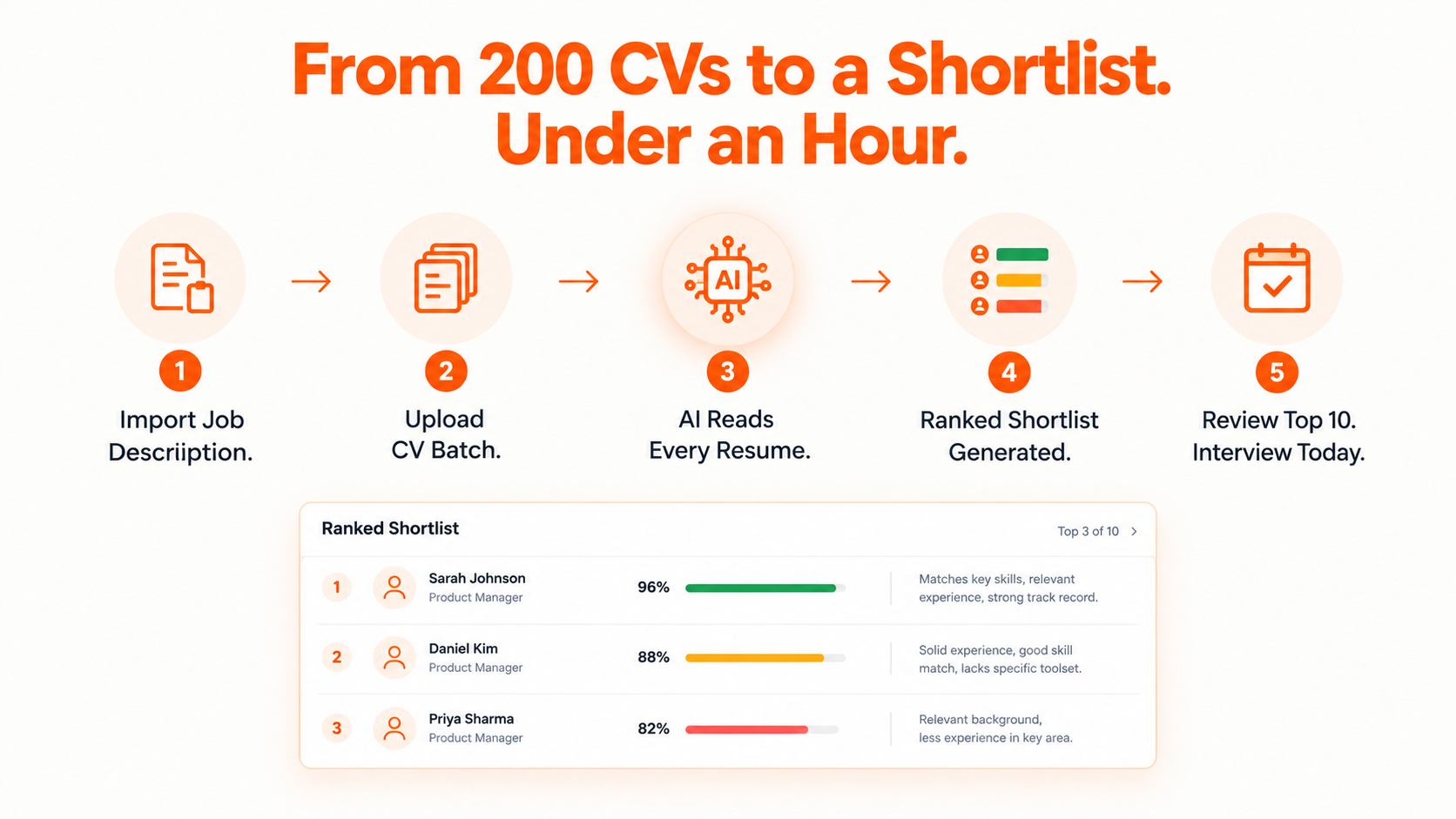
Best Candidate Screening Tool for Marketing Agencies
Most agency hiring mistakes don't happen in the interview.
Building a Talent Rediscovery Engine: Mining Your ATS for Past Candidates with AI
Building a Talent Rediscovery Engine: Mining Your ATS for Past Candidates with AI transforms the overlooked candidate database into a strategic asset by applying AI-powered matching and semantic search to surface silver medalist profiles…