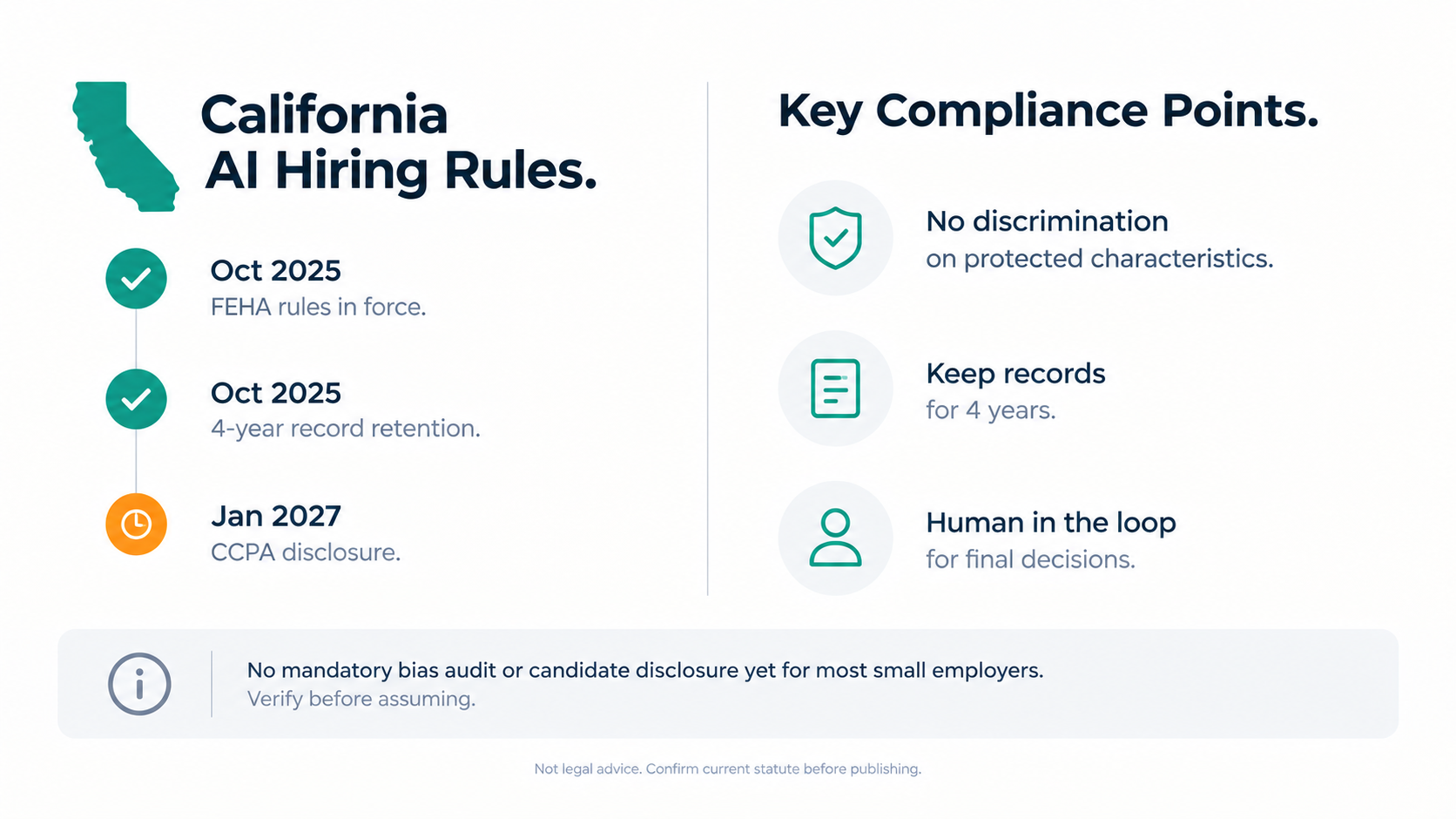
AI Resume Screening Disclosure Law California
California does not currently require employers to disclose to candidates that AI resume screening.

Category
39 articles filed under this product topic.
California does not currently require employers to disclose to candidates that AI resume screening.
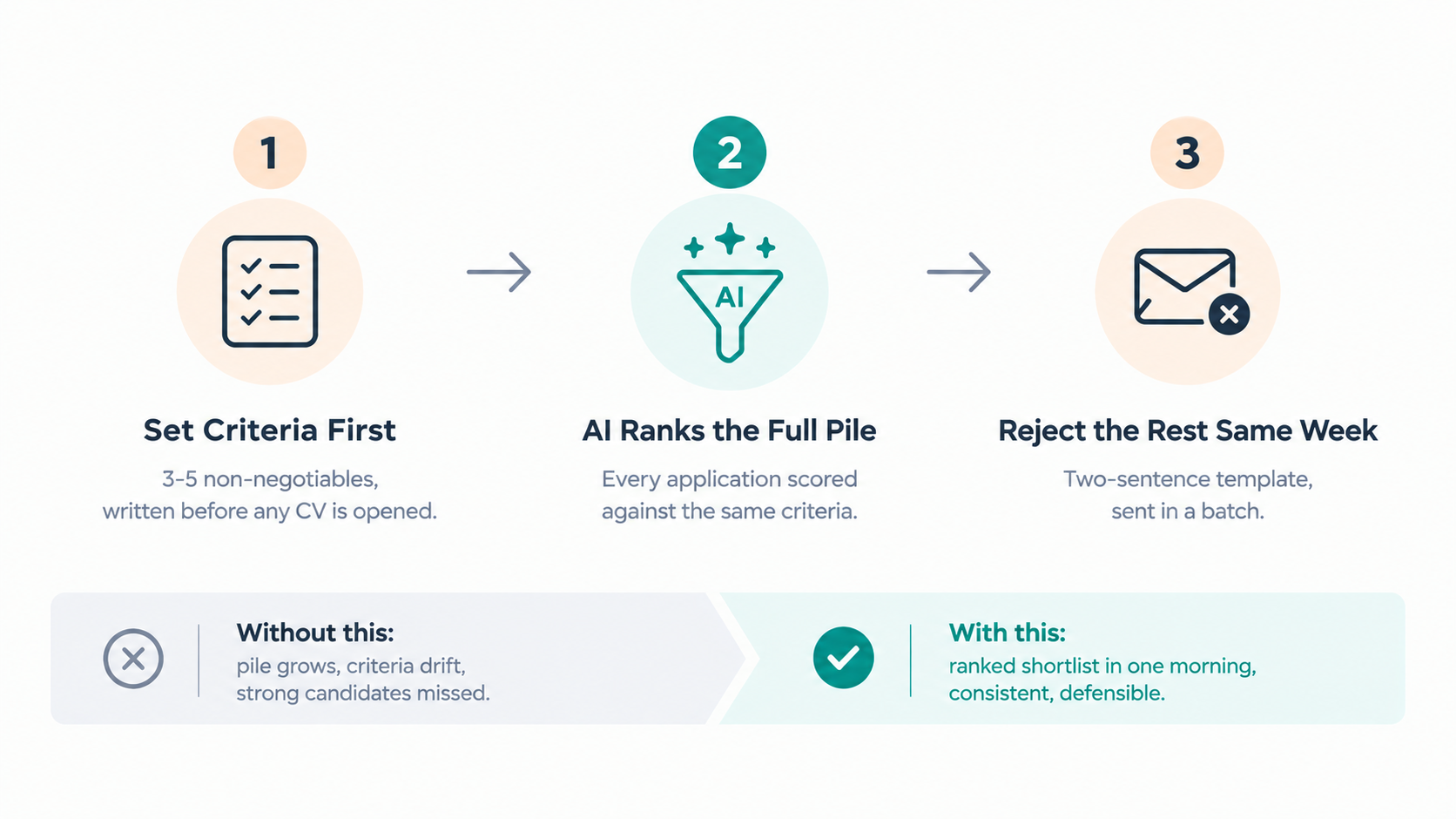
Marketing roles at agencies generate large application piles and land on whoever has the most available time that week.
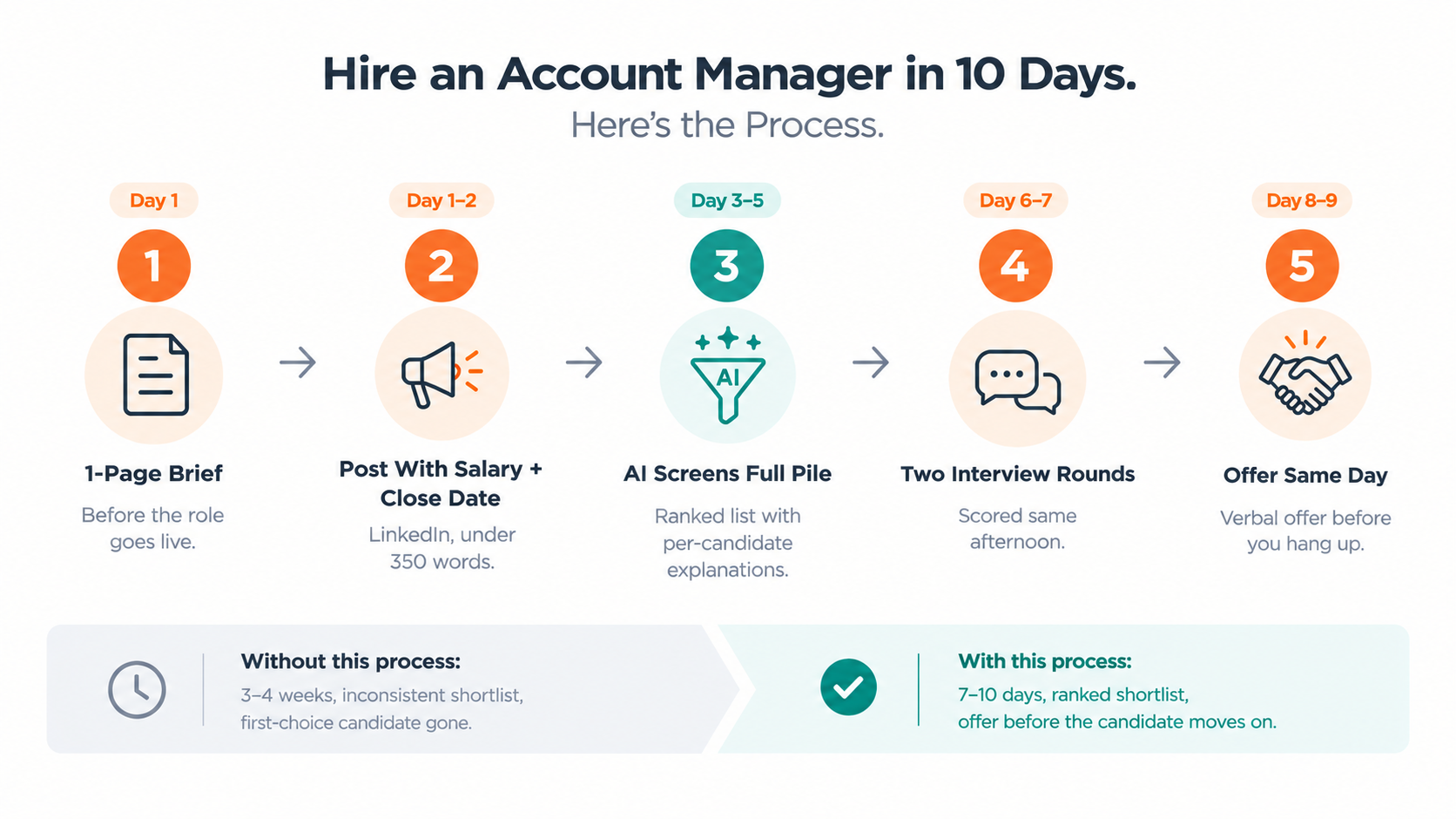
Account manager is the most common hire at a growing agency, and the one that most often goes wrong.
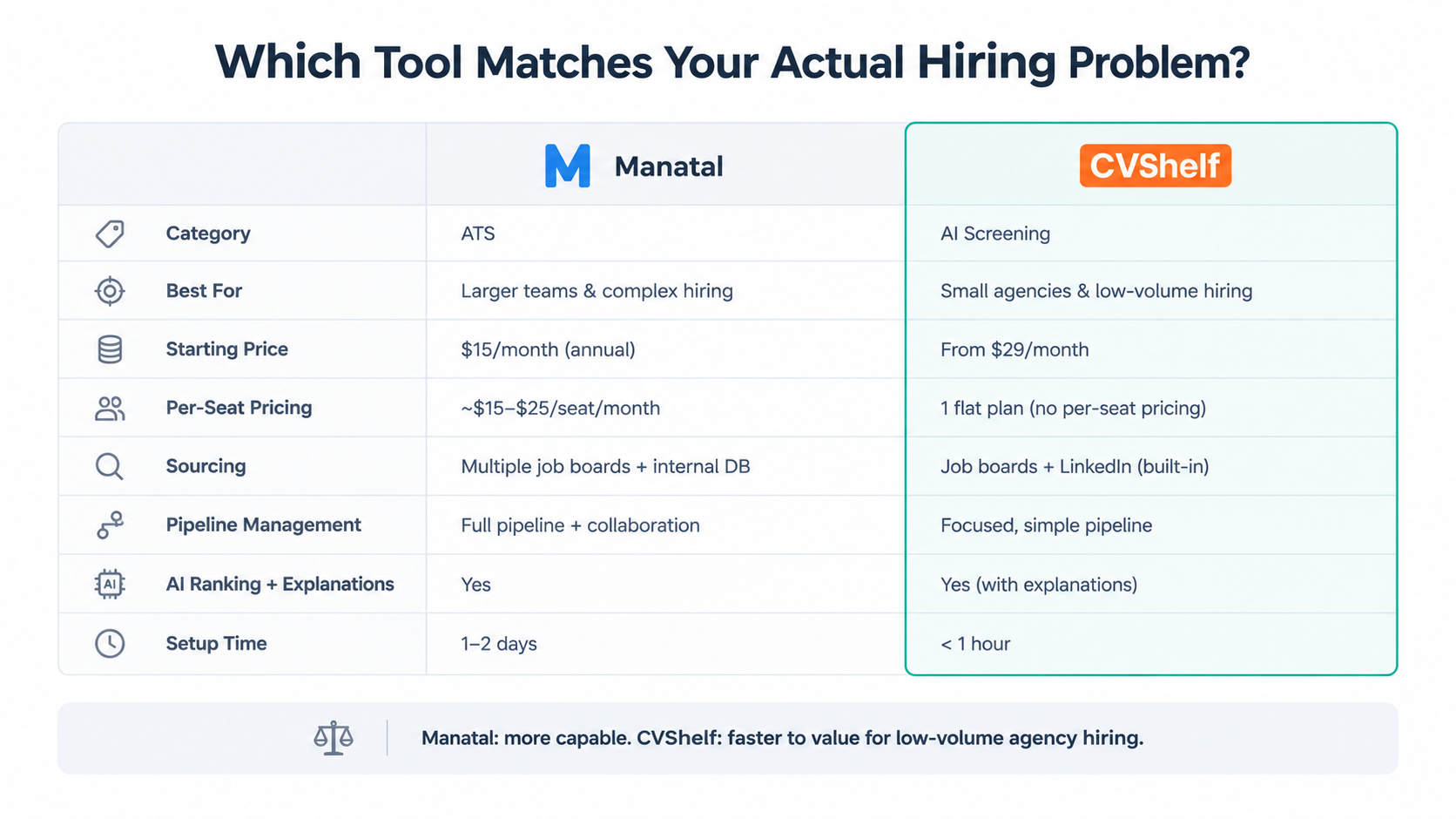
This post is for founders and MDs at 10 to 100-person marketing or creative agencies who are considering Manatal, or trying to decide whether Manatal is the right fit at all.
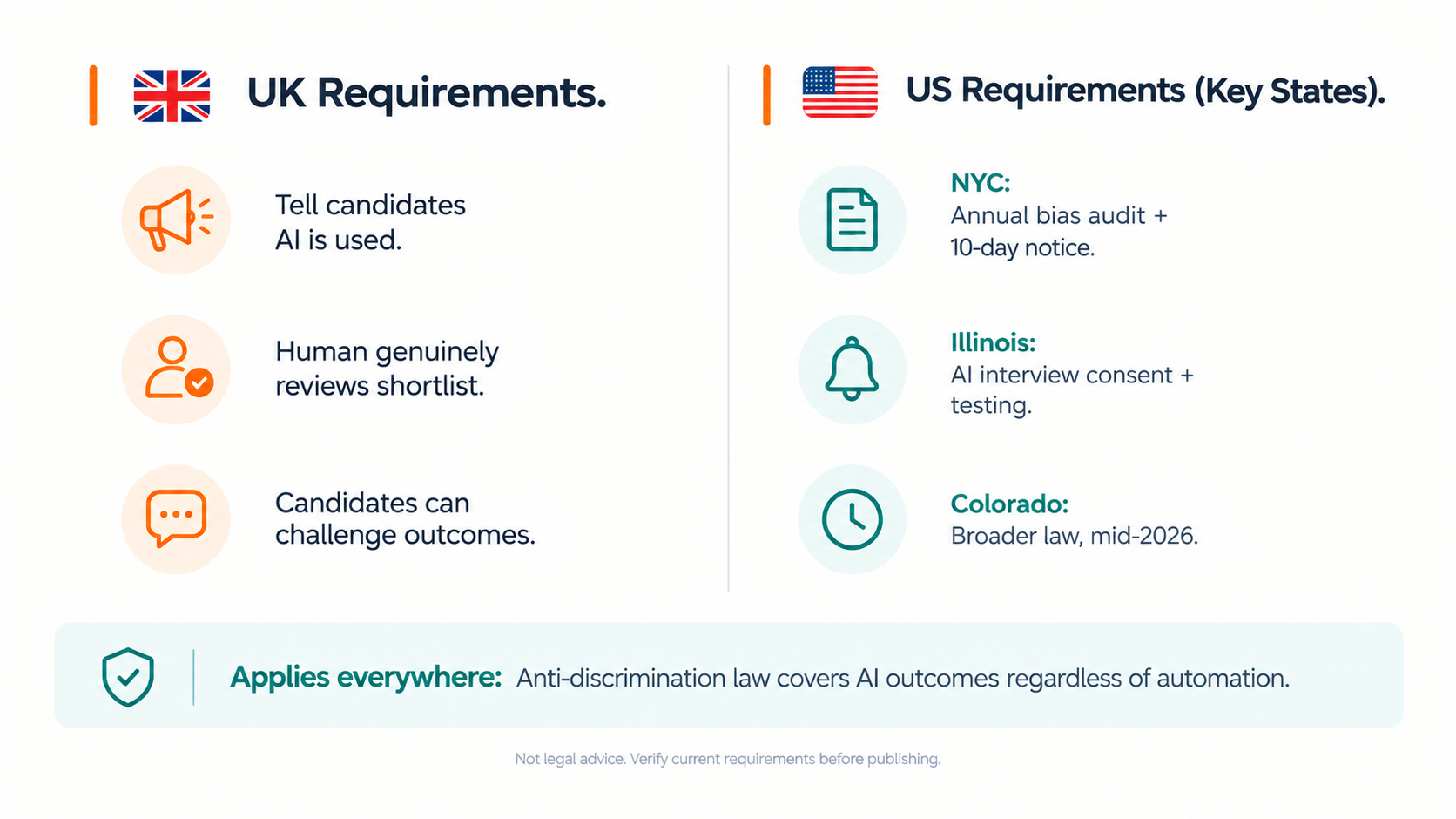
AI hiring compliance for agencies in 2026 means different things depending on where you're based and where your candidates are.
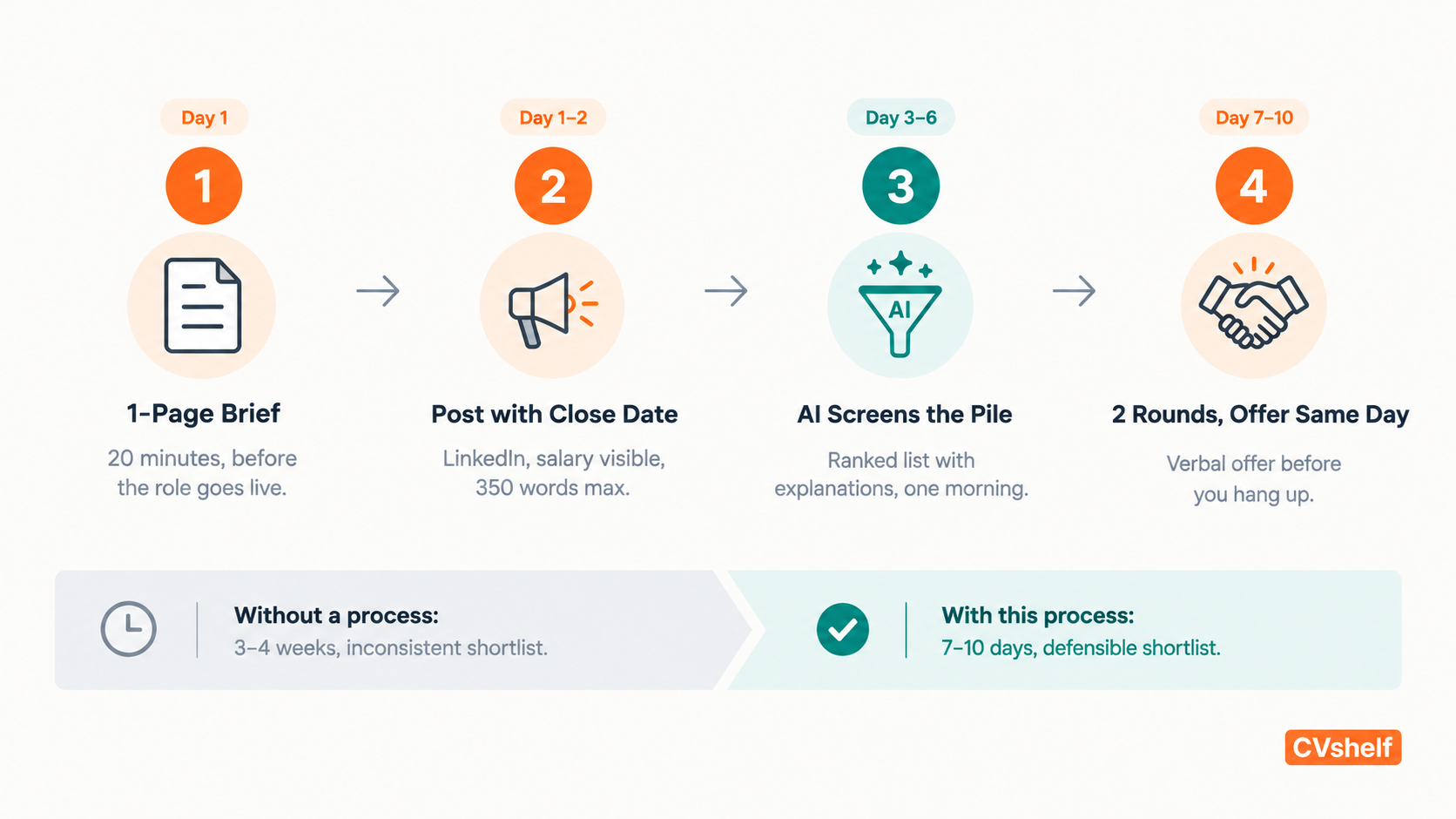
Most agencies under 100 people have no HR team.
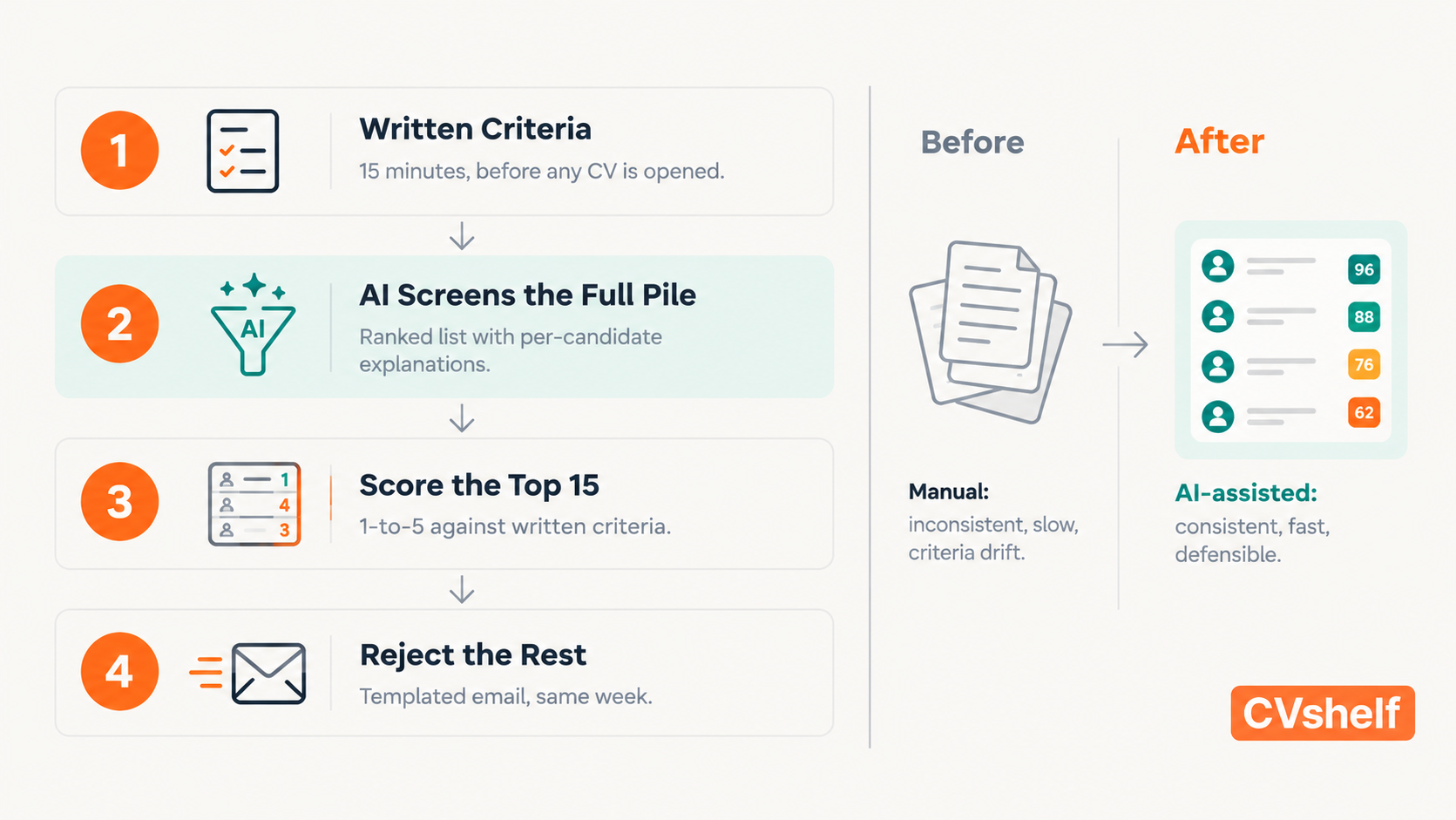
Most candidate screening tools were built for companies with dedicated recruiters and established hiring pipelines.
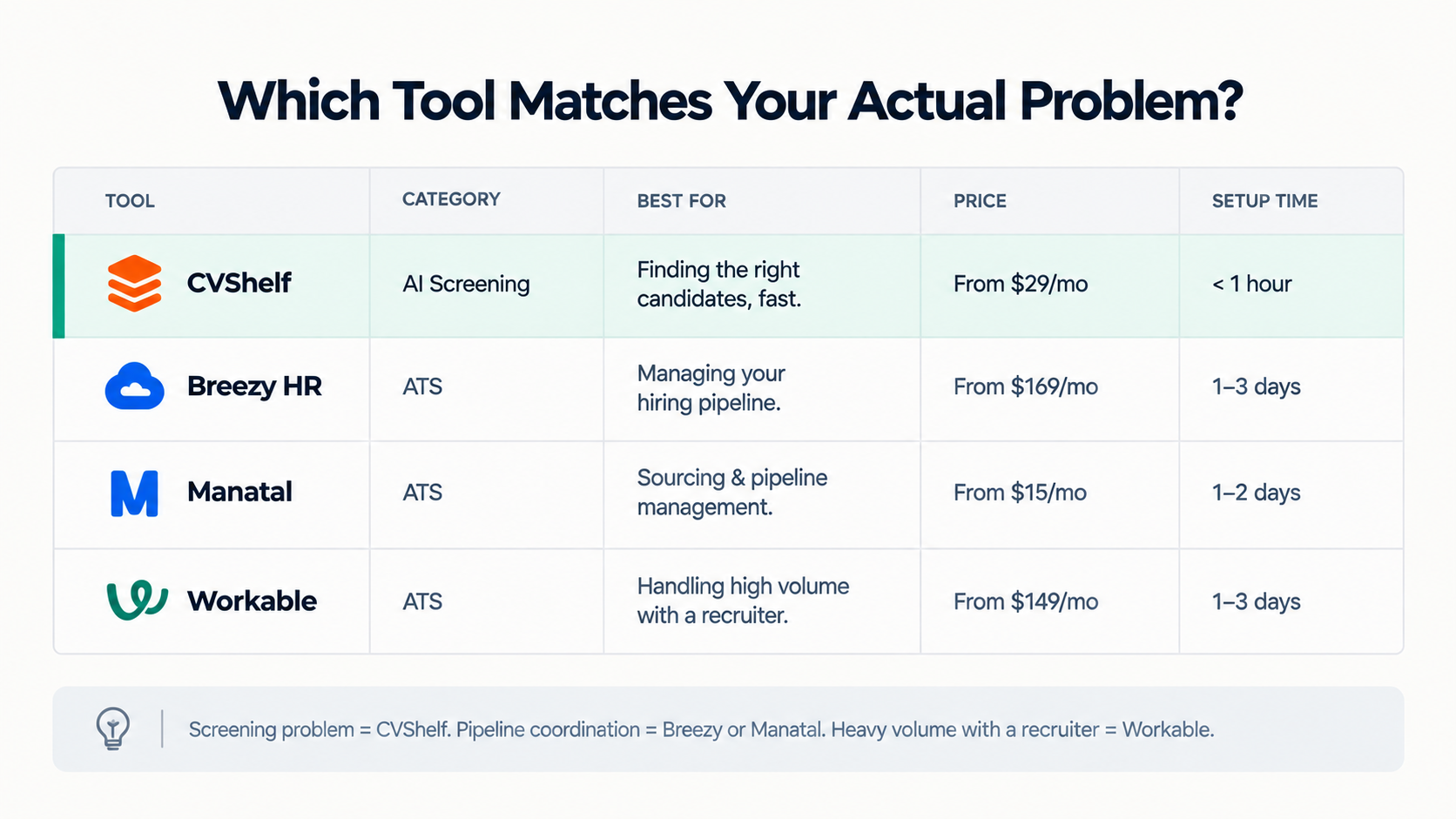
This post is for founders and MDs at 10 to 100 person marketing or creative agencies.
AI resume screening is legal in the UK.
Account manager is the role agencies hire most urgently, usually right after a client win and usually without enough time to do it properly.
Most hiring software was built for companies with full HR teams, continuous recruitment pipelines, and IT departments to manage integrations.
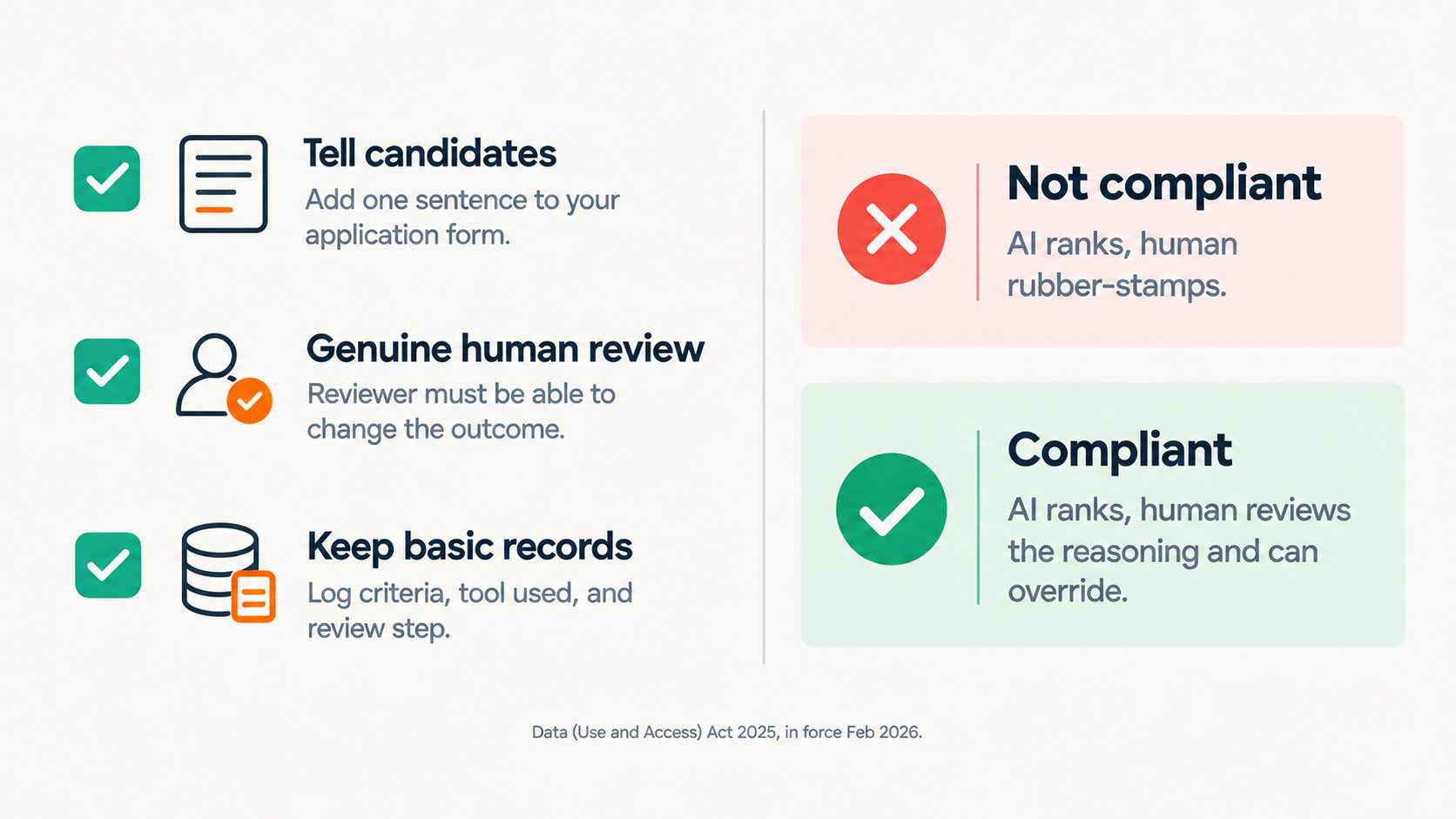
Using CV screening software in the UK means operating under UK GDPR's rules.
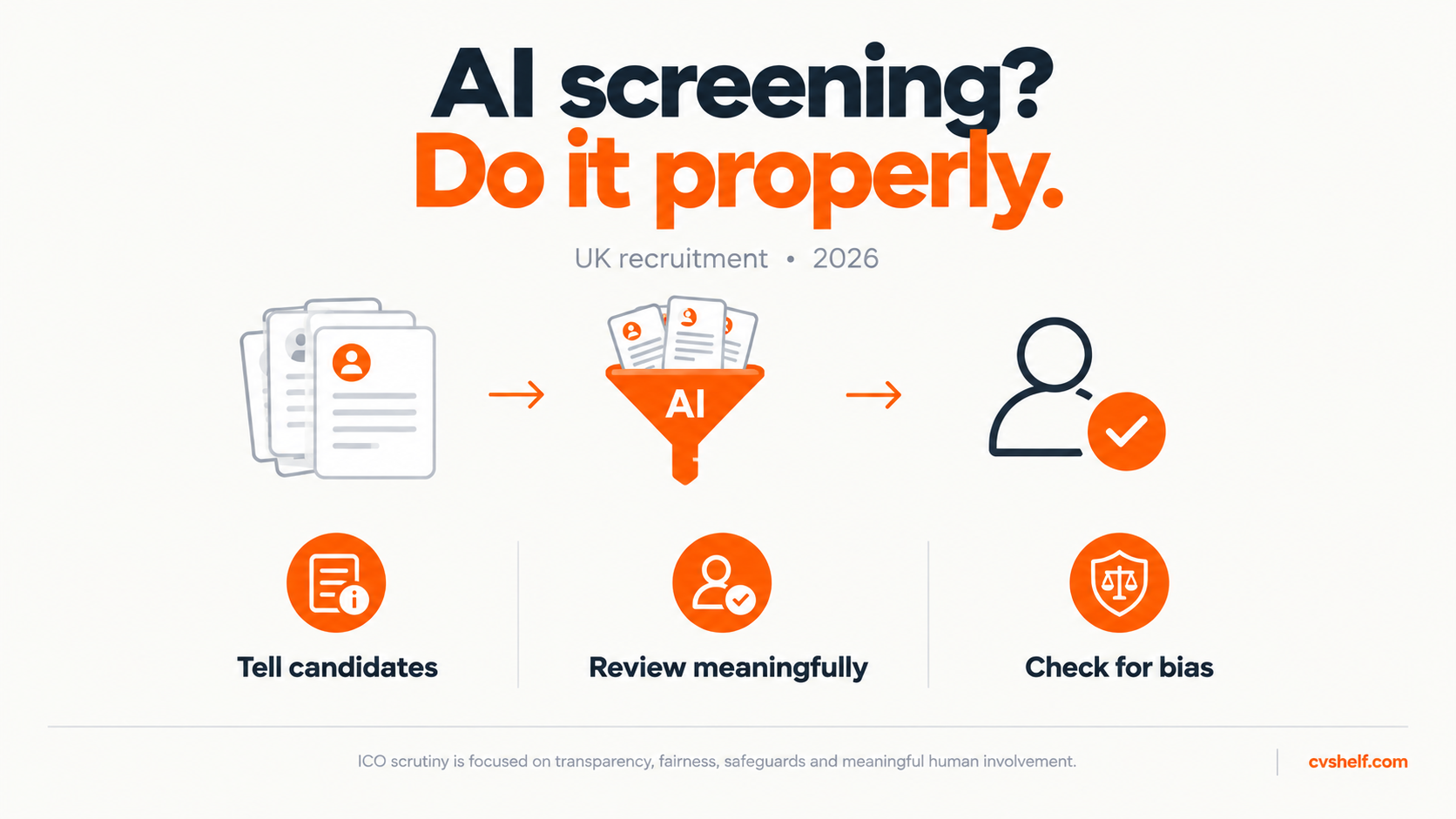
Using an AI tool to screen CVs at a UK marketing agency brings you under UK GDPR's rules on automated decision-making.
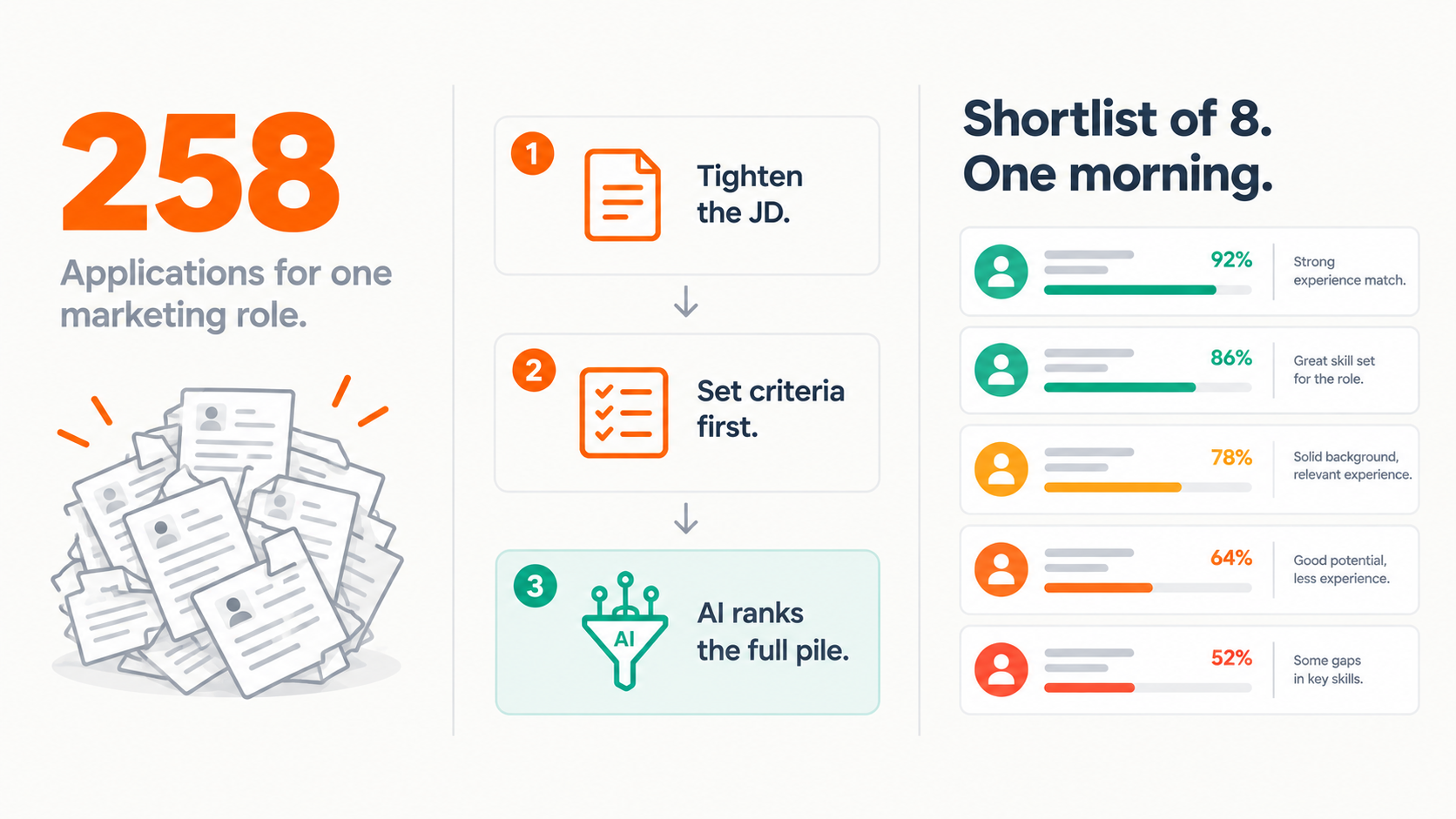
Marketing job posts are getting 200+ applicants and most agencies can't screen them properly
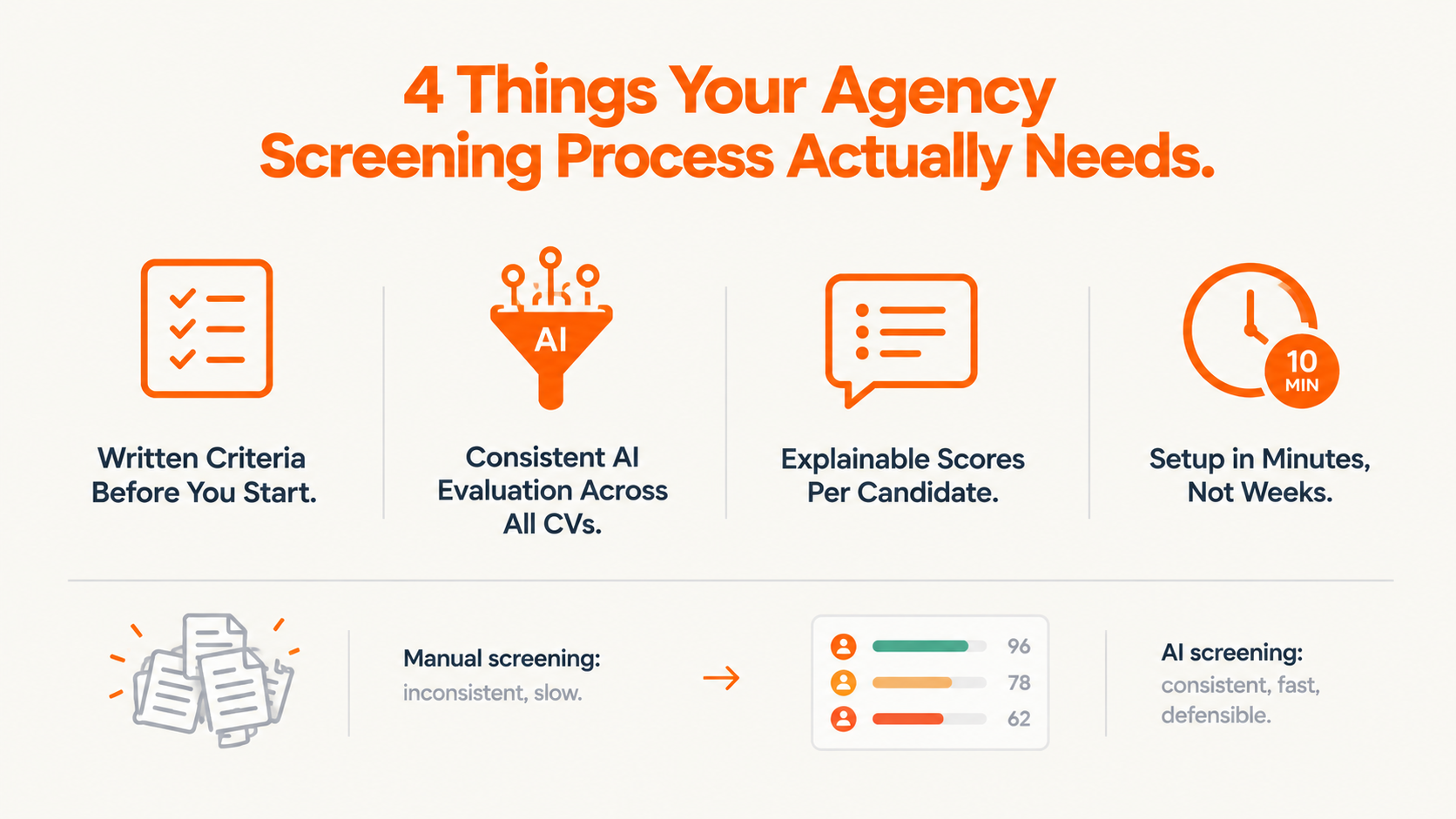
Most resume screening software was designed for companies with dedicated HR teams, IT departments, and continuous hiring pipelines.

Several US states now have live requirements around AI tools used in hiring, covering disclosure, bias auditing, and recordkeeping.
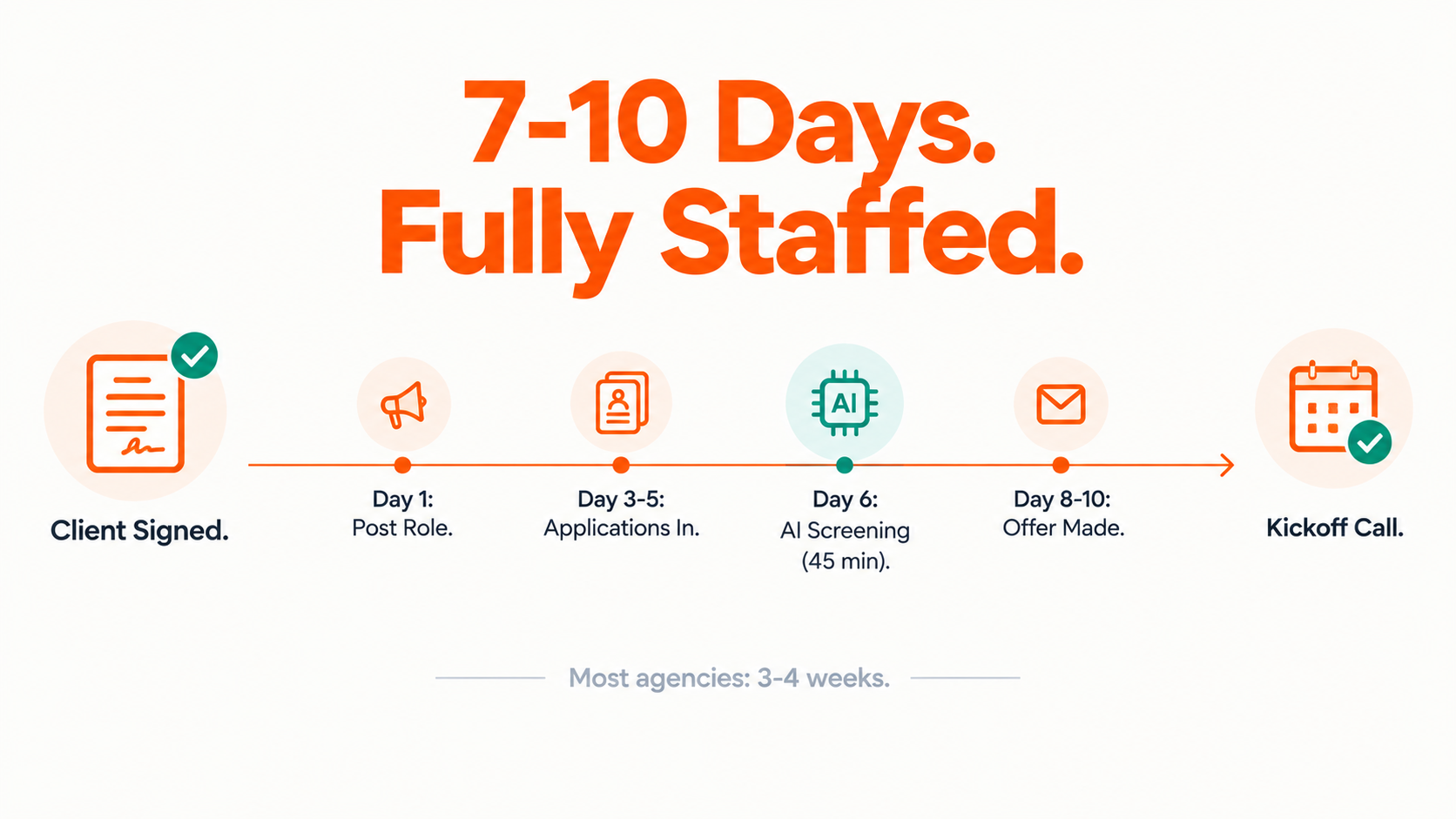
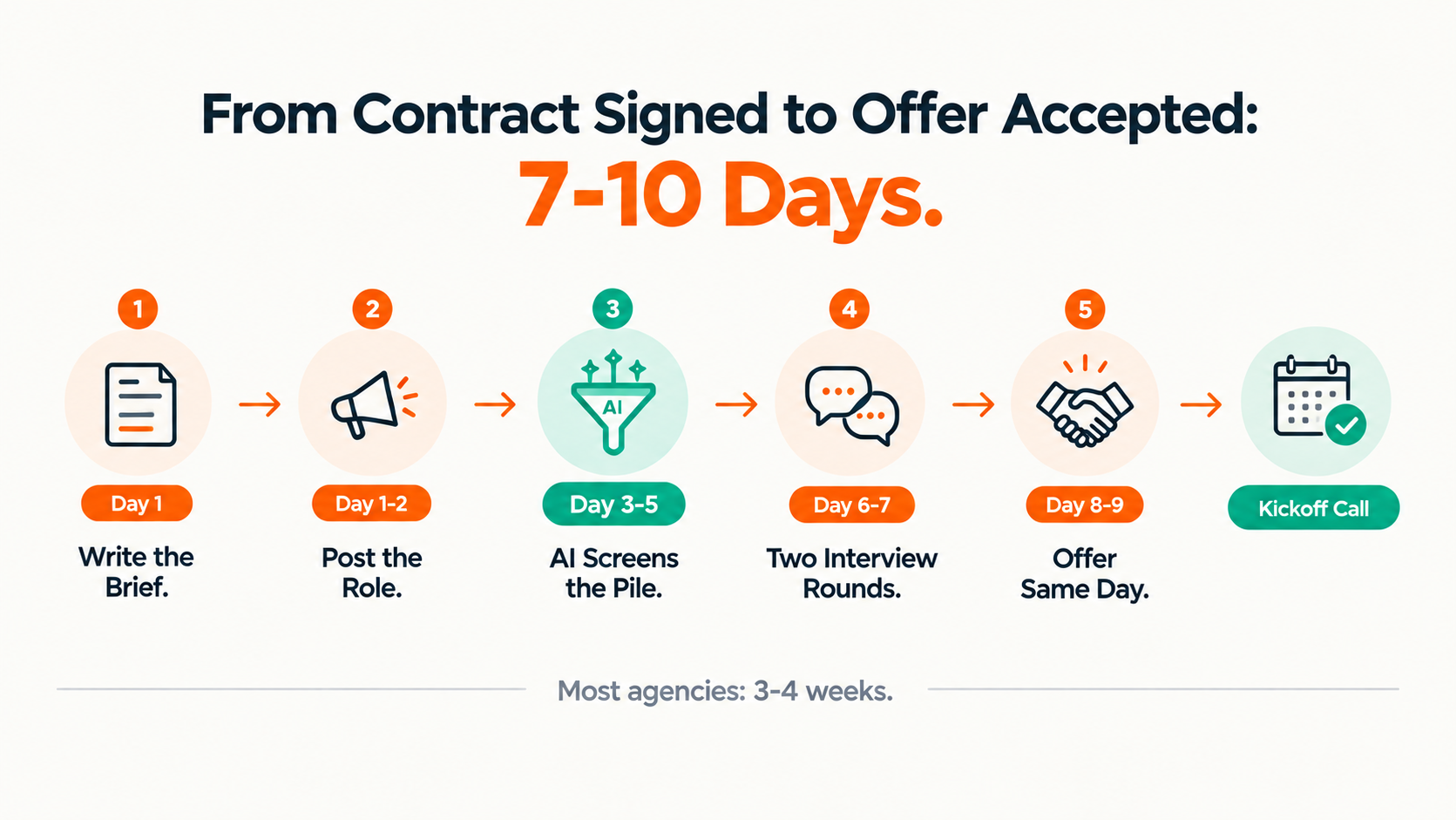
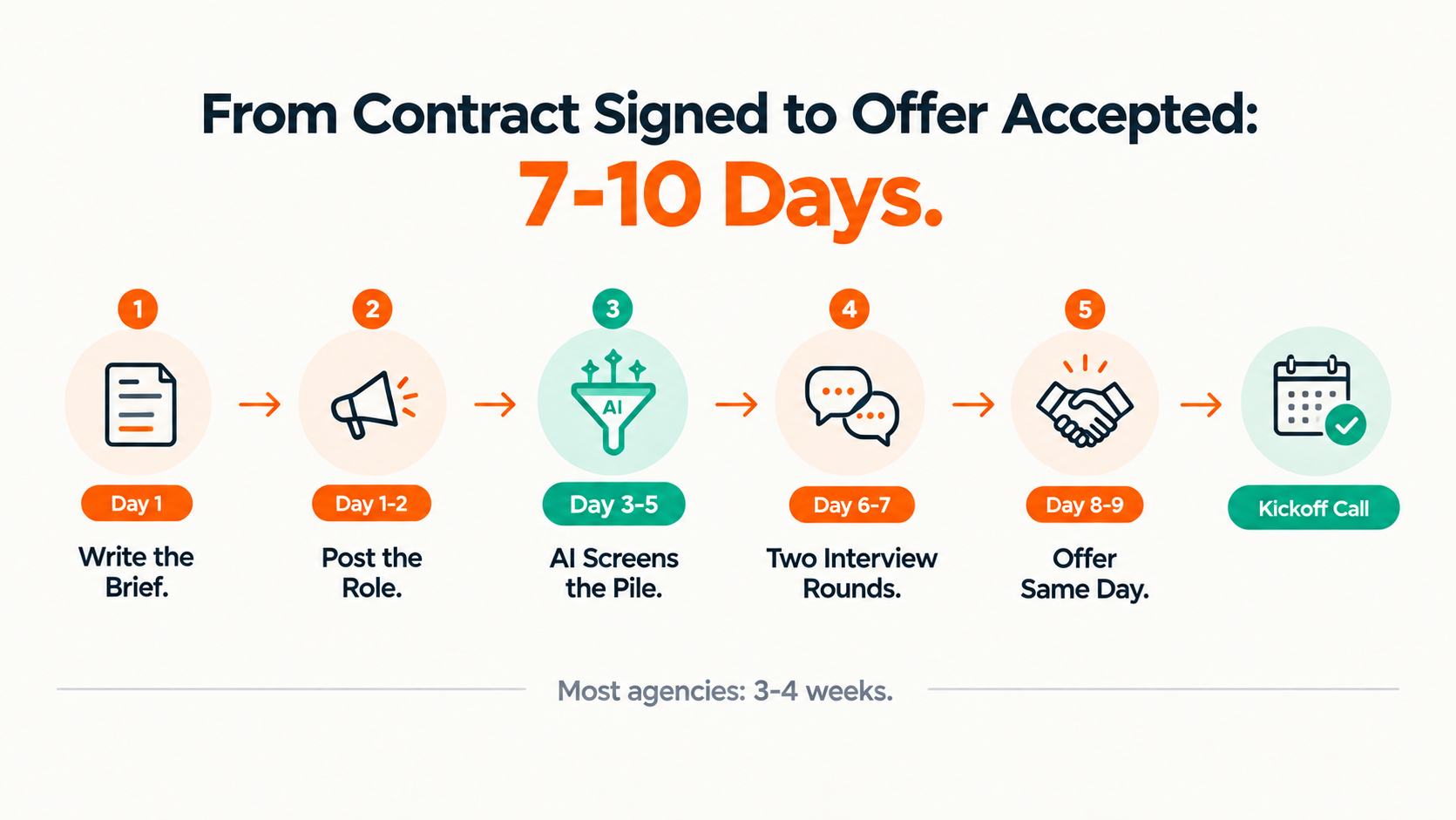
The moment a client signs, a countdown starts.
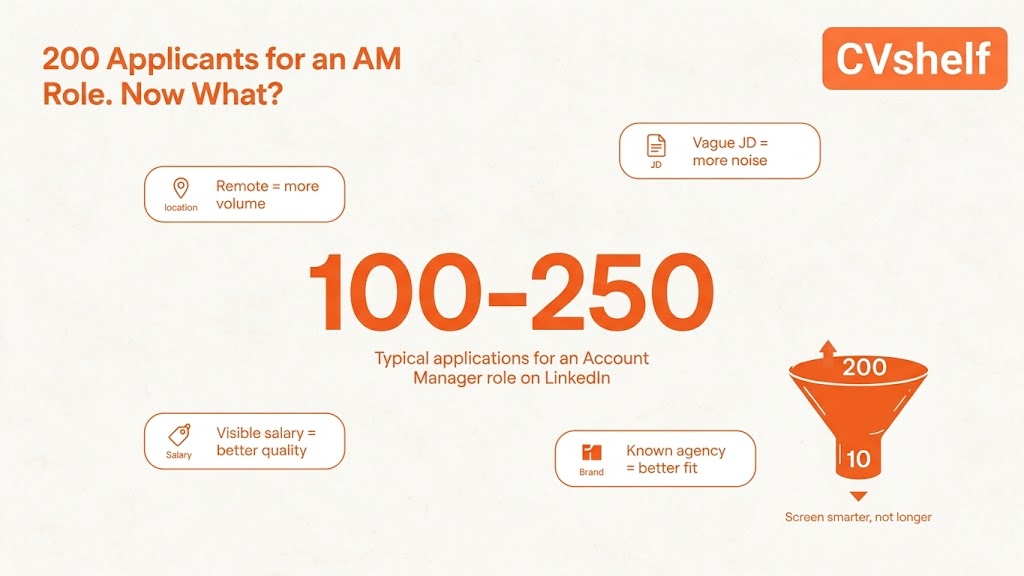
A mid-level Account Manager role posted on LinkedIn typically receives 100 to 250 applications within two weeks.
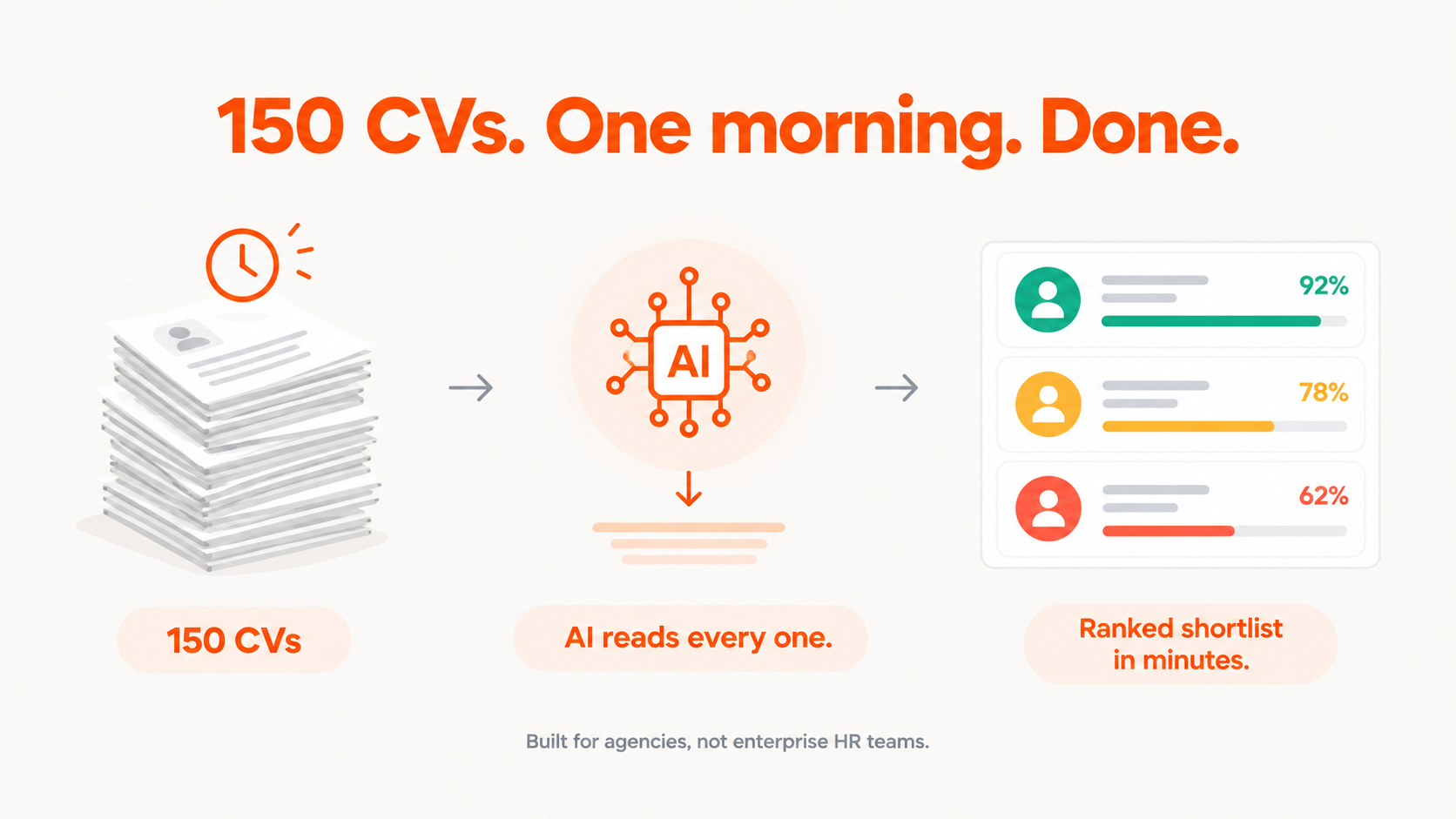
Most AI hiring tools were built for companies with dedicated recruiters, IT budgets, and months to spend on configuration.
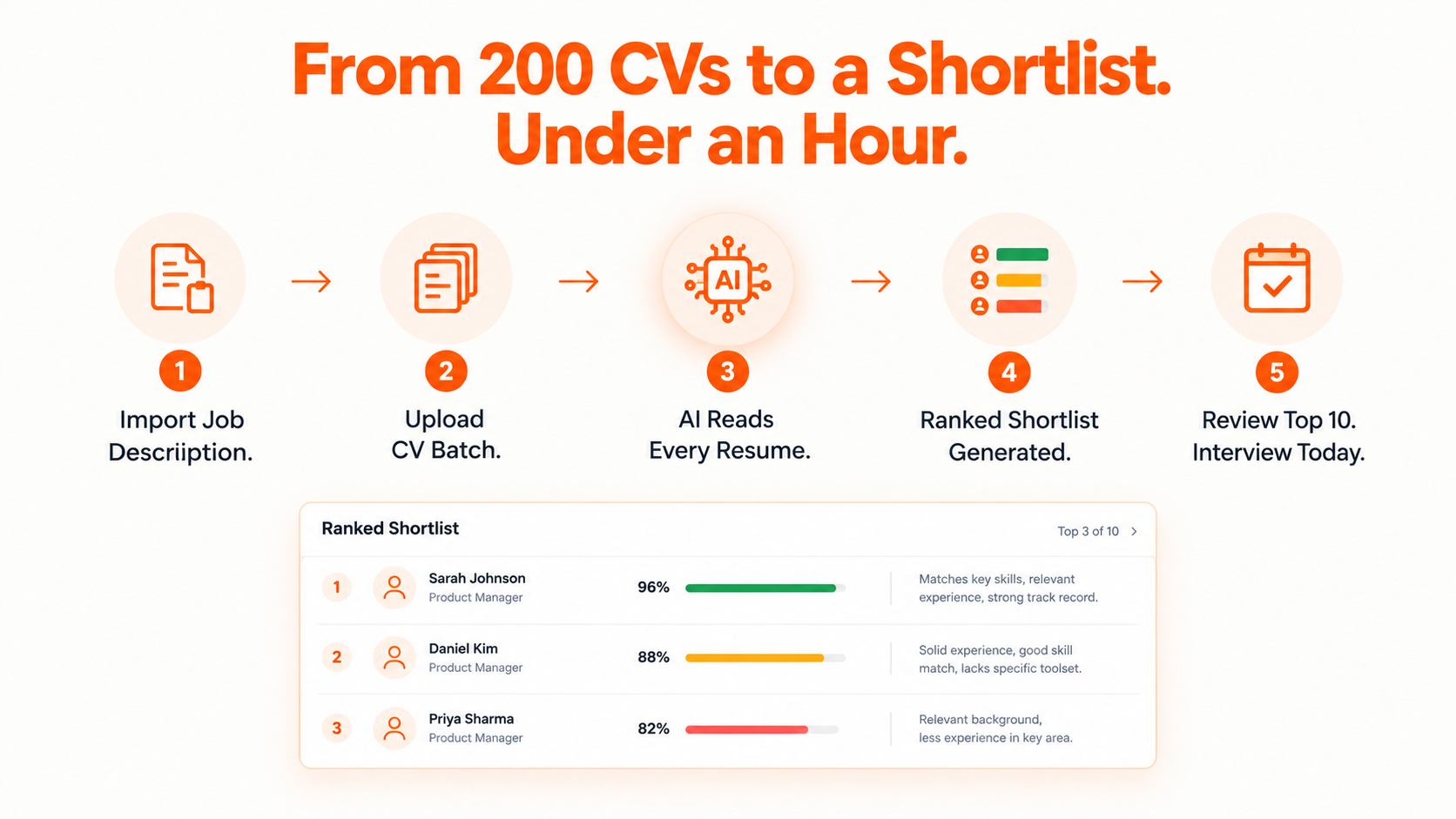
Most agency hiring mistakes don't happen in the interview.
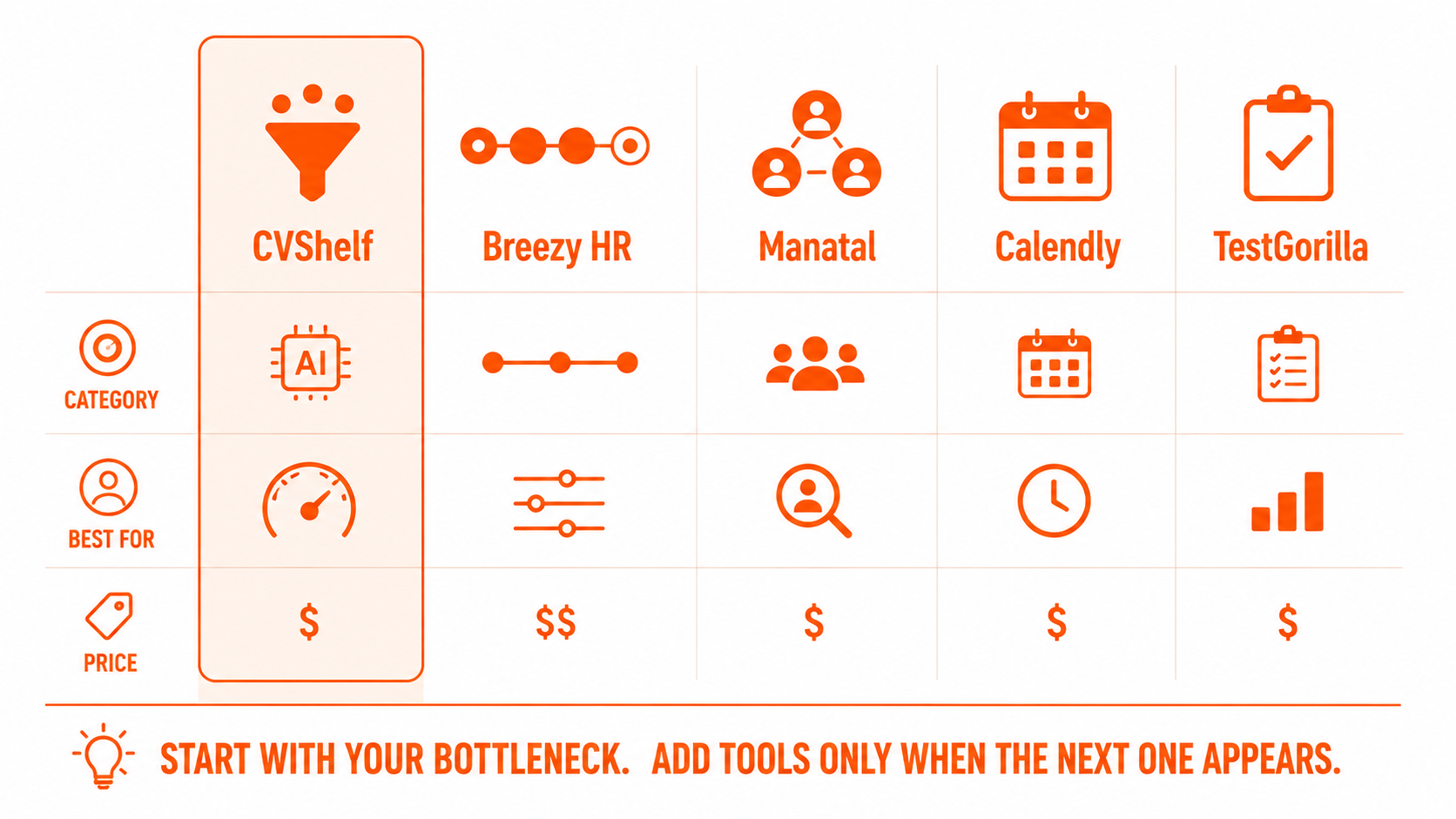
Most ATS tools were designed for companies with dedicated HR teams, IT departments, and recruitment budgets that small agencies simply don't have.
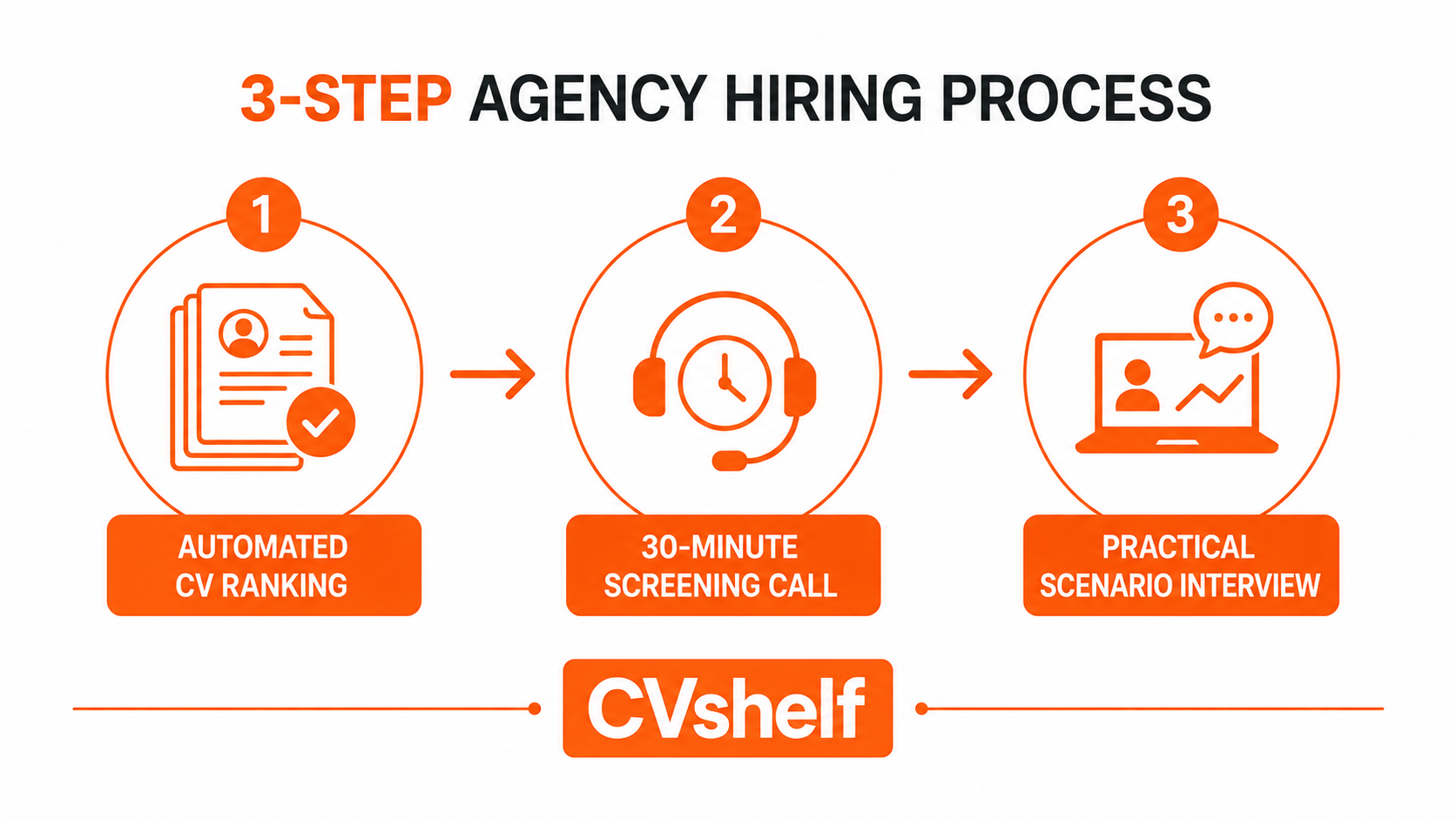
Hiring an Account Manager is usually the bottleneck to growing a boutique agency.
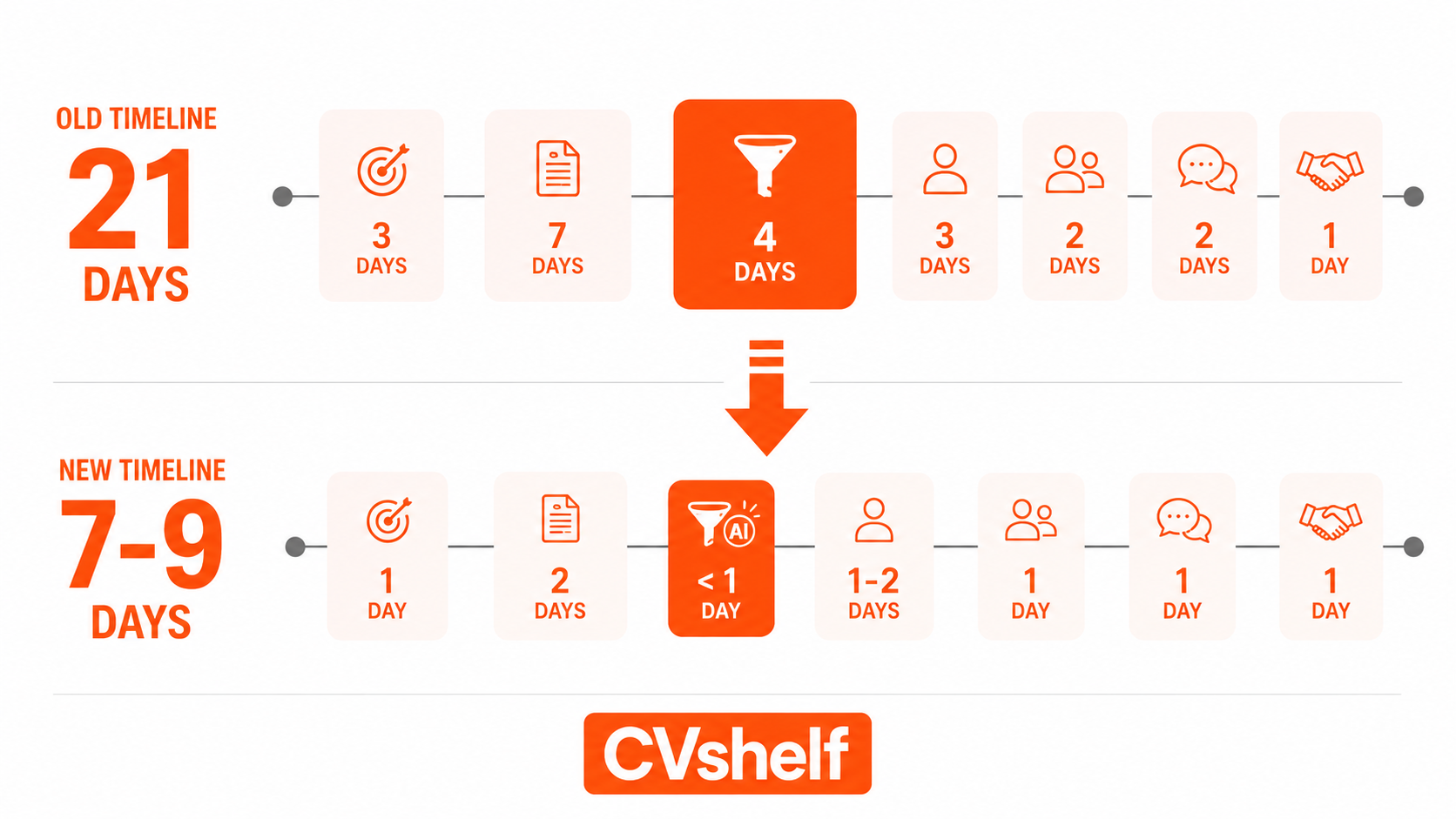
The average marketing agency takes three to four weeks to make a hire. The best candidates accept offers in week two.

The average job post now attracts around 258 applicants. For an account manager or strategist role at a marketing agency, that number can climb higher.

The moment you sign a new client, a countdown begins. You have days, not weeks, to staff the account before the kickoff call.

The average cost per hire in the US is $4,700, according to SHRM. Most HR teams accept that number without interrogating it.

Resume parsing software converts unstructured resume files into structured, searchable data. But parsing alone is only half the job.

Hiring 5 people and hiring 50 are not the same job. The process that works at low volume collapses under pressure:

A recruiter's reputation lives and dies on the quality of their shortlist. Send a hiring manager 15 loosely matched candidates with no explanation and you lose trust.

Transform recruitment with AI automation. Reduce resume screening time, improve candidate matching, minimize bias, and accelerate hiring through intelligent workflows.

Recruiting eats roughly 40% of an HR team's working hours. The fix isn't hiring more people. It's automating the right parts of the process.

Posting a job in 2026 means getting buried in applications. This guide walks through a practical 5-step system for bulk resume screening.
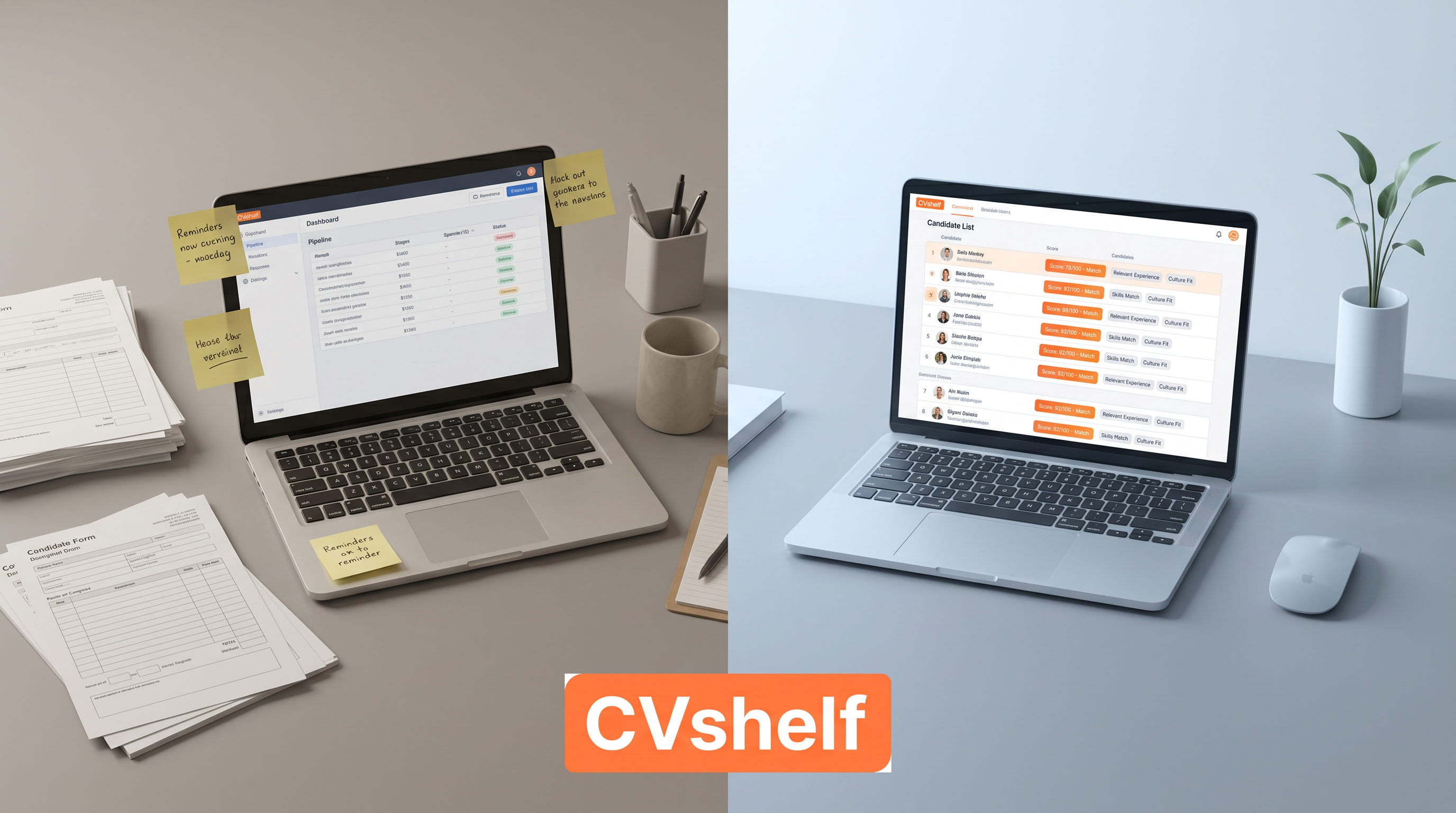
Most hiring software gets lumped into one bucket. "We use an ATS" has become shorthand for "we have a hiring tool," regardless of what the tool actually does.
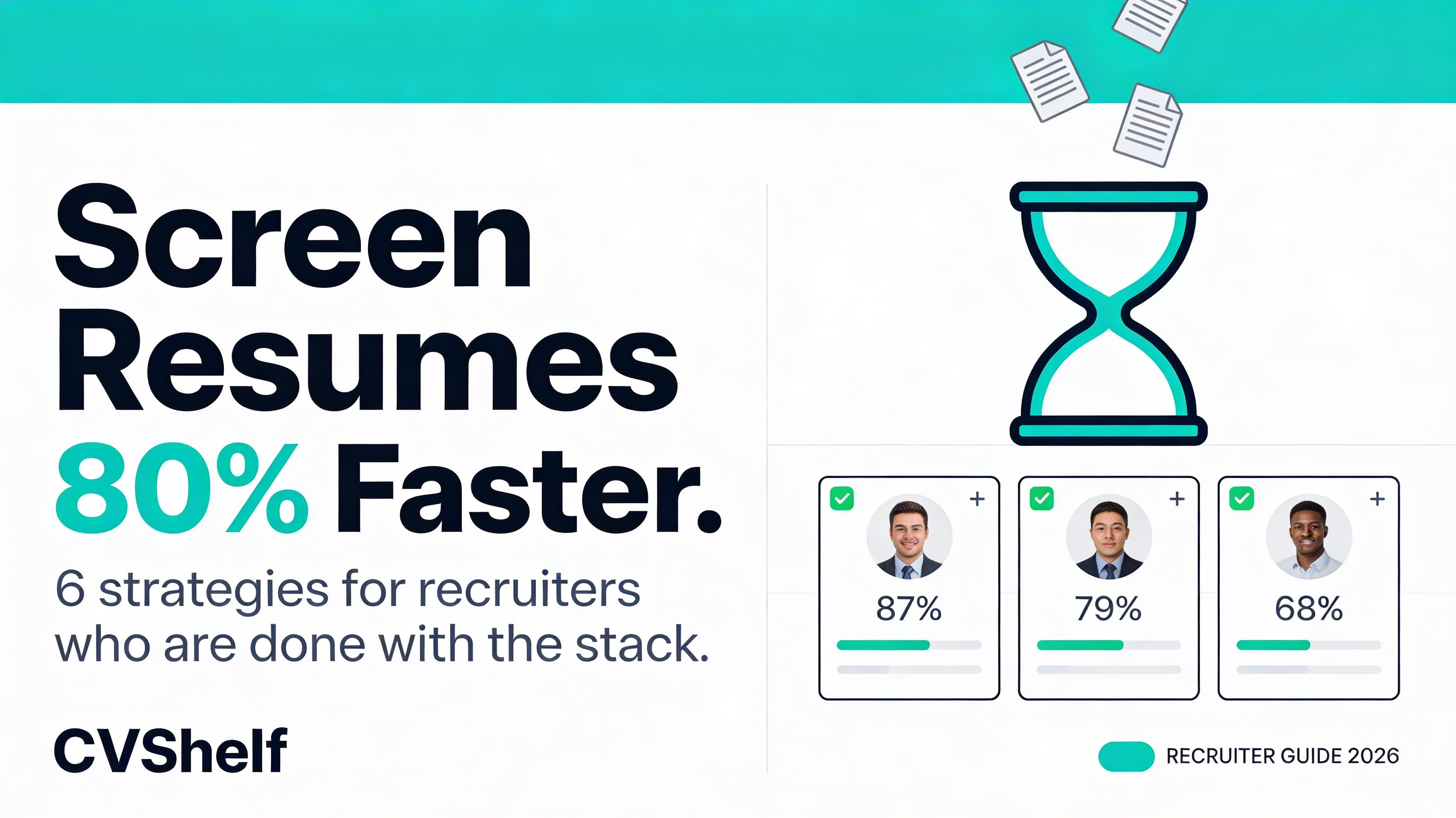
If resume screening is eating your week alive, you're not imagining it. The average recruiter spends 23 hours reviewing resumes for a single role. That's more than half a standard work week, in one position.
A bad hire costs a small business anywhere from $4,000 to $20,000 when you factor in recruiting time, onboarding, lost productivity, and the whole process starting over.

You post a job. By Friday, there are 280 applications in your inbox. You have half a day. Maybe less. And somewhere in that stack is the person you actually want to hire, buried under 200 resumes that don't come close.
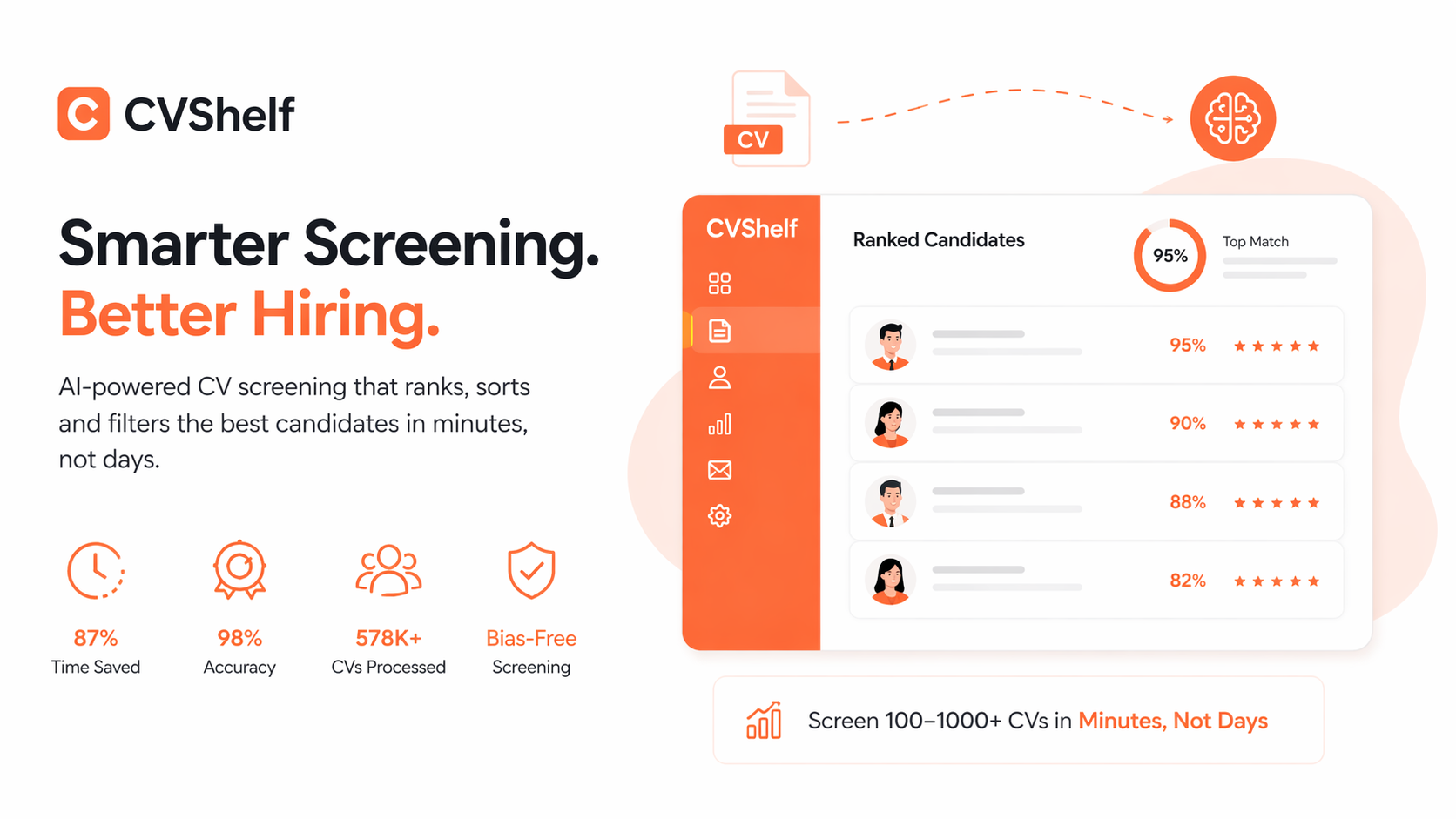
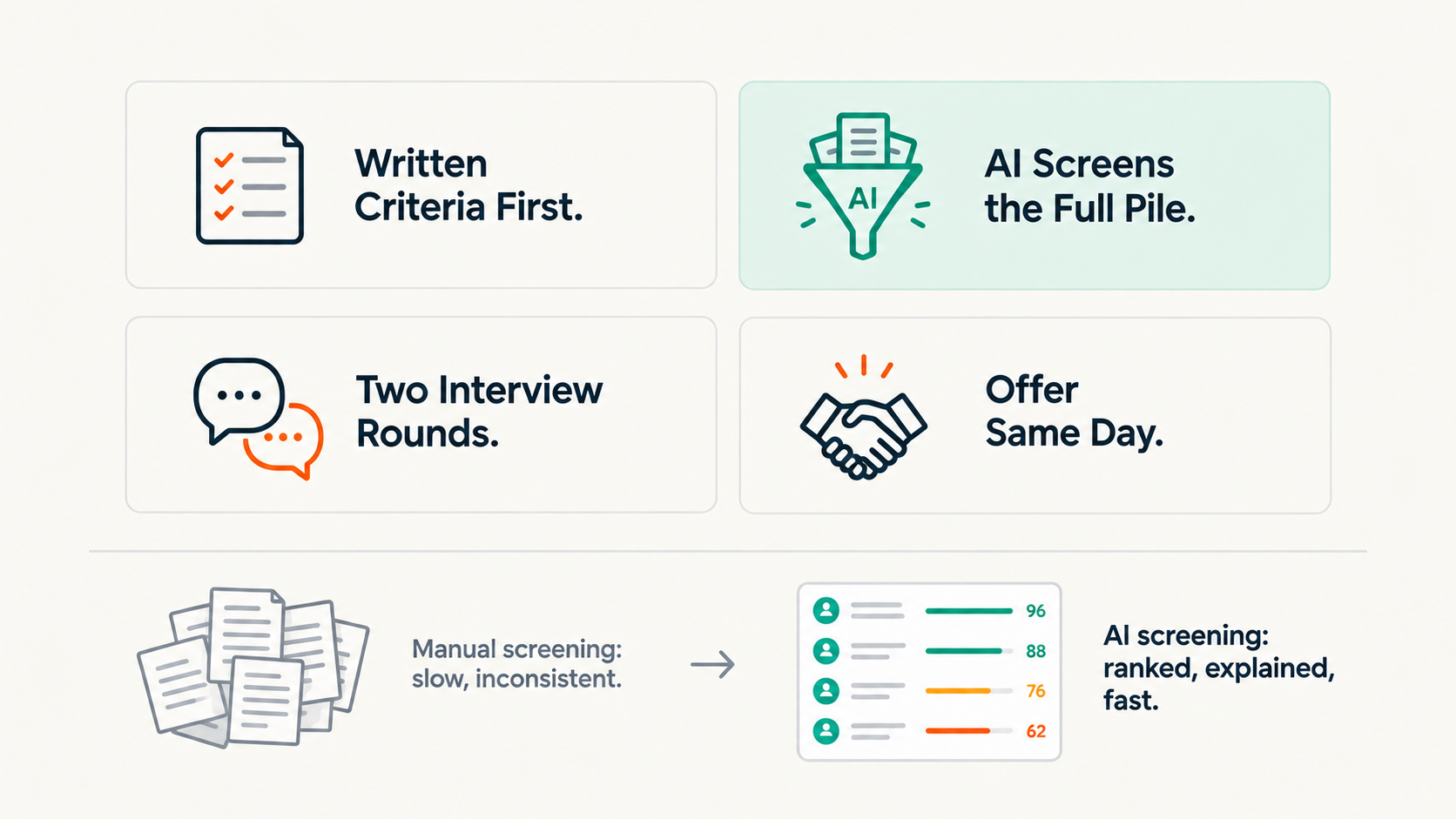
Hiring has changed, but many recruitment processes haven’t. Teams are still spending hours manually reviewing CVs, trying to keep up with growing application volumes. The result is slower hiring, inconsistent decisions, and missed talent.

Recruitment may seem straightforward, but in reality, it is often slow, inconsistent, and prone to errors. Many teams still rely on manual CV screening and intuition, which leads to missed talent and inefficient hiring processes.

Recruiters often make critical mistakes like relying on gut feeling, manual screening, and inconsistent evaluation, which leads to missed top talent and biased decisions.