Agency Growing Pains Hiring
The hiring problems that hit a growing agency aren't random.
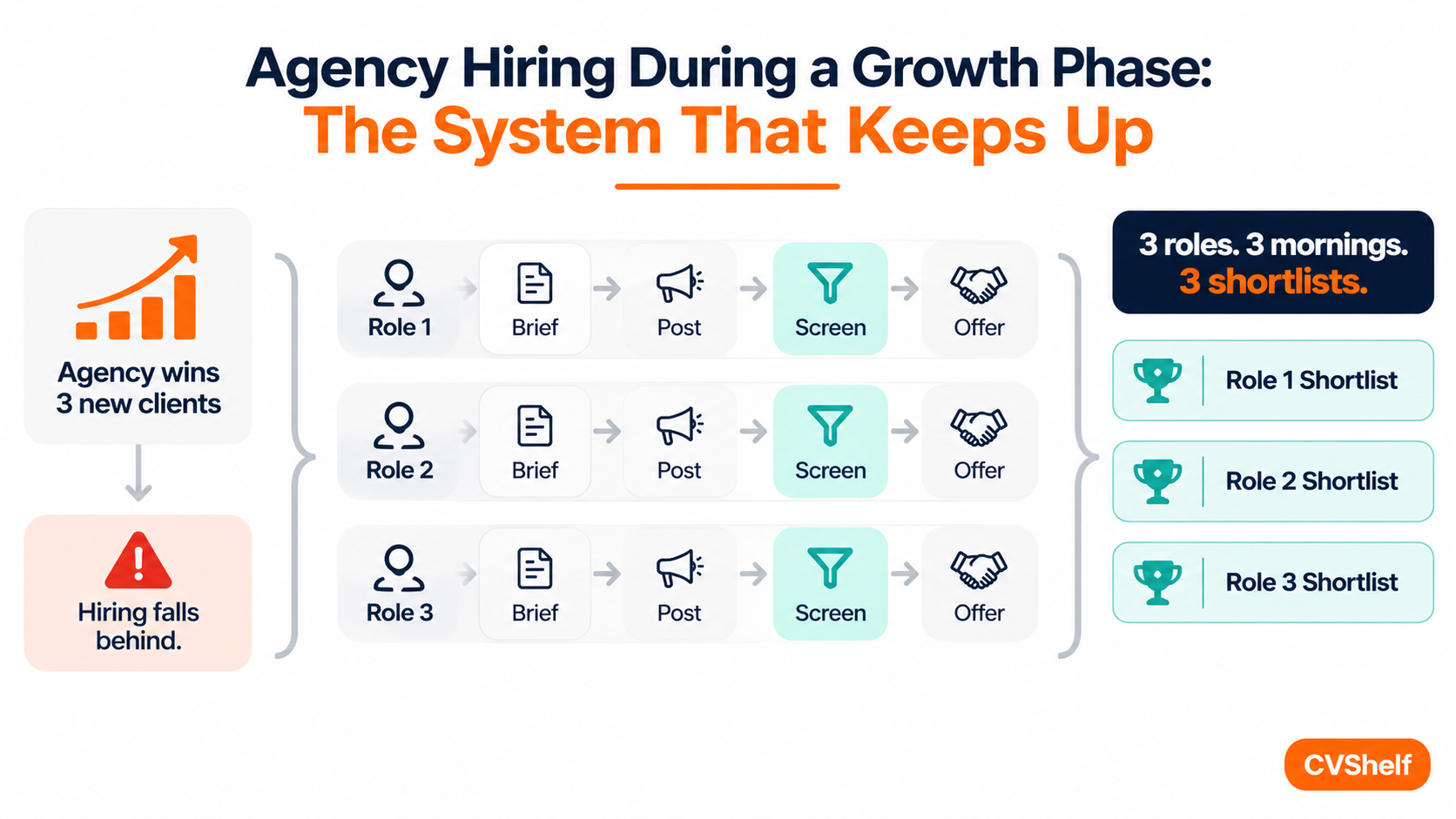
Three new clients in six weeks. The pipeline has never looked better.
The ops problem that comes with it: four open roles, two of which should have been filled last month, and a growing sense that the current team is covering gaps it shouldn't have to cover.
The job posts go up. The applications arrive. Nobody has time to screen them properly.
Why Growing Agencies Hit This Wall
Hiring at a growing agency is reactive by design. Roles open in response to won business, not in advance of it. By the time the brief is written and the post goes live, the team is already stretched.
The deeper problem is that the hiring process doesn't scale with the business. When you're small, 10 to 20 people, one person can manage the occasional hire informally. Read the CVs, pick a few, run some calls, make a decision. The volume is manageable and the stakes on each hire are contained.
At 40 to 80 people, that same informal process runs into a wall. More roles open simultaneously. Each role generates a larger application pile. The person handling screening is now managing multiple open positions alongside client work and team coordination. The informal system collapses under the load.
What doesn't happen: anyone building a hiring process to replace the informal one. It gets deferred because every hire feels like an emergency and there's no slack in the schedule to work on the system. So the same broken approach runs again, slightly worse each time.
What It Actually Costs
The cost that shows in headcount reports is slow hires and unfilled roles. The cost that doesn't show anywhere is what happens to the clients connected to those gaps.
When a new account opens understaffed, the existing team absorbs the load. Senior people cover junior tasks. Account managers stretch across more clients than they should. Quality at the margins drops. The new client who signed based on a strong pitch starts noticing that something is off.
This compounds at growth stage because you're simultaneously managing new client relationships and stretched existing ones. A hiring process that consistently runs three to four weeks late isn't just an ops problem. It's a retention risk across your whole book of business.
There's also the compounding effect on the team. Sustained overload during a growth phase is one of the main drivers of departures. The people you most need to keep, the ones covering the gaps, are the ones who feel the strain first.
A Better Way to Handle It
Three changes that hold up under growth pressure.
Build the brief template before the next role opens. A one-page document: what does this person do in their first 90 days, what are three non-negotiables, what's the salary range. Templatise it once. Adapt it per role in 20 minutes. This replaces the "start from scratch" dynamic that adds a week to every hire.
Process all applications in one batch on close date. Set a close date when the post goes live. When it hits, upload everything to an AI ranking tool, paste in the job description, and get a ranked list with per-candidate explanations. One session instead of a week of fragmented reading. This is the step that changes the scale of the problem during growth periods when multiple roles are open simultaneously.
Make the offer the day of the final interview. Agree on salary and terms internally before the interview. If it goes well, make the verbal offer before you hang up. Growing agencies lose good candidates in the deliberation gap more than anywhere else, because good mid-level marketers are in multiple processes and they take the fastest reasonable offer.
Where CVShelf Removes the Bottleneck
During growth phases, the screening stage is where the system breaks. Applications pile up across multiple open roles and nobody has the bandwidth to read them properly.
CVShelf processes the full pile for each role, upload the CVs, paste in the job description, get a ranked list with a short explanation per candidate. Each explanation covers what the AI found and what it flagged, so the reviewer can engage with the reasoning rather than just accept a score. A COO or ops manager works through the top fifteen candidates for a role in under an hour.
For agencies looking for a tool that explains its rankings rather than just producing scores, the guide to candidate ranking tools built for agency workflows covers how to evaluate them and what to look for.
CVShelf starts at $29/month. No setup required.
FAQs
Q1. Why is hiring always chaotic at a growing agency?
Because the hiring process was built for a smaller, slower business and hasn't been updated to match the current pace. At 15 people, informal screening is fine. At 60 people with four simultaneous open roles, the same approach fails. The fix is building a repeatable process, brief template, AI ranking for applications, fast offer policy rather than treating each hire as a one-off emergency.
Q2. How do you hire fast when you're in a growth phase?
Set a close date on every role so applications land in one batch. Run the full pile through an AI ranking tool the day the close date hits. Run two interview rounds with consistent scoring. Make the offer same day as the final interview. That sequence consistently produces a seven to ten day process from post to offer, which is what keeps pace with new business wins.
Q3. What do you do when multiple roles are open at the same time?
Process them in parallel rather than sequentially. Each role gets its own brief, its own job post, and its own AI screening run. The screening for three simultaneous roles takes three mornings rather than three weeks, because the AI handles the read-through and you're reviewing ranked shortlists. The bottleneck moves from screening to interview scheduling, at that point, an async video interview tool for first rounds (Loom, or a dedicated async platform) handles the coordination overhead.
Growing agencies hit hiring walls because the informal process doesn't scale. The fix is a repeatable system that runs in parallel across multiple roles.
Try CVShelf complimentary at cvshelf.com.
Keep Reading
More from AI Resume Screening.
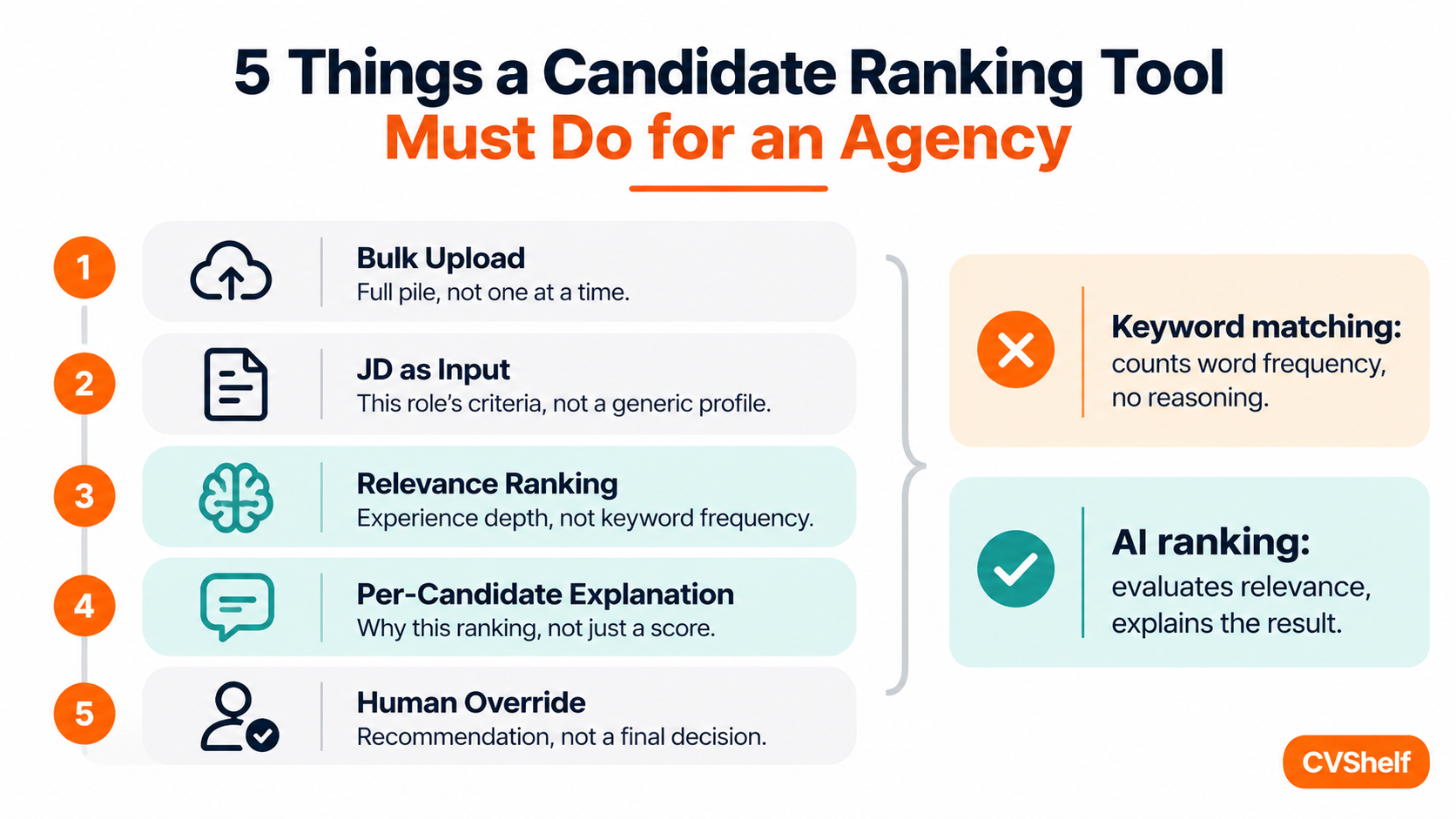
Candidate Ranking Tool For Agencies
A candidate ranking tool for agencies needs to do something most ATS screening features don't.
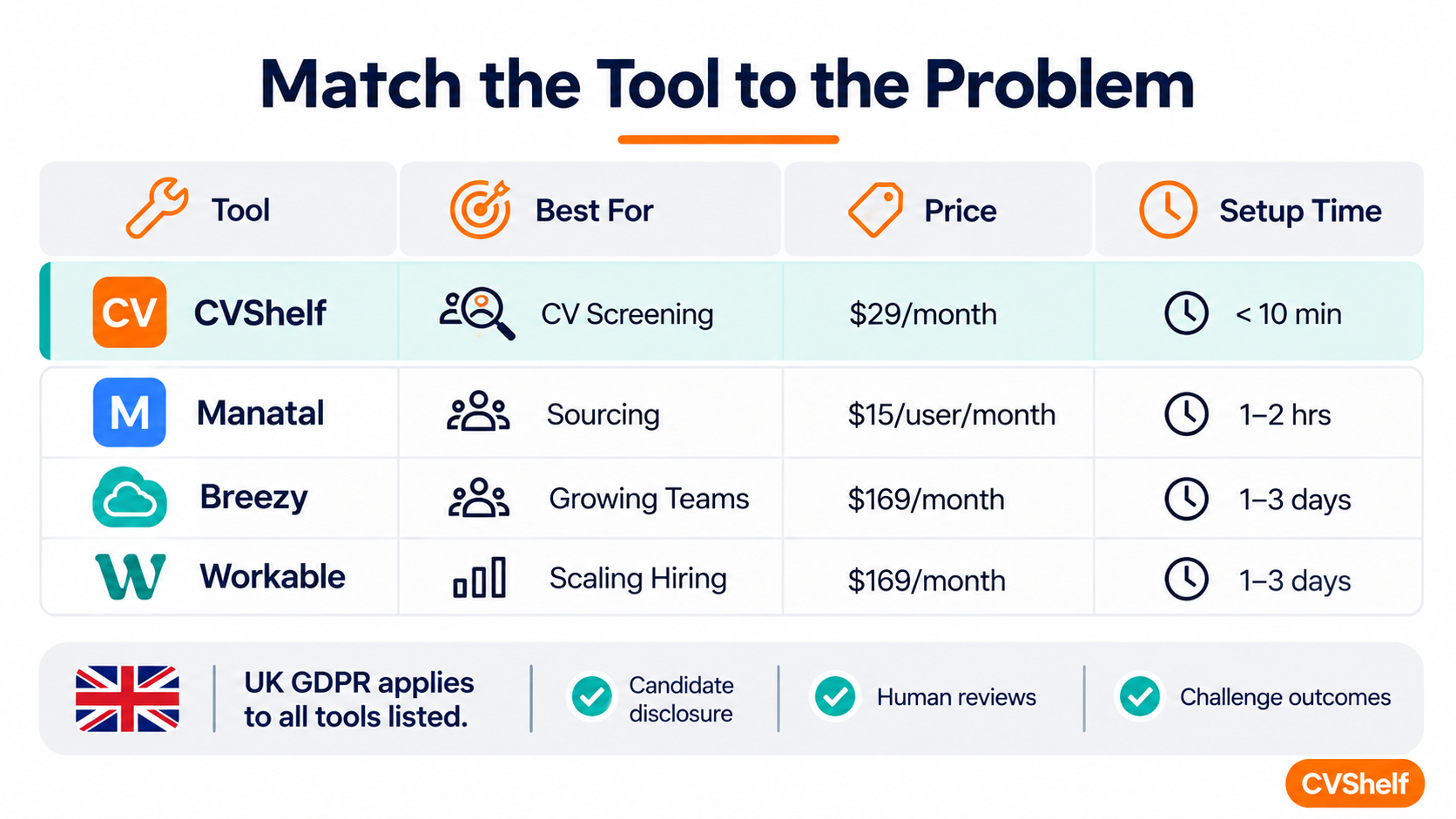
AI Hiring Tool UK Small Business
This post is for founders and MDs at 10 to 100-person UK agencies.
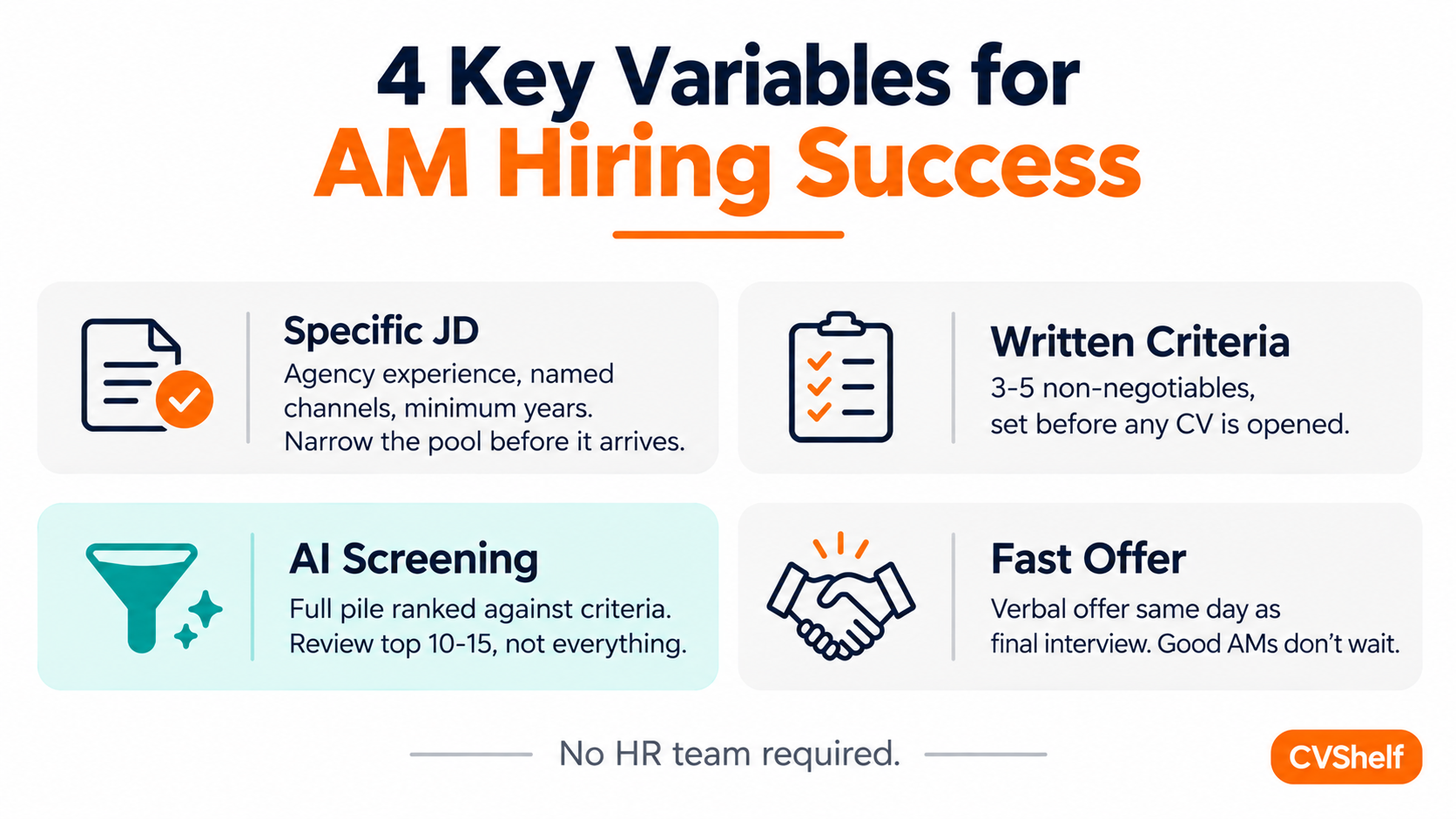
Hiring Account Manager Without HR
Hiring an account manager without an HR team is standard at most agencies under 100 people.