
Do I Need An ATS As A Small Agency
Most small agencies under 100 people don't need a full ATS.
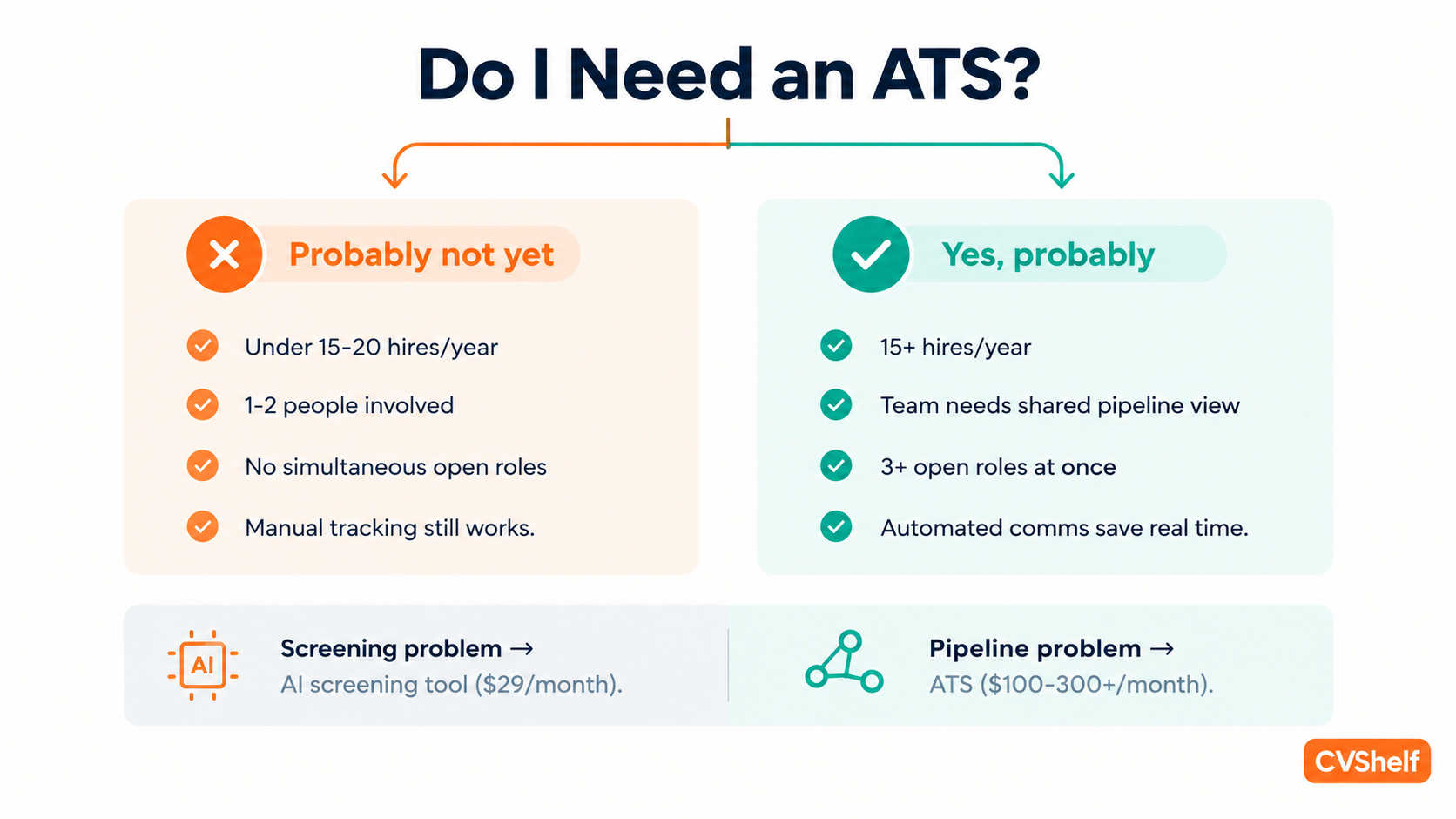
Probably not yet. A full ATS, Breezy HR, Manatal, Workable, Greenhouse, makes sense when you're coordinating hiring across multiple people, running several open roles simultaneously, and doing enough hires per year to justify continuous pipeline management. For most agencies under 100 people doing fewer than 15-20 hires per year, the overhead of a full ATS outweighs what it saves. The screening problem and the pipeline problem are different things. Most small agencies have the first. The second shows up later.
The Fuller Context
Whether you need an ATS depends on which hiring problem you actually have.
The screening problem is what happens when 150 applications arrive and one person has to process them alongside client work. Manual reading is slow, inconsistent, and produces shortlists that reflect reading order more than candidate quality. An AI screening tool fixes this without requiring pipeline infrastructure. CVShelf, for example, processes a full pile in one session and returns a ranked list with per-candidate explanations. Setup takes under ten minutes per role.
The pipeline problem is what happens when multiple people need shared visibility into where candidates are, automated communications need to go out at each stage, and you're running three or four open roles at once. An ATS fixes this. But it only becomes a real problem at a certain hiring volume and team size. Most small agencies aren't there yet.
The mistake is buying an ATS to solve a screening problem. The ATS handles pipeline management. It doesn't solve the screening bottleneck, most ATS platforms do keyword matching rather than genuine relevance ranking, and none of them produce per-candidate explanations.
When an ATS starts to make sense:
Regularly running three or more open roles simultaneously
Multiple people involved in hiring decisions who need shared pipeline visibility
Enough annual hiring volume that structured tracking saves meaningful time
Automated candidate communications creating real efficiency gains
Below those thresholds, a screening tool and a shared spreadsheet is usually sufficient.
Related Questions
Q1. What do small agencies use instead of an ATS?
A combination of LinkedIn for posting, an AI screening tool like CVShelf for processing inbound applications, and a shared Google Sheet or Notion doc for tracking candidates through stages. This setup handles the actual friction for most agencies doing fewer than 15 hires a year without the cost or configuration overhead of a full ATS.
Q2. At what size does a small agency need an ATS? Headcount isn't the main variable, hiring volume and coordination complexity are. An agency of 50 people doing 8 hires a year with one person managing the process probably doesn't need an ATS. An agency of 30 people doing 25 hires a year with a team of three involved in every decision probably does. The signal is when manual tracking across people and roles becomes the bottleneck, not when the CV pile gets large.
Q3. Is an ATS worth it for occasional hiring?
Rarely. Most full ATS platforms charge $100-$300+/month and require meaningful setup time. For a team doing four to eight hires per year, that's a significant cost per hire for infrastructure you'll use intermittently. A screening tool at $29/month and a spreadsheet for tracking costs less, requires less setup, and is easy to pick up and put down between hiring cycles without losing context.
Q4. What's the difference between an ATS and a CV screening tool?
An ATS is a database and workflow platform. It stores candidate records, moves them through pipeline stages, sends automated emails, and produces hiring reports. A CV screening tool evaluates incoming applications against job criteria and ranks them by relevance. Most ATS platforms include basic screening, but it's typically keyword matching rather than AI ranking, and it doesn't produce explanations. A dedicated screening tool does that job better. The two solve different parts of the hiring process.
What This Means for How You Screen Candidates
If the problem you're trying to solve is "we get too many applications and don't have time to read them properly," an ATS isn't the answer. A screening tool is.
Set written criteria before the pile arrives, three to five non-negotiables defined before you open any application. Run the full batch through CVShelf: upload the CVs, paste in the job description, get a ranked list with reasoning per candidate. Review the top ten to fifteen. That takes one morning, not a week.
For a broader look at how to structure the full hiring process at creative agency scale, the guide to recruitment software that actually fits a small creative agency covers what to use at each stage and when.
An ATS can come later. Start with the problem you have now.
Keep Reading
More from AI Resume Screening.
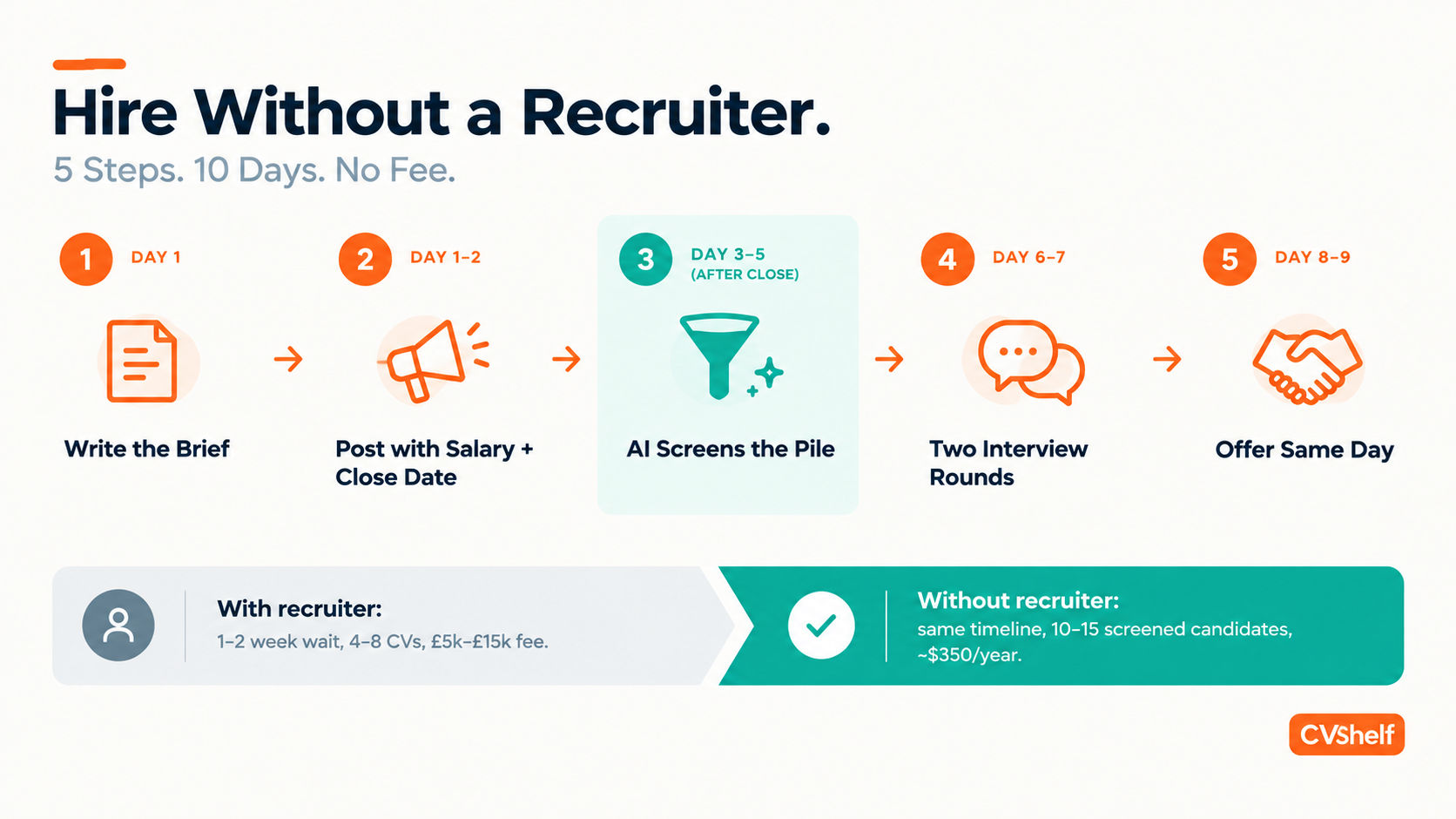
How To Hire Without A Recruiter
Most agency founders have hired without a recruiter at least once.
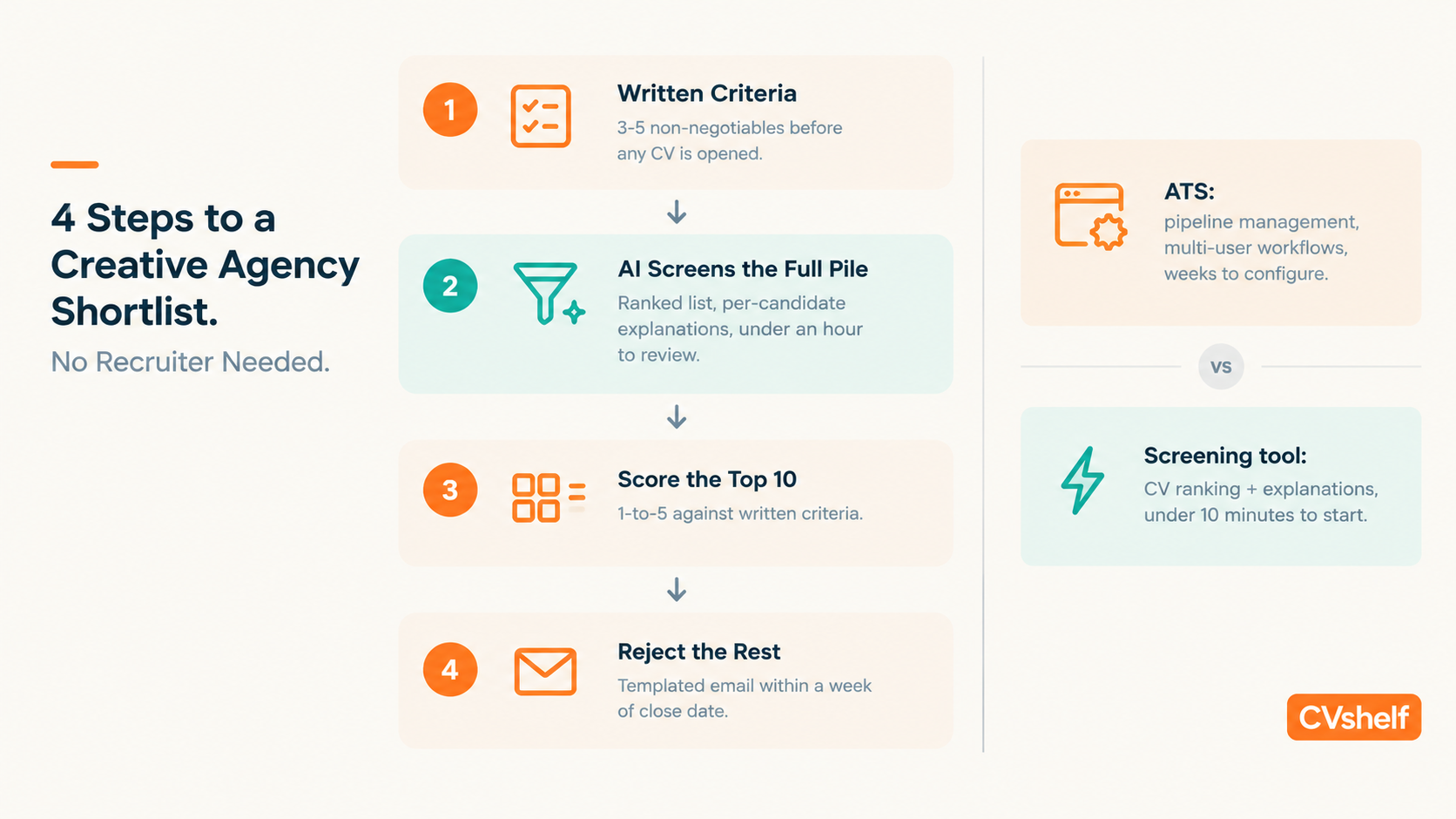
Recruitment Software For Creative Agency
Recruitment software built for enterprise HR teams doesn't fit a creative agency.
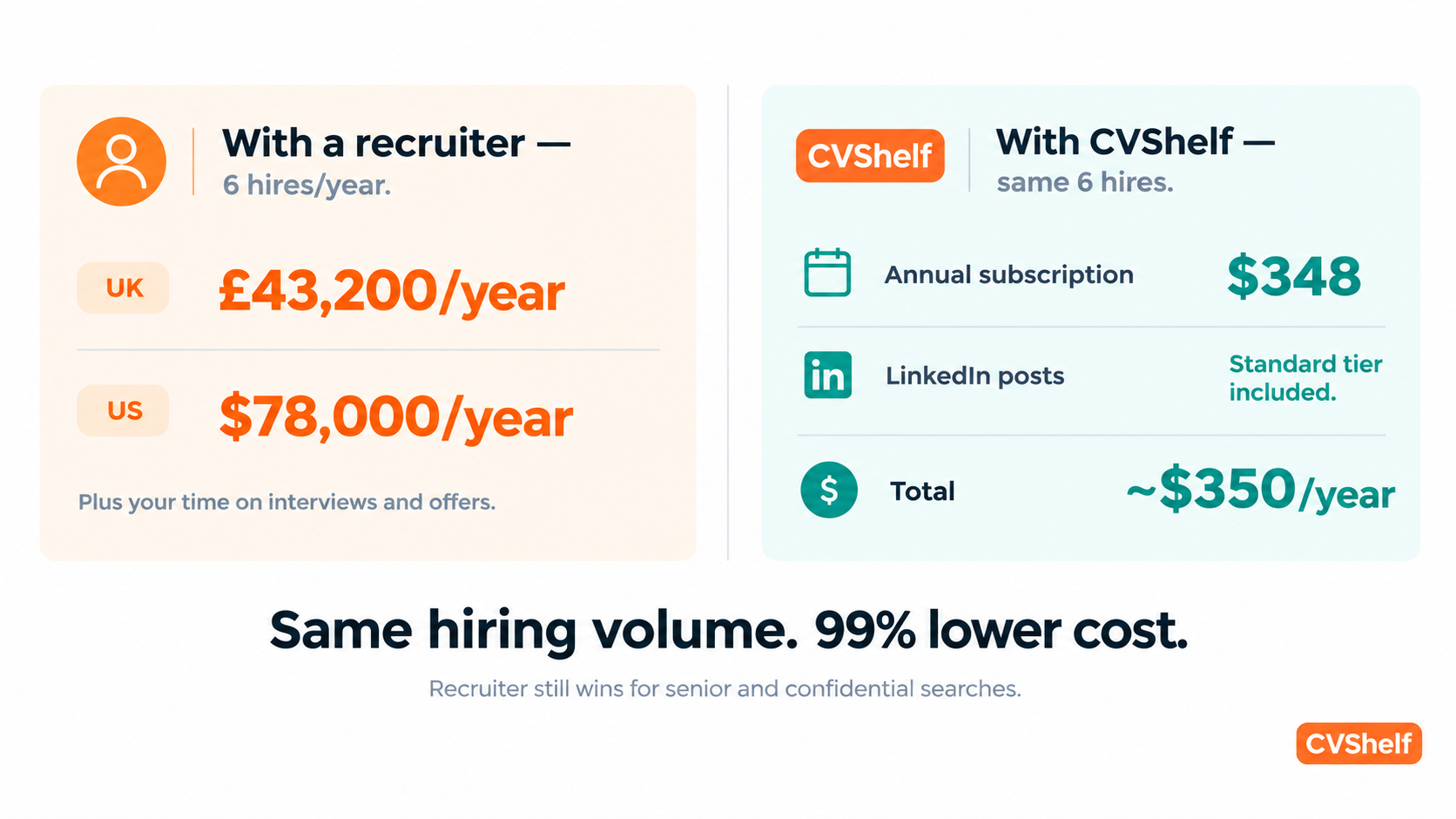
Agency Hiring Without Recruiter Fees
Contingency recruiters charge 15-25% of first-year salary for mid-level placements, that's $9,000 to $15,000 for a single account manager hire.