Hiring Without HR Department Small Business
Most small businesses handle hiring the same way: someone gets voluntold, reads a third of the CVs.
The email arrives on a Tuesday afternoon. New client, starts next month, needs an account team. Someone has to hire a project coordinator.
That someone is you.
By Thursday, the role is live. By the following Monday, there are 140 applications in a shared folder. You have three client deadlines this week and a team standup in 20 minutes.
The folder sits there.
Why This Keeps Happening
Small businesses don't have a hiring function. They have whoever is least busy when a role opens, which is usually an ops manager, a studio lead, or the founder themselves, operating with no standing process and a full workload.
Every hire starts from scratch. What criteria matter, where to post, how to evaluate the pile, who makes the final call. These decisions get made in real time, under pressure, alongside everything else. There's no muscle memory. No rubric from last time. No shortlist template.
And because it only happens a few times a year, nobody builds the process between cycles. The next role opens, the same chaos runs again, and it still falls on whoever was available.
What It Costs When It Goes Wrong
The slow hire has two costs. One is visible. One isn't.
The visible cost: the role stays open for three weeks while your team covers the gap. Someone who was at 90% capacity is now at 110%. Quality at the edges slips. Deadlines get close.
The cost that doesn't show up in any report: the client relationship.
If the role opened because you won new business, the client has expectations set in the pitch. They expect a capable team on their account from day one. When the AM or coordinator role is still being filled in week two of the relationship, the client feels the understaffing before they can name it. Response times are slower. Strategy calls get pushed. The energy from the pitch starts to bleed out.
Early churn almost never traces back to the quality of the creative work. It traces back to the first 60 days of the relationship and whether the client felt like they were being looked after.
There's also the candidate side. Good mid-level marketing professionals are in two or three processes simultaneously. They accept the fastest reasonable offer. An agency that takes three weeks to reach a decision is competing for whoever is still available, not whoever was strongest.
A Better Way to Handle It
Four steps. All of them doable before the week is out.
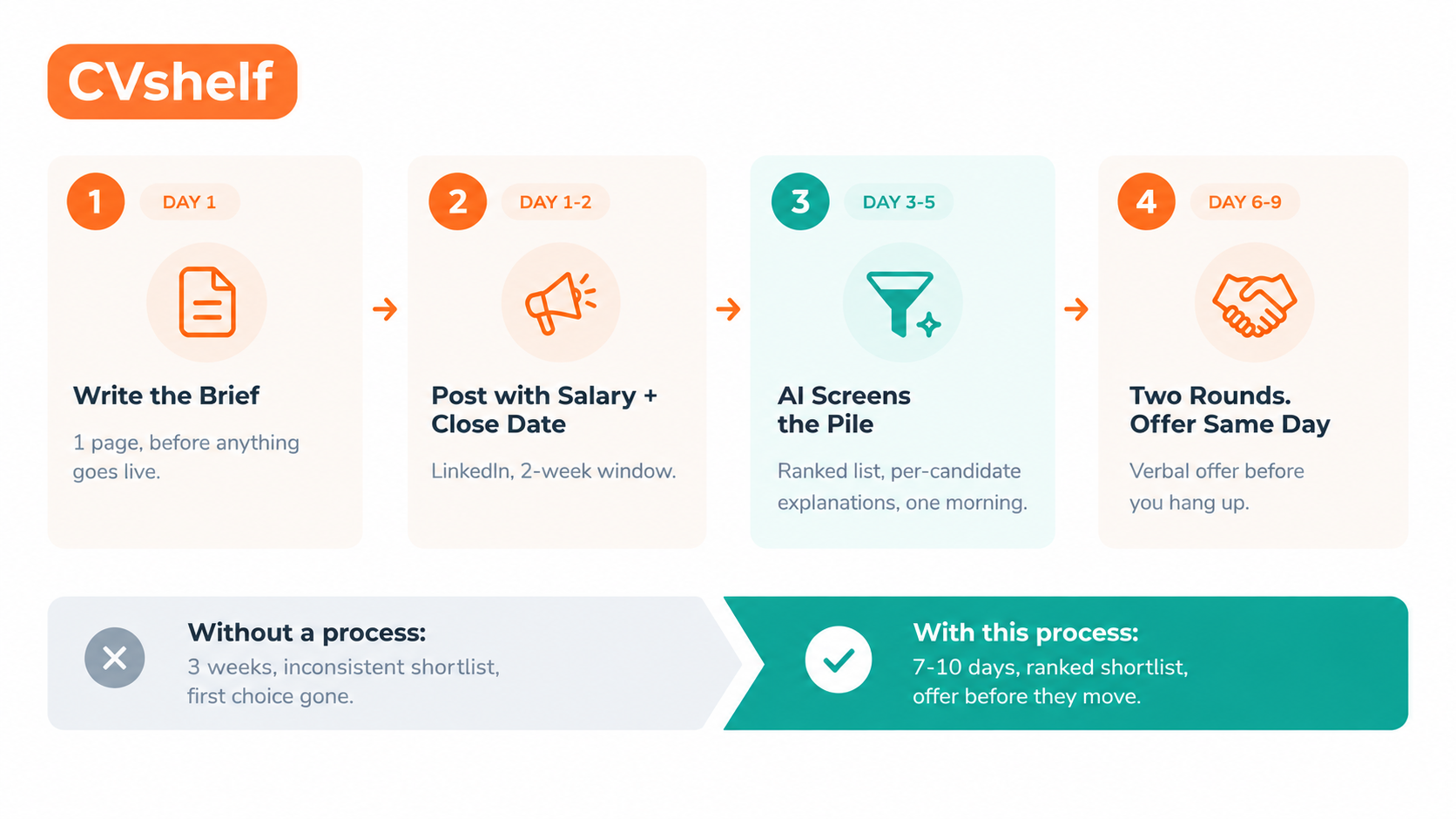
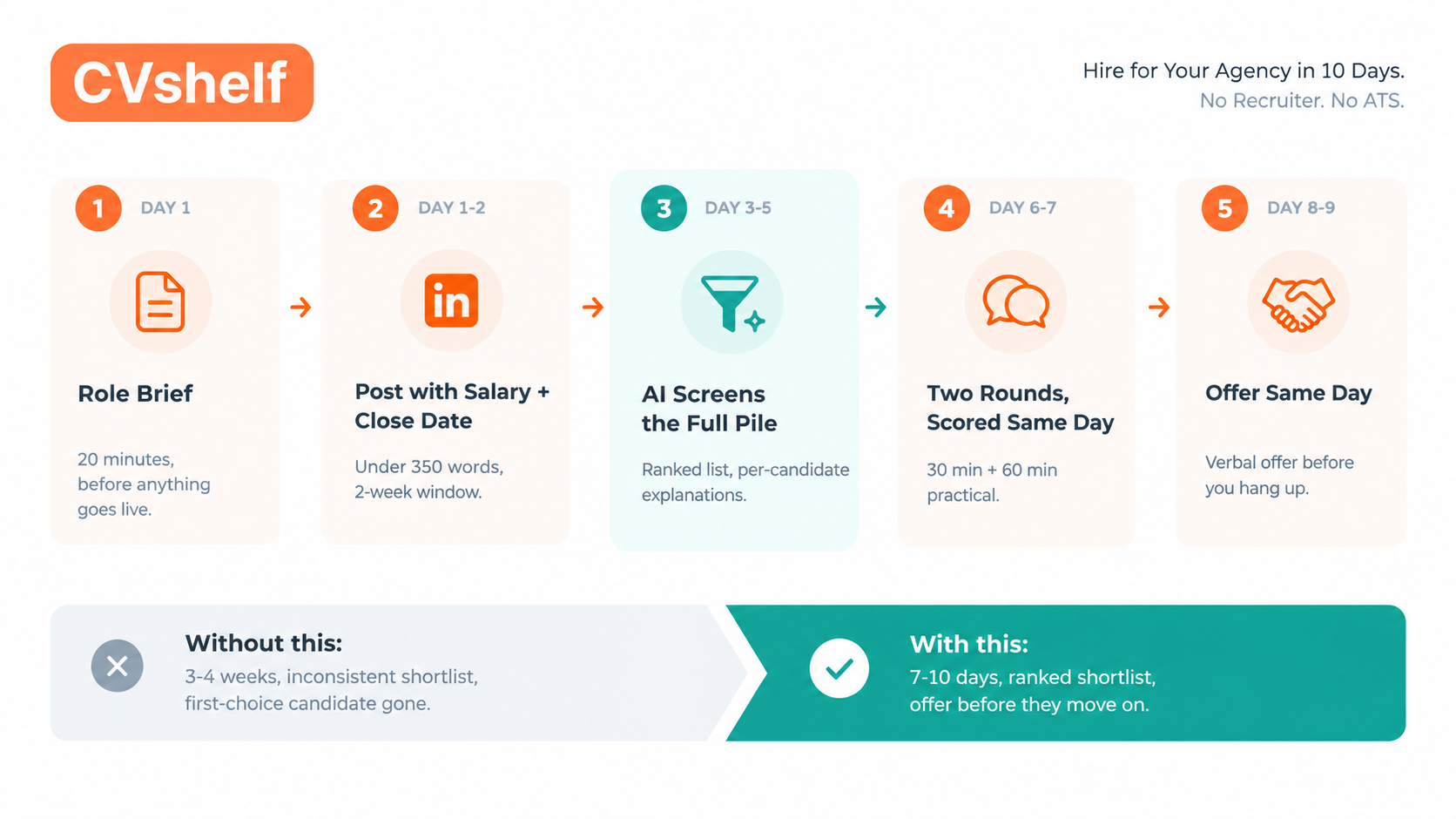
Write the brief before anything goes live. One page. What does this person do in their first 90 days? What are three actual non-negotiables, not a wishlist, genuine dealbreakers? What's the salary? This brief becomes the job description, the screening criteria, and the shared reference point if anyone else needs to be involved.
Post on LinkedIn with a close date and a visible salary. Keep the JD under 350 words. Candidates who can't see a salary range either skip the listing or invest time only to find out late that it doesn't work. A close date two weeks out means you collect a batch and process it once, rather than applications trickling in indefinitely.
Use AI to rank the full pile. When the close date hits, upload everything to a screening tool, paste in the job description, and get a ranked list with a per-candidate explanation. You review the top ten to fifteen with your full attention. The rest is handled. The screening that would take a week of fragmented reading takes one focused morning.
Two interview rounds, offer same day as the final. A 30-minute first call, a 60-minute second with something practical. Agree on salary and start date internally before the second round. If the final conversation goes well, make the verbal offer before you hang up.
Where CVShelf Removes the Bottleneck
The step that eats the most time is reading the pile. CVShelf handles it.
Paste in the job description or pull it from LinkedIn. Upload the CVs as a bulk batch, PDFs, Word files, a zip of everything. CVShelf reads every application against the role criteria and returns a ranked list with a short explanation per candidate: what the AI found, what it flagged, why the ranking landed where it did.
The explanation matters specifically for non-recruiters. You're not interpreting a score. You're reading a reasoned recommendation and deciding whether you agree. A reviewer with no hiring background can work through the top fifteen candidates in under an hour and produce a shortlist they can defend.
For small agencies and businesses building out a more complete hiring setup, the guide to hiring platforms designed for digital marketing agencies covers the full process end to end.
CVShelf starts at $29/month. No setup call.
FAQs
Q1. How do small businesses hire without an HR manager?
They write a brief before the role opens, post on one or two job boards with a visible salary and a close date, use an AI screening tool to process inbound applications, run two interview rounds, and make a fast offer. The whole process takes seven to ten days when each stage has a clear owner and a clear deadline. The mistake most small businesses make is treating each hire as an ad hoc event rather than a repeatable sequence.
Q2. Is it legal to hire without an HR team?
Yes. There's no legal requirement to have an HR department to hire employees. Employment law still applies, discrimination protections, right-to-work checks, written contracts, and those obligations rest with the business regardless of whether it has HR staff. If you're using AI screening tools, specific disclosure and record-keeping requirements apply in some US states and the UK. Check the requirements for your jurisdiction before deploying any AI tool in hiring.
Q3. What tools help with hiring if you don't have HR?
At minimum: a job board (LinkedIn covers most mid-level roles), an AI screening tool for the inbound pile (CVShelf), and a scheduling tool if coordinating interviews across multiple people becomes the bottleneck (Calendly). A full ATS isn't necessary for fewer than 15 to 20 hires per year. Start with the screening problem, that's where the most time goes.
Hiring without an HR team is manageable. A process you can pick up and run in an afternoon is all it takes.
Try CVShelf complimentary at cvshelf.com.
Keep Reading
More from AI Resume Screening.
Hiring Platform For Digital Marketing Agency
Most hiring platforms were built for companies with dedicated HR teams.
How Much Does A Recruiter Cost Vs AI Tool
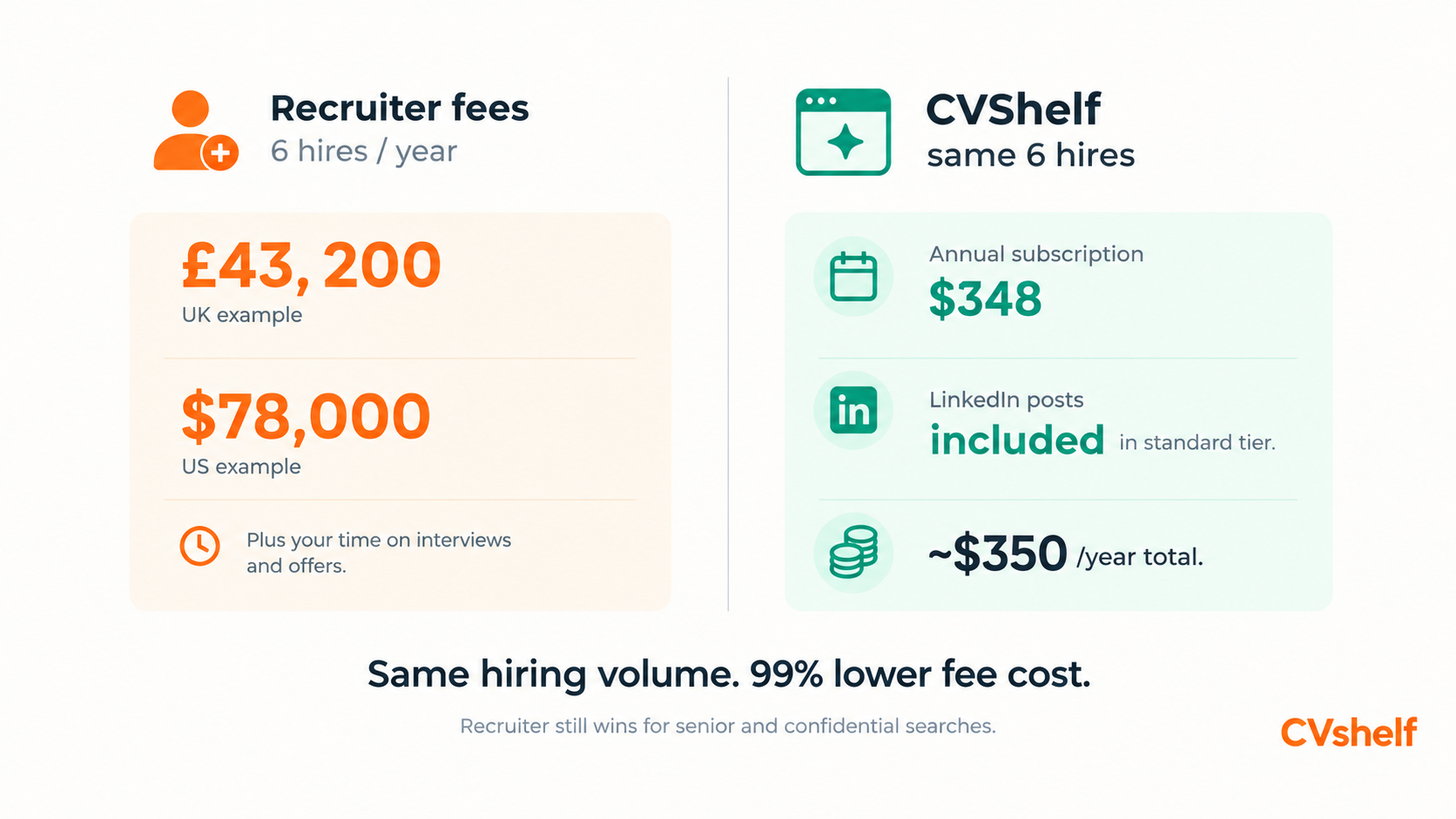
A contingency recruiter placing a mid-level account manager or strategist typically charges 15-25% of first-year salary.
Illinois AI Hiring Law Resume Screening
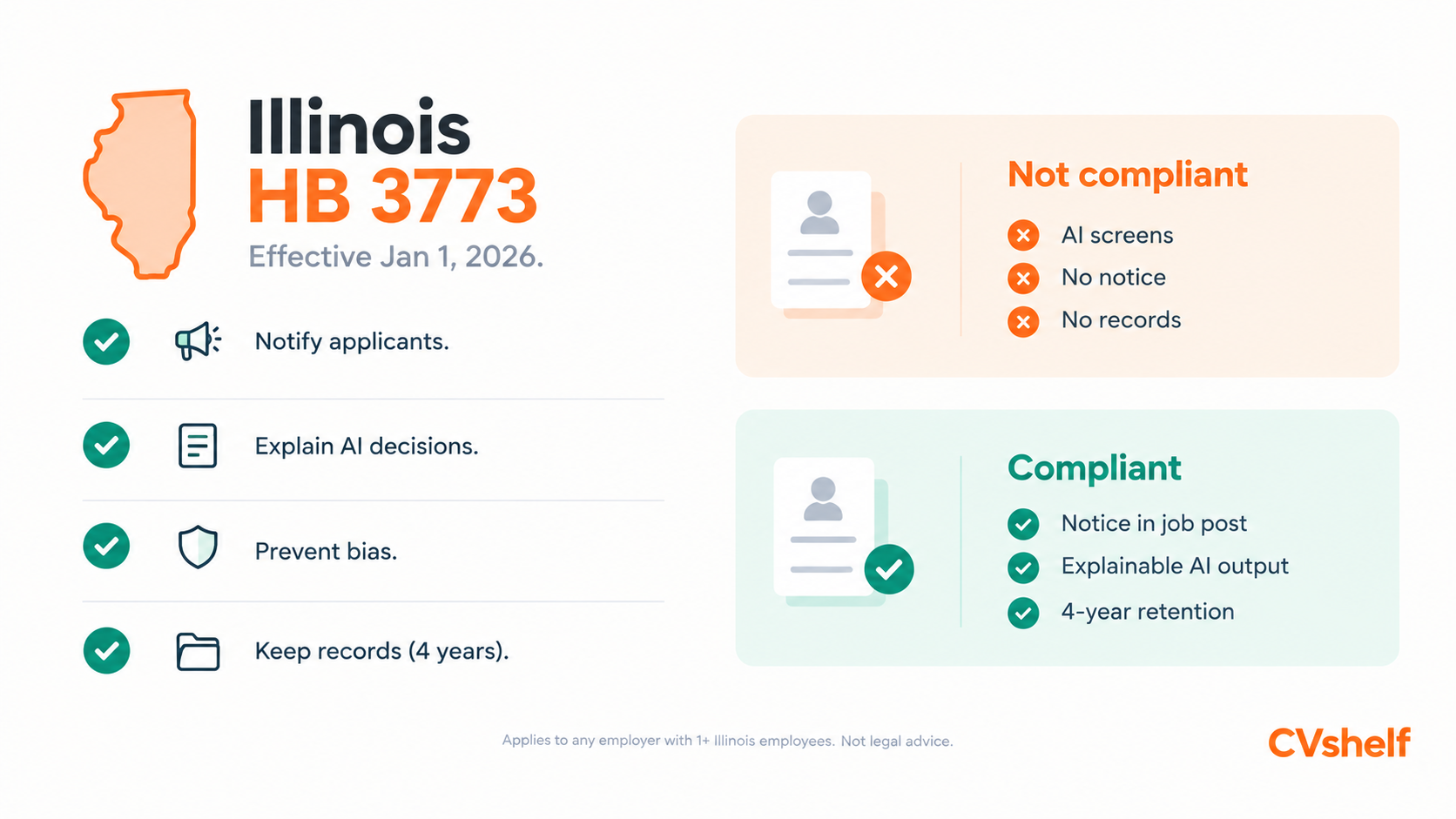
Illinois HB 3773, effective January 1, 2026, amended the Illinois Human Rights Act to require employers to notify applicants.