Illinois AI Hiring Law Resume Screening
Illinois HB 3773, effective January 1, 2026, amended the Illinois Human Rights Act to require employers to notify applicants.
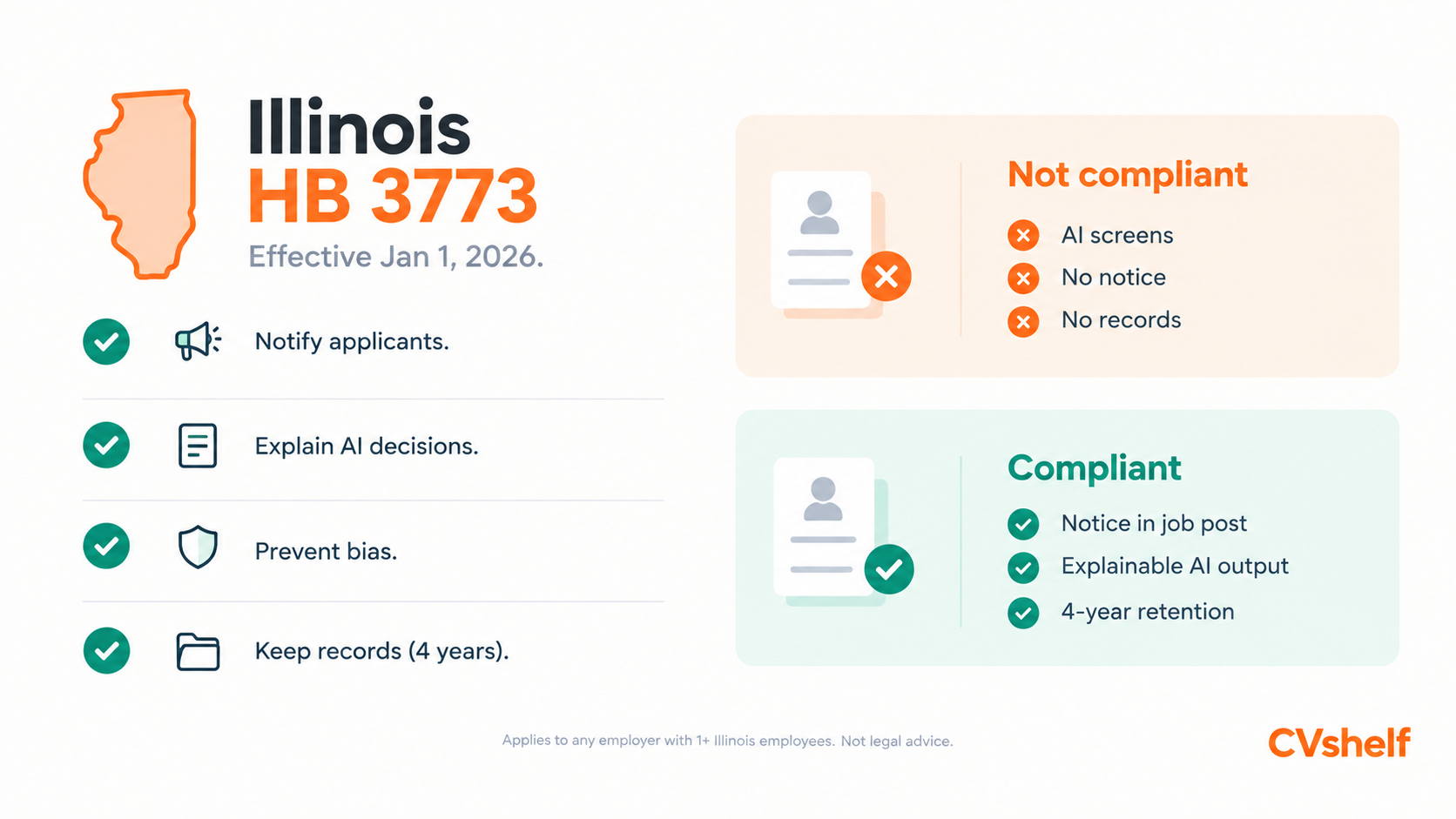
Effective January 1, 2026, Illinois House Bill 3773 amended the Illinois Human Rights Act to require employer notice when AI influences or facilitates, employment decisions, including resume screening. The coverage threshold should get every small employer's attention: the Illinois Human Rights Act has applied to employers with one or more employees working in Illinois since 2020.
If you hire people based in Illinois and use any AI-assisted tool that touches a resume, a job ad, or a candidate ranking before a human makes the final call, this law applies to you.
The Fuller Context
Employers must notify both current employees and job applicants if AI is used to influence or facilitate a covered employment decision. Using AI for recruitment, hiring, promotion, discipline, discharge, or setting the terms and conditions of employment triggers this notice. Examples of AI use requiring notice include computer-based assessments or games used to predict skills, automated resume screening tools, video or audio analysis in interviews, and targeted job advertisements.
Employers are required to preserve records of AI use, including all notices and disclosures, for a period of four years.
The law prohibits any AI use that produces discriminatory outcomes based on protected characteristics, race, gender, age, disability, and others covered under Illinois law. This isn't new principle; it extends existing anti-discrimination obligations to AI-assisted decisions.
What the law does not require: Illinois employers should treat bias testing as voluntary best practice for now. There is currently no mandatory independent bias audit requirement for private employers in Illinois, unlike NYC's Local Law 144. The withdrawal paused the rules, not the law, the IDHR released draft implementing regulations that were subsequently withdrawn for revision. The substantive obligations (notice, non-discrimination, recordkeeping) remain in force.
Illinois also enacted the Artificial Intelligence Video Interview Act in 2020, which separately governs AI analysis of video interviews, candidates must be notified, consent obtained, and annual bias testing conducted if AI is used to evaluate video interviews.
Related Questions
Q1. Do I have to tell job applicants in Illinois that I'm using AI to screen their resumes?
Yes. HB 3773 requires employers to provide notice when AI is used to influence or facilitate hiring decisions, including resume screening. The notice must identify the specific employment decisions the AI influences. This applies to any employer with one or more Illinois employees, with no size exemption.
Q2. What counts as AI under the Illinois hiring law?
The law defines AI broadly, it includes any machine-based system that infers how to generate outputs from inputs received, and generative AI. Resume screeners that filter or rank candidates by keywords or patterns are covered. Practically, if your hiring tool makes any automated judgment about a candidate, it falls within scope.
Q3. Does the Illinois AI hiring law apply to small agencies?
Yes, Since 2020, the Illinois Human Rights Act has applied to employers with one or more employees working in Illinois. There is no headcount exemption. If you have even one Illinois-based employee and use AI in hiring, the notice and non-discrimination requirements apply.
Q4. What records do I need to keep?
Four years of records related to AI use in employment decisions, including the notices provided, the AI tools used, and the decisions they influenced. Check your screening tool's data retention settings to ensure nothing is deleted within that window.
What This Means for Your Screening Process
Three practical steps that put a small agency on the right side of Illinois law without needing a legal team.
Add a disclosure to your job postings and application process. State that AI tools are used in initial resume screening and identify what decisions that AI influences, for example, which candidates are shortlisted for review. A sentence or two in the job description or application form covers this. Make it specific enough to satisfy the "identifying the specific AI tools or decisions" standard the law references.
Use a tool that produces explainable output. The Illinois law's anti-discrimination requirement is easier to satisfy if you can demonstrate how candidates were evaluated. A screening tool that produces per-candidate explanations, what the AI found, what it flagged, why the ranking landed where it did, gives you something to audit and defend. A black-box score does not.
Keep records for four years. Document the AI tools used, the notices provided to applicants, and that a human reviewed the shortlist before decisions were communicated. A simple log is sufficient.
For agencies building a compliant process around this, the guide to CV screening tools that actually fit a small agency covers the practical setup alongside the compliance requirements.
Try CVShelf complimentary at cvshelf.com.
Illinois has more AI hiring compliance requirements in force than most small agencies realise. The obligations are manageable. Ignoring them isn't.
This post is not legal advice. Speak to an employment lawyer before making compliance decisions for your business.
Keep Reading
More from AI Resume Screening.
Reduce Time To Hire For Agencies
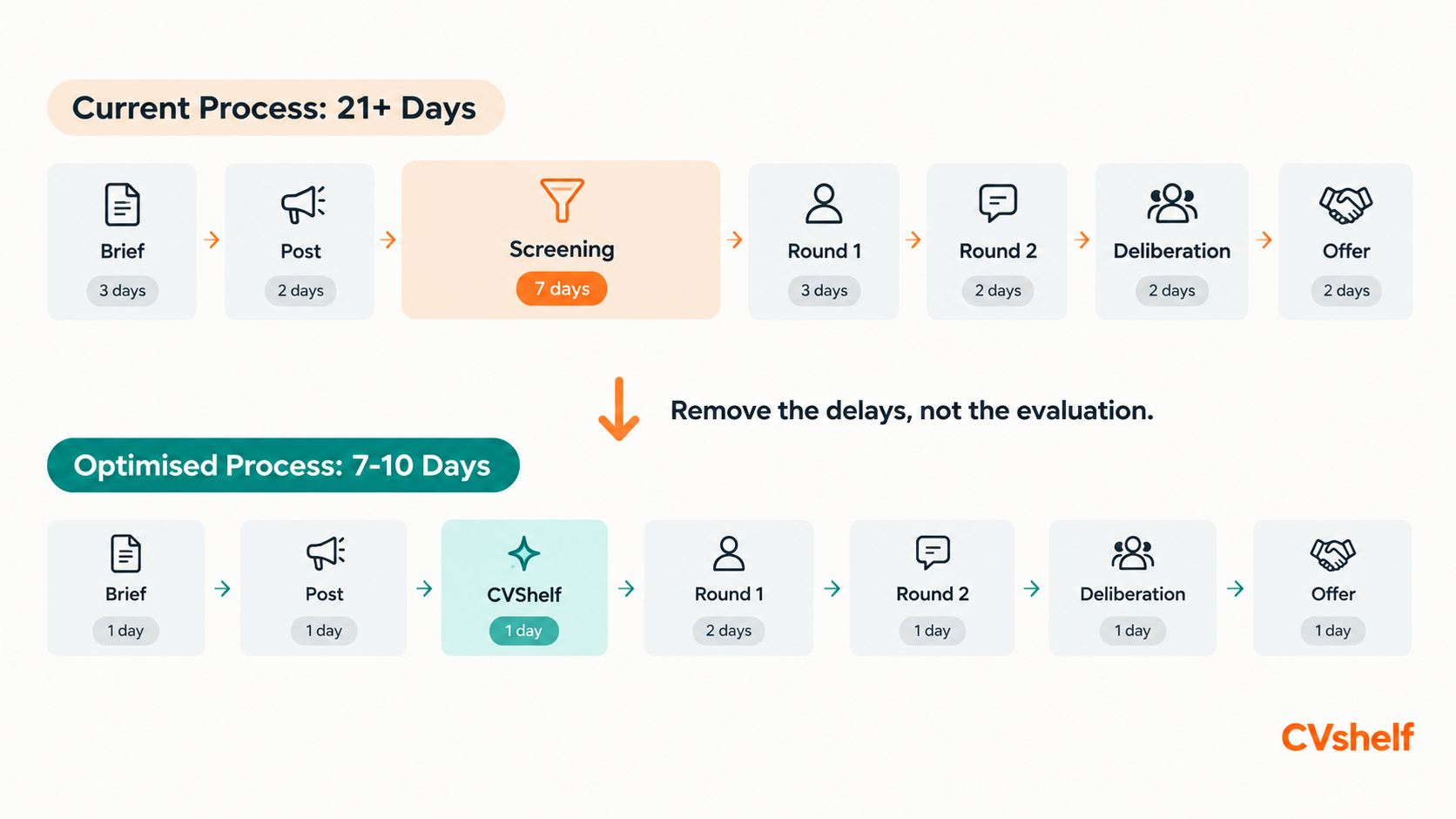
The average agency hiring process takes three to four weeks.
CV Screening Tool For Small Agency
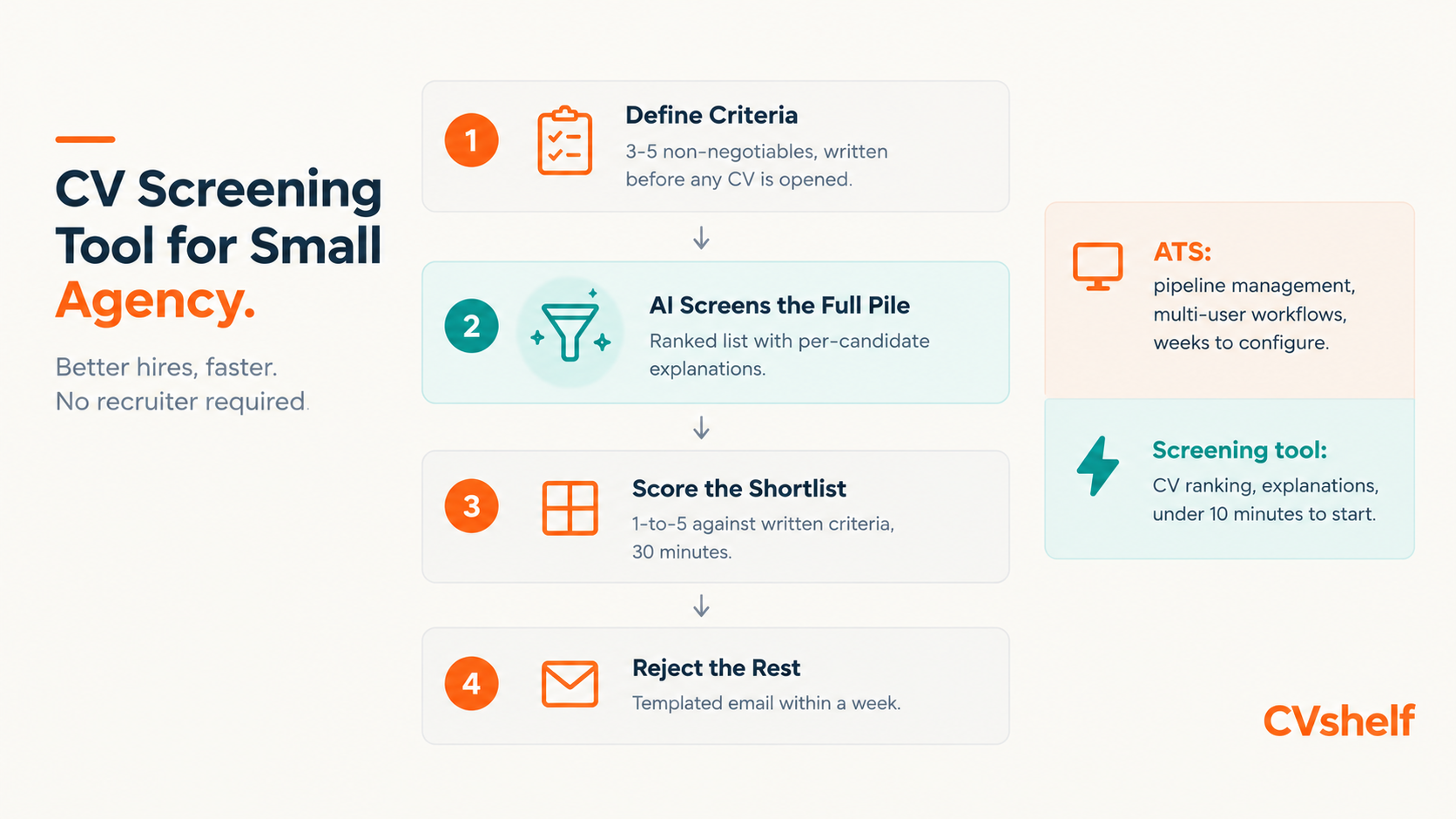
Most CV screening tools were built for companies with dedicated recruiters and continuous hiring pipelines.
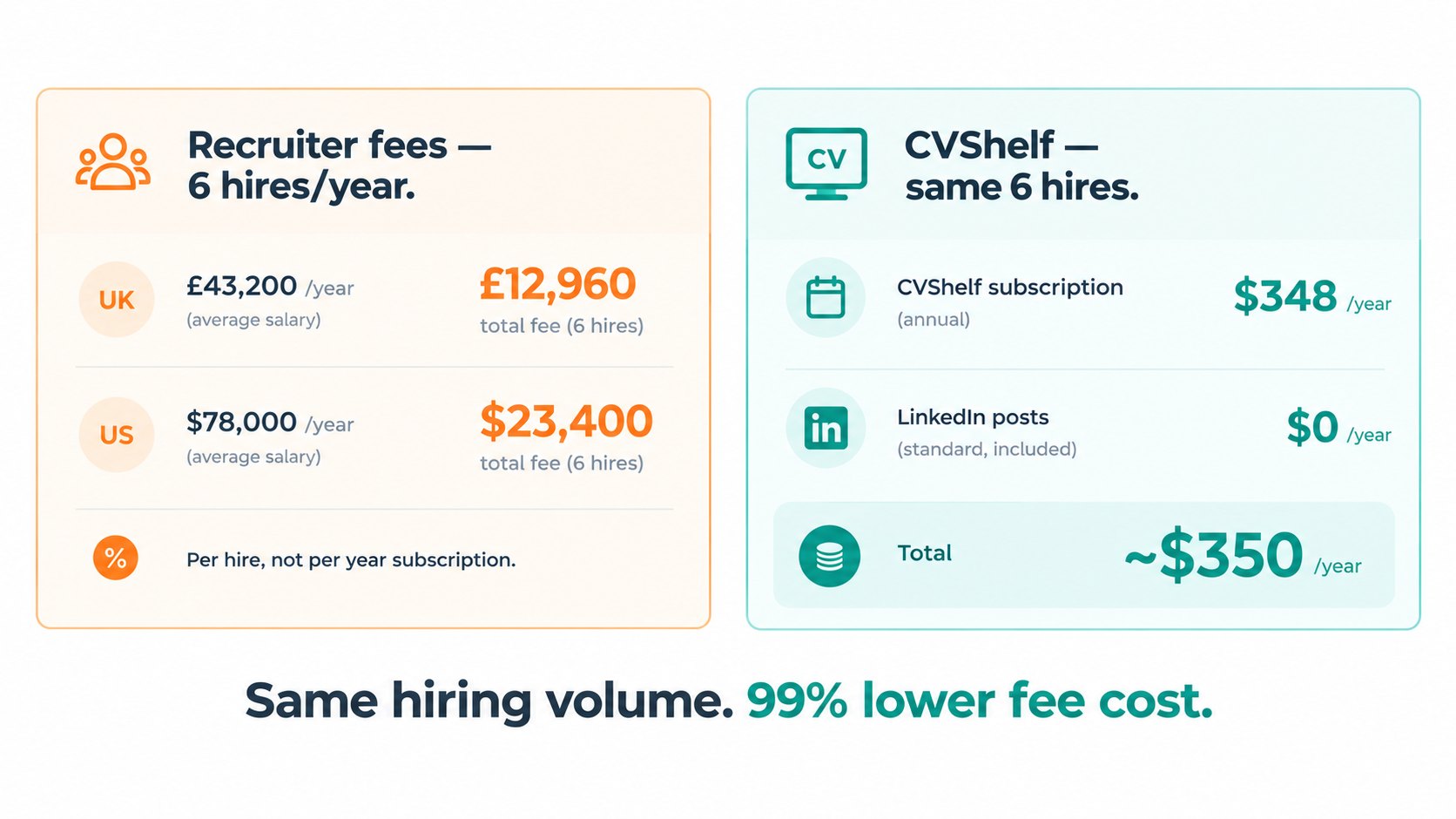
Agency Recruiter Fees Vs Software
A contingency recruiter placing a mid-level account manager.