
How To Hire An Account Manager Quickly
Account manager is the role agencies hire most urgently, usually right after a client win and usually without enough time to do it properly.
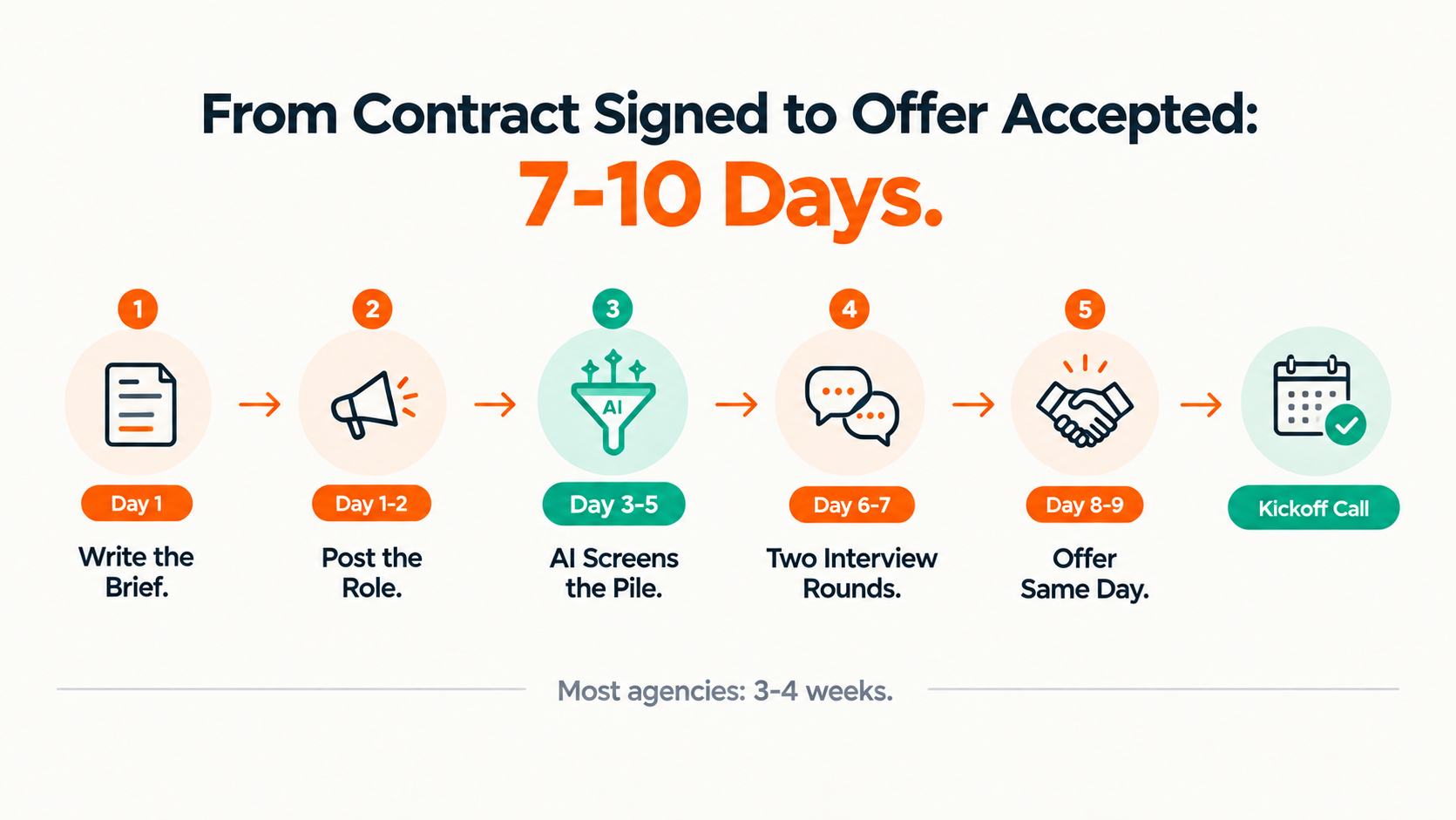
Tuesday afternoon. You just signed a new client. The kickoff call is booked for three weeks out. You need an account manager.
You post the role Wednesday morning. By Thursday, you have 160 applications and a proposal to finish.
The folder stays closed over the weekend.
Why This Keeps Happening
Agencies don't hire on a schedule. A new client comes in, a role opens, and whoever is least busy that week gets handed the hiring task alongside everything else they were already doing.
There's no warm pipeline. No standing process. No shortlist from last quarter you can pull from. Every AM hire starts from scratch, and the person running it is doing it between client deliverables.
That's not a people problem. It's a structure problem. And because it only happens three or four times a year, nobody ever fixes it between cycles.
What It Costs You When This Goes Wrong
The obvious cost is time. Less visible is what happens to the client relationship while the role stays empty.
When you win a new account, the client has expectations set in the pitch. They expect a capable team on their account from day one. When you're scrambling to hire in week two of the relationship, someone on your existing team absorbs the load. They stretch. Quality at the margins drops. The new client feels it.
Early churn isn't usually about the work itself. It's about the first 60 days, whether the agency showed up with the right team, stayed responsive, and kept the momentum from the pitch alive. An unfilled AM role makes all of that harder.
There's also the candidate side. Good account managers at this level are in two or three processes at once. They take the fastest reasonable offer. A three-week hiring timeline doesn't compete with a company that moved in ten days.
A Better Way to Handle It
Five steps. All of them doable this week.
1. Write the brief the day the contract is signed. One page. What does this person do in the first 90 days? What are the two or three non-negotiables, agency-side experience, specific channel knowledge, location or hybrid requirements? This brief becomes your screening criteria and your job description source material.
2. Post the same day or next morning. LinkedIn is the channel. Keep the job description under 350 words. Include the salary range, candidates who have to guess at pay either skip the listing or find out in round two and withdraw. Set a close date two weeks out.
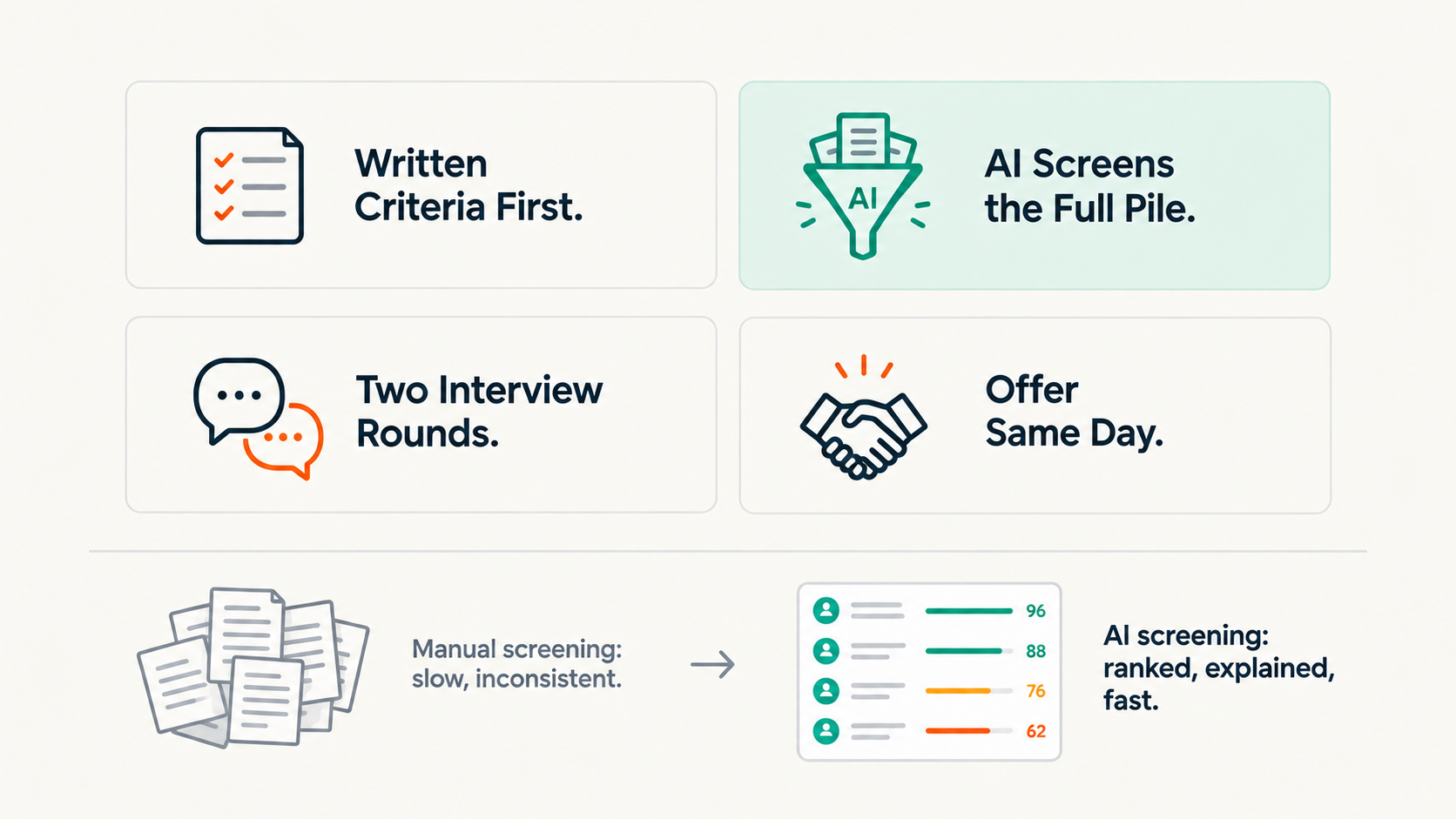
3. Screen with AI, not by hand. When the applications arrive, run them through a screening tool rather than reading manually. Paste in the job description, upload the pile, get a ranked list with an explanation per candidate. You review the top ten to fifteen. The tool handled the rest. For agencies building out a proper process around this, the breakdown of hiring software that actually fits a creative agency covers the full picture.
4. Two rounds only. A 30-minute first call to check basics and fit. A 60-minute second conversation with a practical element, a client scenario, a portfolio review, something that shows how they think under a bit of pressure. Anything beyond two rounds is testing scheduling coordination, not candidate quality.
5. Offer same day as the final interview. Have the salary, start date, and key terms agreed internally before the interview happens. When the conversation goes well, make the verbal offer before you hang up. Send the written offer the same day. Every day between final interview and offer is a day the candidate is talking to someone else.
Where CVShelf Removes the Bottleneck
The screening stage is where the week goes, not because anyone is slow, but because reading 160 applications properly takes time no founder has sitting around.
CVShelf takes your job description, runs it against a bulk upload of resumes, and returns a ranked list with a per-candidate explanation covering what the AI found and what it flagged. You review the top ten to fifteen with your full attention. The rest of the pile is handled.
The explanation layer matters specifically for non-recruiters. You're not interpreting a score. You're reading a note that says why this person ranked where they did, and deciding whether you agree. That's a task a founder or ops manager can do in 45 minutes rather than a week of fragmented reading.
CVShelf starts at $29 per month. No setup required.
FAQs
Q1. How many candidates should I interview for an AM role at my agency?
Five to eight first-round conversations is the right number. Beyond that, you're adding time without adding meaningful signal. If the top five from a well-structured shortlist all fall short in first rounds, the issue is usually in the screening criteria or the JD, not the interview count.
Q2. Is it realistic to hire an account manager in under two weeks?
Yes, with a structured process. The three-week timeline most agencies run isn't three weeks of evaluation. It's two or three days of actual evaluation spread across three weeks by delayed screening, slow feedback loops, and unnecessary interview rounds. Remove those gaps and the timeline compresses significantly.
Q3. What salary should I put in the job description for an AM role?
Put a range. Listings without salary ranges get skipped by candidates who have enough options to avoid the guessing game, which tends to be the strongest candidates. For agency AM roles in the UK, mid-level (3-6 years relevant experience) typically runs £32k to £45k in London, £26k to £38k outside. US agencies in major markets are broadly $55k to $80k at that level.
The contract is signed. The clock is running. Start the process the same afternoon.
Try CVShelf complimentary at cvshelf.com.
Keep Reading
More from AI Resume Screening.
Hiring Software for Creative Agencies
Most hiring software was built for companies with full HR teams, continuous recruitment pipelines, and IT departments to manage integrations.
CV Screening Software and UK GDPR
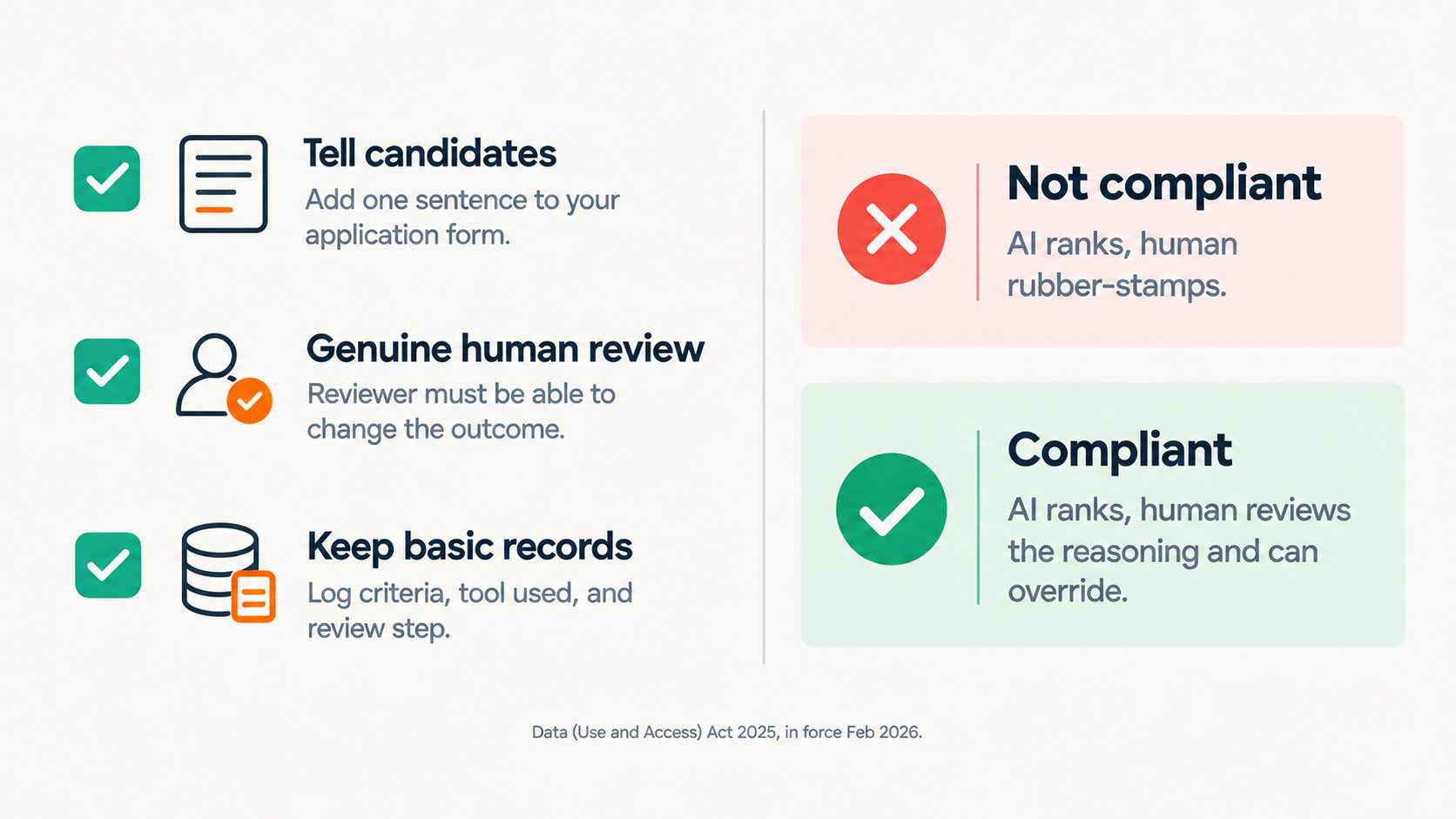
Using CV screening software in the UK means operating under UK GDPR's rules.
GDPR and AI Hiring for UK Marketing Agencies
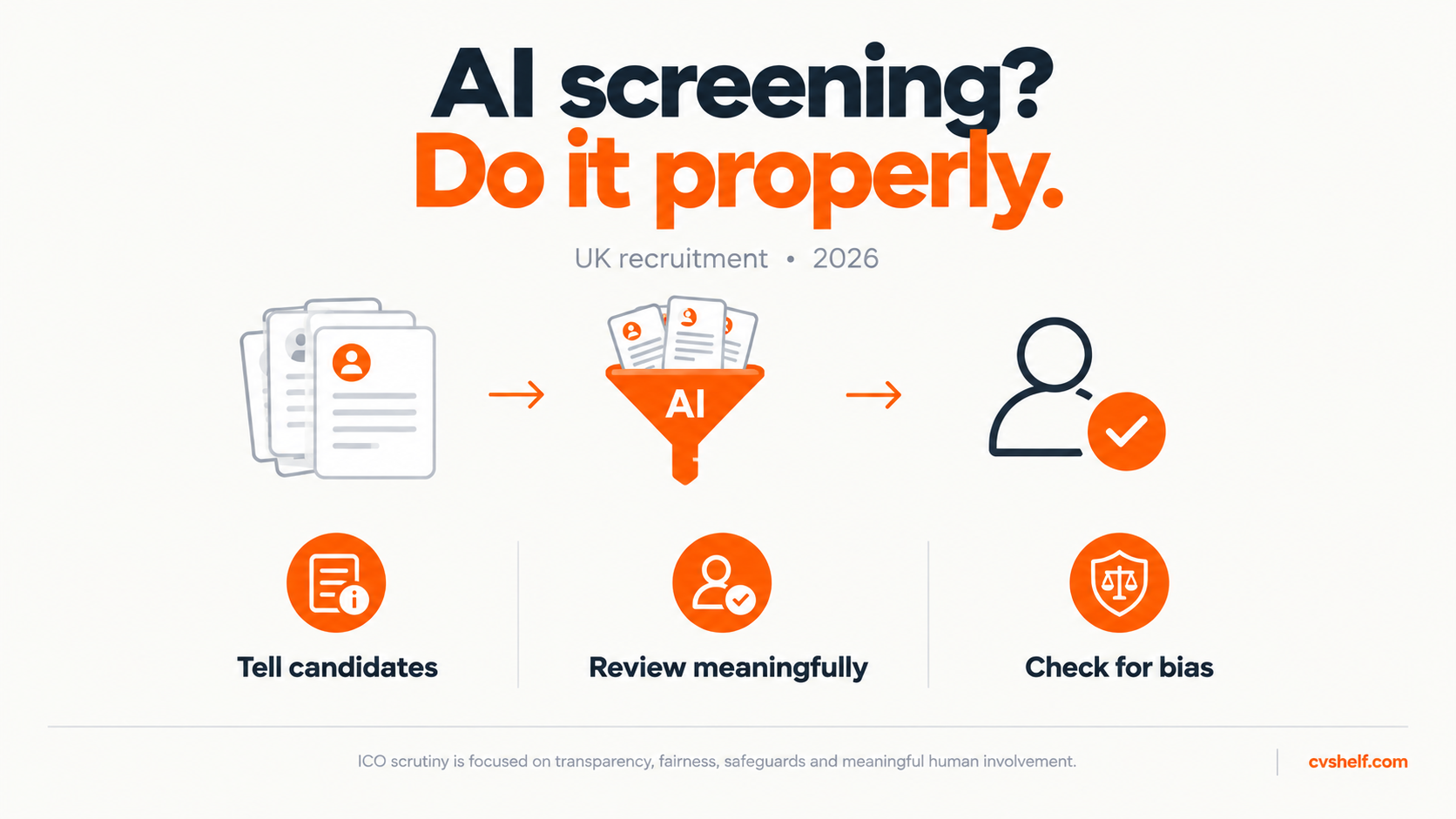
Using an AI tool to screen CVs at a UK marketing agency brings you under UK GDPR's rules on automated decision-making.