
How To Screen Applicants Without A Hiring Manager
At most small agencies, nobody owns the hiring brief.
It's Thursday. The new client signed on Monday and the account manager role went live the same afternoon. The MD's message is short: "Can you sort the hiring? I'm in pitches all week."
You open the folder. 130 applications. You have no idea what the department head actually wants, because the department head is on a client call until Friday.
So you start reading CVs, guessing at what "good" means.
Why This Keeps Happening
At a small agency, the hiring manager role is split three ways and owned by nobody.
The department head knows what the role needs but is buried in delivery. The MD signs off on the hire but has no time to read applications. The ops manager has the time, or at least the closest thing to it, so the pile lands there.
The problem is that screening needs a definition of good, and the person screening is not the person who holds it. So you either guess, or you wait for a conversation that keeps slipping. Both options burn days.
This isn't a failure of any one person. It's a gap in how the work is handed off. Nobody wrote the brief, so nobody can screen against it.
What It Costs You When It Goes Wrong
Guessing produces a shortlist the department head rejects in the first interview. You restart, and the role that should have taken ten days takes four weeks.
Meanwhile the new client is in week two of the relationship with a gap on their account. Response times are slower. The strategy call gets pushed. The pitch energy fades. Early client churn rarely traces to one bad deliverable. It traces to the first 60 days and whether the client felt properly staffed.
The candidate side matters too. A good mid-level account manager is usually in more than one process. If your screening stalls for two weeks while you wait on a brief, they accept someone else's offer.
A Better Way to Handle It
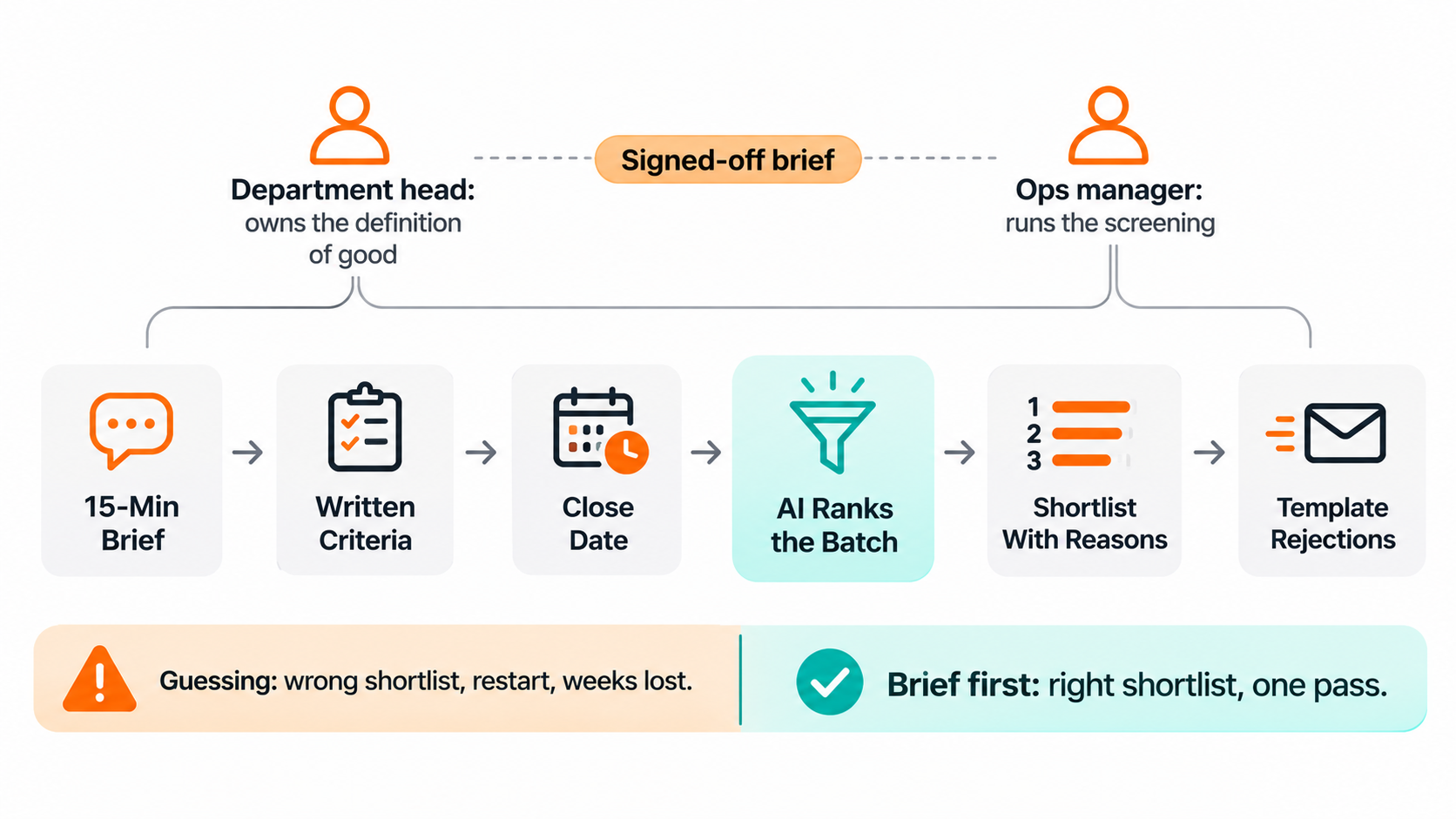
Six steps, all doable this week, none of them needing a hiring manager in the room.
1. Get a 15-minute brief, in writing. Catch the department head between calls. Ask three questions: what does this person do in their first 90 days, what are the three dealbreakers, and what's the salary range. Send the answers back in a short message and ask them to reply "yes" or correct it. Now you have a brief with their sign-off.
2. Turn it into written criteria. Three to five specific non-negotiables. "Agency experience" is vague. "Three years managing client accounts at an agency" is a criterion.
3. Post with a close date. Two weeks out, with the salary visible. The pile arrives as one batch you can process in a single session.
4. Rank the full batch with AI. Paste in the criteria, upload the CVs, review the ranked list with its explanations. Read the top ten to fifteen properly.
5. Send the shortlist with reasons. Give the department head eight names, each with a one-line reason. They choose who to interview. You've done the screening, they make the call.
6. Reject the rest with a template. Two sentences, sent within a week.
Where CVShelf Removes the Bottleneck
Step four is where the week disappears, and it's the step CVShelf handles. Paste in the job description or the criteria from your brief, upload the CVs as a batch, and get a ranked list with a short explanation per candidate: what the AI found, what it flagged, and why the ranking landed where it did.
That explanation is what makes this work without a hiring manager. When the department head asks why a candidate made the shortlist, you have an answer that isn't "the software said so." You can read the reasoning, agree or override, and hand over names with context. For the wider setup around this, the guide to an AI recruitment tool for small agencies covers the full process.
CVShelf starts at $29/month. No setup call.
FAQs
Q1. Who should screen applicants if there's no hiring manager?
Whoever has the time can do the reading, but someone with authority over the role must sign off on the criteria. Get a short written brief from the person who will manage the new hire, then screen against it. The screener does the work, the future manager owns the definition of good.
Q2. How do I screen CVs when I don't know what the department wants?
Don't guess. Ask three questions: what does this person do in the first 90 days, what are the dealbreakers, and what's the salary range. A 15-minute catch-up or a three-line message is enough. Anything you screen without that brief is a coin flip.
Q3. Can AI screen applicants without a hiring manager involved?
It can rank them, but it's only as good as the criteria you give it. A vague job description gives a vague ranking. Use the signed-off brief as the input, and keep a human making the final shortlist and interview decisions.
No hiring manager doesn't mean no process. Get the brief in writing, screen against it, and let the person who owns the role make the final call.
Try CVShelf complimentary at cvshelf.com.
Keep Reading
More from AI Resume Screening.
AI Recruitment Tool For Small Agencies
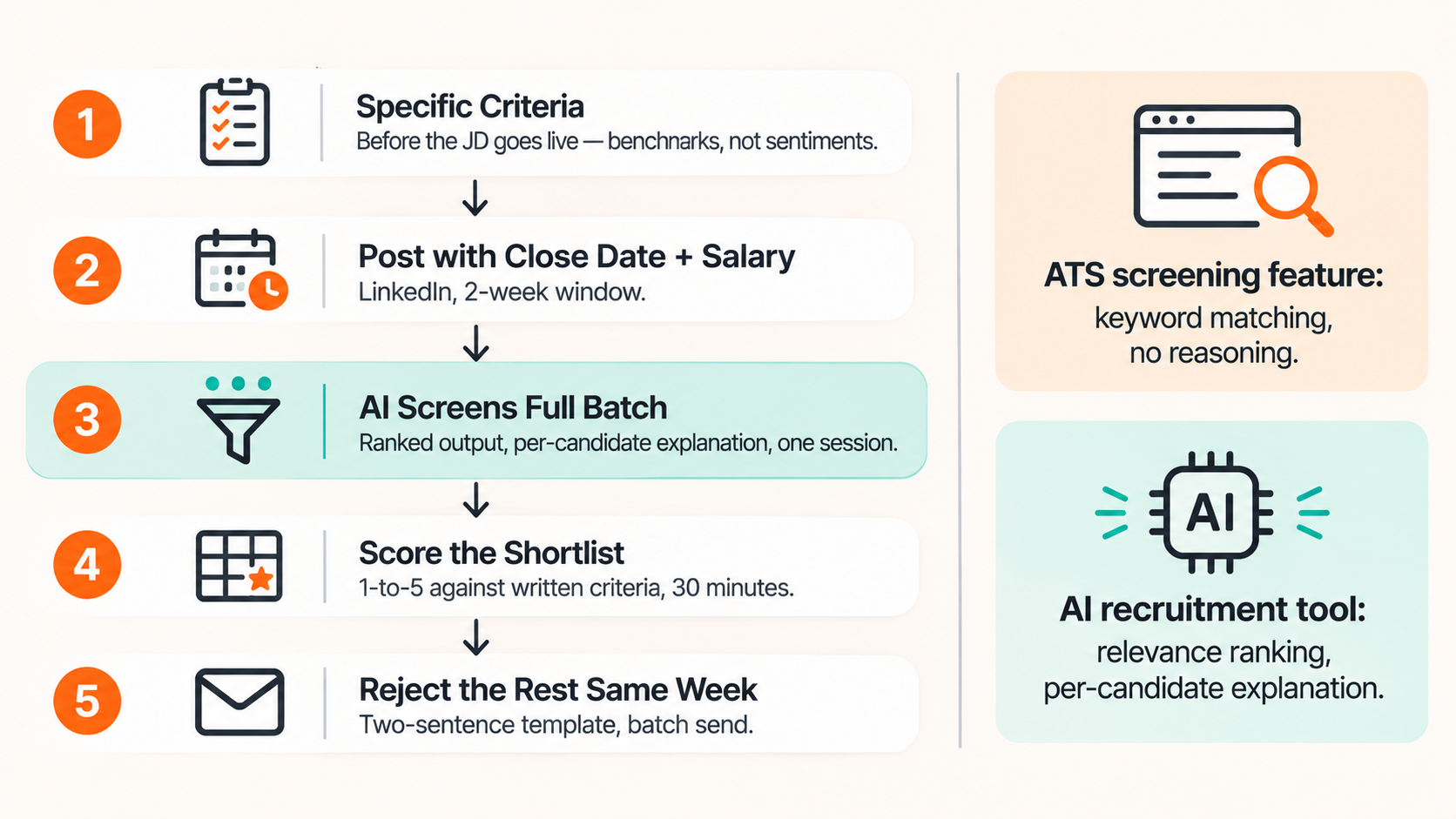
An AI recruitment tool for a small agency needs to do one thing well: take a large pile of inbound CVs
Recruitment Software UK Small Agency
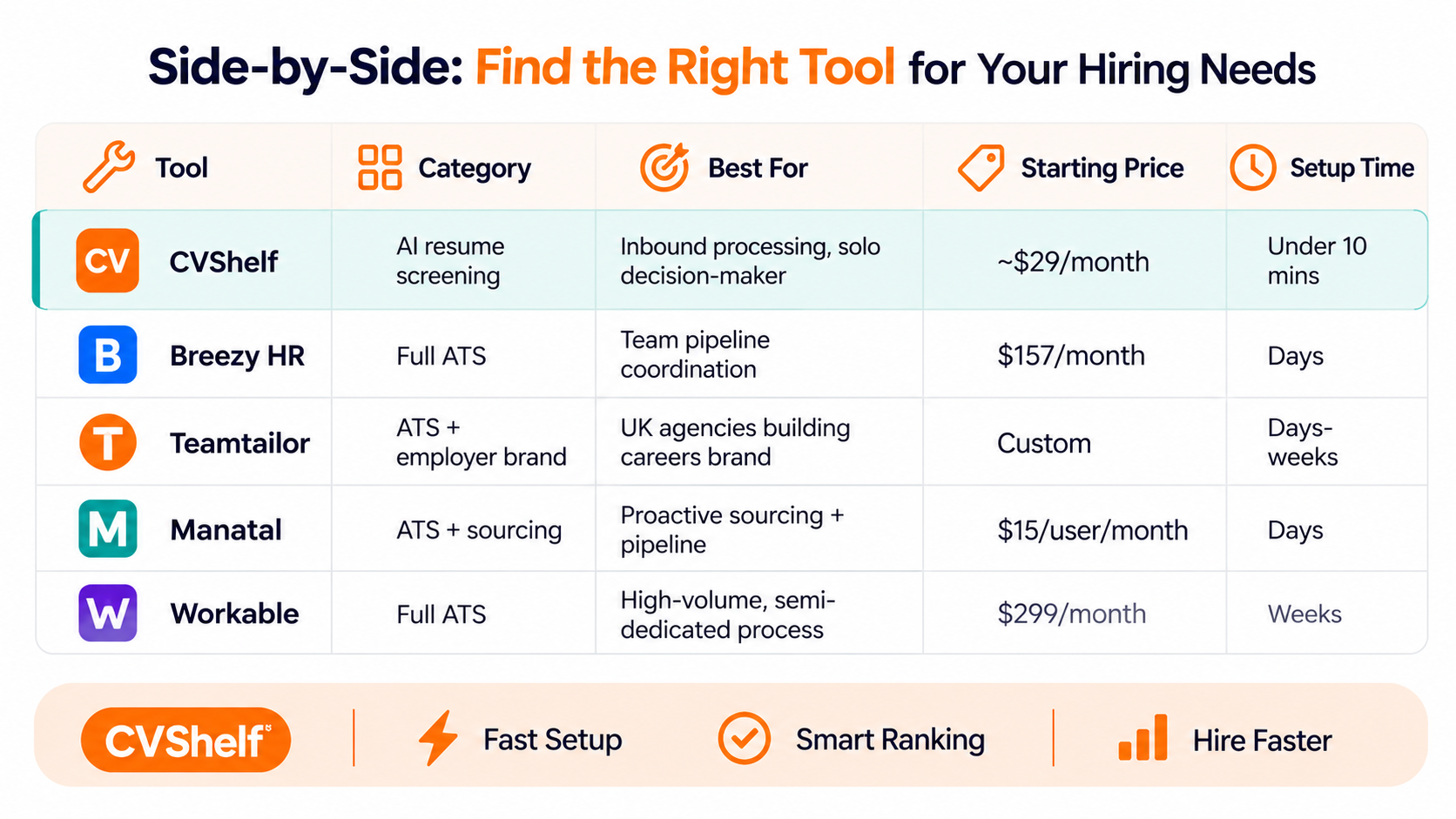
This post is for COOs and ops managers at 10 to 100-person UK digital marketing.
How Many Applicants For A Marketing Coordinator Role
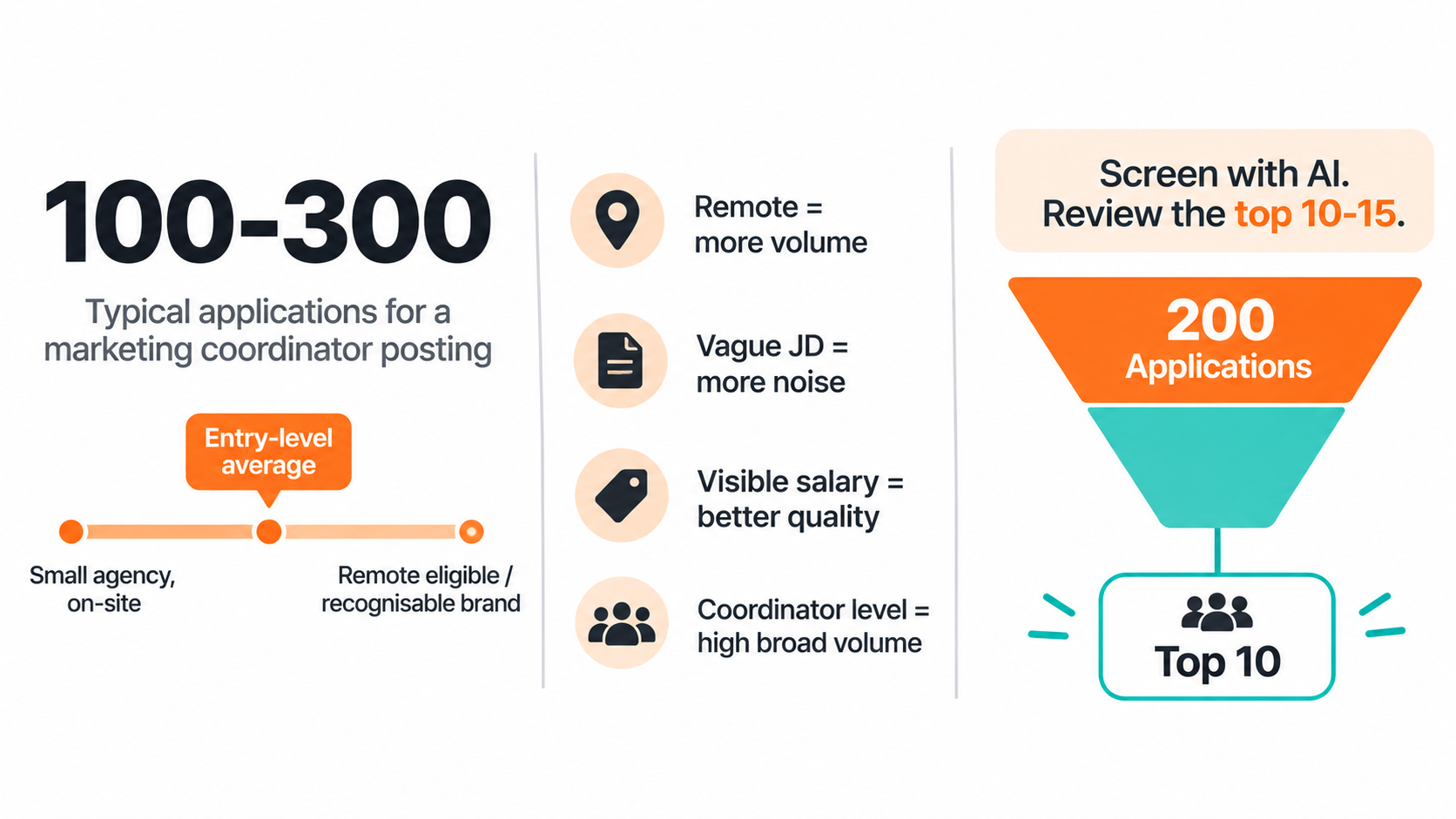
A marketing coordinator role typically attracts 100 to 300 applications on LinkedIn.