AI Hiring Compliance USA 2026
Several US states now have live requirements around AI tools used in hiring, covering disclosure, bias auditing, and recordkeeping.

In simple terms: if you use AI to screen resumes or make hiring decisions in Illinois, New York City, or California, there are rules in place that affect you. Most of them require disclosure, telling candidates that AI was involved, and some require that the tool you're using has been tested for bias. Connecticut adds new requirements from October 2026 onward. For agencies outside these jurisdictions, and for agencies below certain revenue thresholds, the picture is lighter.
This is not legal advice. For decisions that affect your business, talk to an employment lawyer.
What the Law Actually Covers
Here is what is confirmed in effect or imminent as of this writing.
Illinois (effective January 1, 2026). The amended Illinois Human Rights Act requires employers to notify applicants that AI will be used in hiring, recruitment, or employment decisions. It also makes explicit that discrimination through AI tools is unlawful. This applies regardless of company size.
New York City (effective since 2023, still in force). Local Law 144 prohibits using automated employment decision tools for hiring or promotion decisions in NYC unless the tool has undergone an independent bias audit within the past year. Audit results must be publicly available. This applies to employers and employment agencies operating in the city.
California (effective January 1, 2026 for CCPA-covered businesses). The California Privacy Protection Agency's Automated Decision-Making Technology rules require advance notice to candidates if ADMT is used, along with explanations of how the tool works. [VERIFY: confirm the $25M revenue threshold for CCPA coverage, small agencies below this threshold are likely exempt from this specific rule, but verify before assuming.] Separately, California's automated decision systems employment regulations (effective October 1, 2025) apply to software that screens resumes, grades interviews, or administers tests, requiring that such tools not produce unlawful disparate impact. Employers must retain employment records, including data from automated systems, for a minimum of four years.
Connecticut (effective October 1, 2026). The Connecticut AI Responsibility and Transparency Act introduces an automated employment decision technology framework. Core obligations phase in between October 2026 and October 2027, including anti-discrimination provisions and disclosure requirements. [VERIFY: confirm precise employer size thresholds and which obligations apply from October 1, 2026 vs October 1, 2027.]
Colorado (effective June 30, 2026). The Colorado AI Act was delayed from its original February 2026 date. It covers high-risk AI systems used in consequential decisions, including employment, requiring impact assessments, transparency disclosures, and human oversight. [VERIFY: confirm whether the proposed SB 25-189 repeal/replace measure passed before publishing.]
Texas (effective January 1, 2026). The Texas Responsible AI Governance Act takes a lighter approach. It prohibits intentional AI-based discrimination but does not require bias audits or disclosure to candidates. Employers have a 60-day notice and cure period for violations.
Federal direction. A March 2026 National AI Legislative Framework recommended federal preemption of state employment AI requirements, and a December 2025 executive order directed challenges to "burdensome" state AI laws. Whether federal preemption materialises is [VERIFY: confirm current status of federal AI preemption legislation as of publication date].
What This Means for a 10 to 100-Person Agency
Most of the rules above are manageable if you know they exist.
If you're in Illinois: add a line to your job applications stating that AI tools are used in the screening process. One sentence is likely sufficient. [VERIFY: confirm whether the notification must appear at application stage, offer stage, or both.]
If you're hiring in NYC: the bias audit requirement applies to the vendor, not directly to you as the employer. Before using any AI screening tool for NYC hires, confirm the vendor has a current, publicly available bias audit. This is worth a five-minute check before deploying any new tool.
If you're in California: check whether your agency meets the CCPA revenue threshold. Most agencies under [VERIFY: confirm revenue threshold] are below the level where the ADMT disclosure rules kick in. The anti-discrimination rules around automated decision systems apply more broadly.
If you're anywhere else: the baseline requirements are the same ones that have always applied. If your AI screening tool produces decisions that have a disparate impact on a protected group, you're liable even if you didn't build the tool. This is not new law. It's existing anti-discrimination law applied to a new context.
The practical minimum for any agency using AI screening, regardless of state: choose a tool with explainable scoring (so you can justify shortlisting decisions), keep records of how you screened candidates, and make sure a human makes the final call rather than delegating the hire to an algorithm.
How CVShelf Fits Into This
CVShelf produces an explainable ranked shortlist, not a pass/fail decision. Every candidate ranking comes with a per-candidate explanation covering what the AI found and what it flagged. A human reviews the list and makes the final shortlisting and interview decisions.
That design matters for compliance. When a candidate asks why they weren't shortlisted, you have documented reasoning. When a regulator asks how you screened, you have a process you can describe. You're not pointing at a black box.
For agencies building out their approach to AI hiring tools built for small teams rather than enterprise HR departments, the transparency layer is one of the first things worth evaluating in any tool you consider.
CVShelf starts at $29 per month. Try it complimentary at cvshelf.com.
FAQs
Q1: Do I have to tell candidates I'm using AI to screen resumes?
In Illinois, yes, as of January 1, 2026, employers must notify applicants that AI is used in hiring decisions. In New York City, the vendor's tool must have passed an independent bias audit, and results must be public. In most other US states, there is currently no explicit disclosure requirement, though this is changing. The safest baseline across all jurisdictions is to include a short disclosure in your application process.
Q2: Does the NYC AI hiring law apply to small agencies?
Yes. NYC Local Law 144 applies to employers and employment agencies using automated employment decision tools for hiring or promotion in New York City, without a carve-out for company size. The obligation falls on you as the employer to confirm the tool you're using has a current bias audit before deploying it for NYC hires.
Q3: What happens if my AI screening tool discriminates against a protected group?
Under existing federal anti-discrimination law (Title VII, ADA, ADEA), you remain liable even if the discrimination was produced by a vendor's algorithm rather than a decision you made consciously. The EEOC has been clear on this. A 2023 guidance statement confirmed that employers cannot shift liability to the software company. This is the highest-stakes compliance risk in AI hiring, and it applies everywhere, not just in states with specific AI laws.
NOTED: This post is not legal advice. The AI hiring compliance landscape is moving fast, and requirements vary significantly by state, company size, and the specific tool you use. Verify current statute text with an employment lawyer before making compliance decisions for your business.
Keep Reading
More from AI Resume Screening.
Recruitment Software For Creative Agency
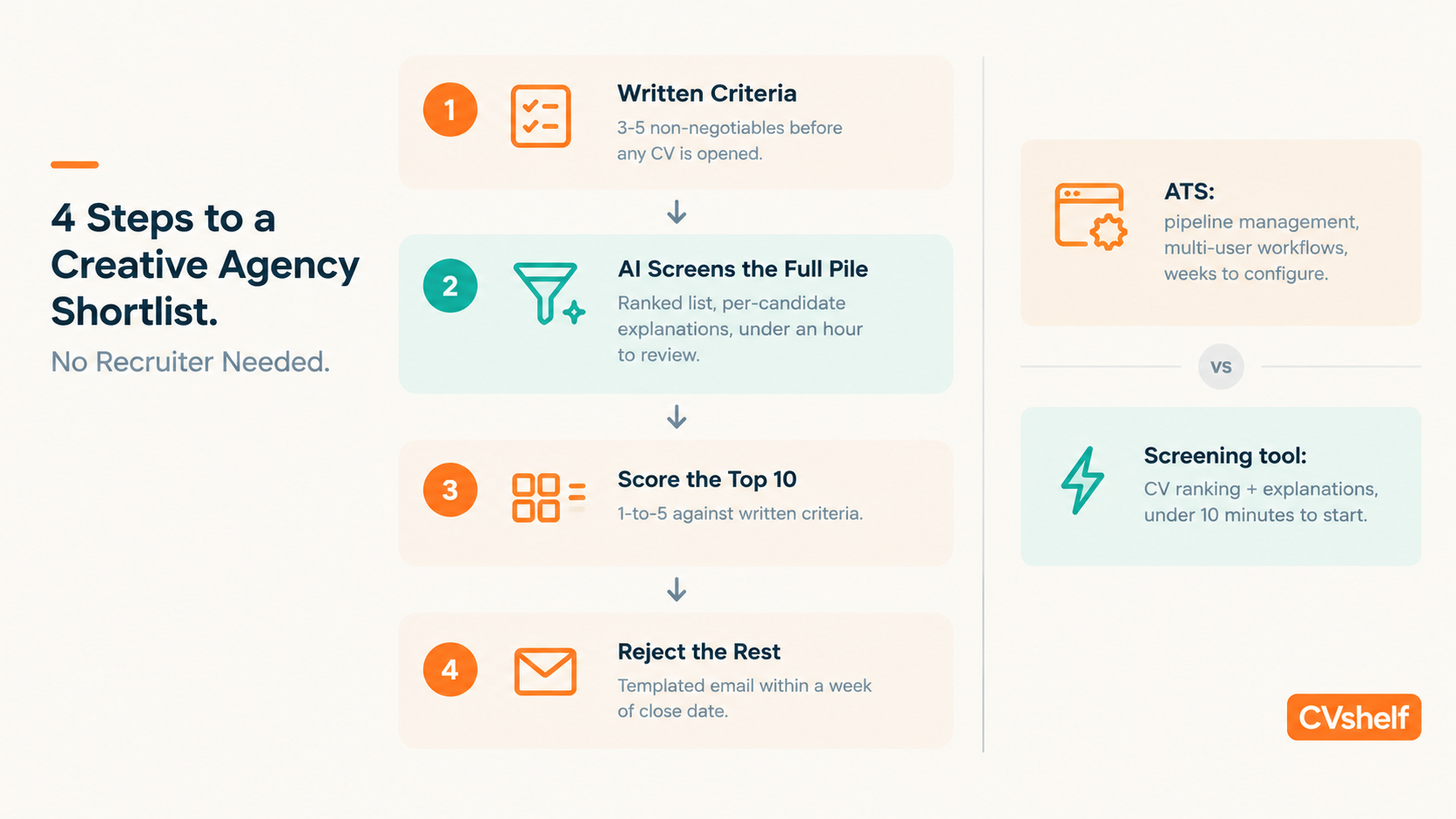
Recruitment software built for enterprise HR teams doesn't fit a creative agency.
Agency Hiring Without Recruiter Fees
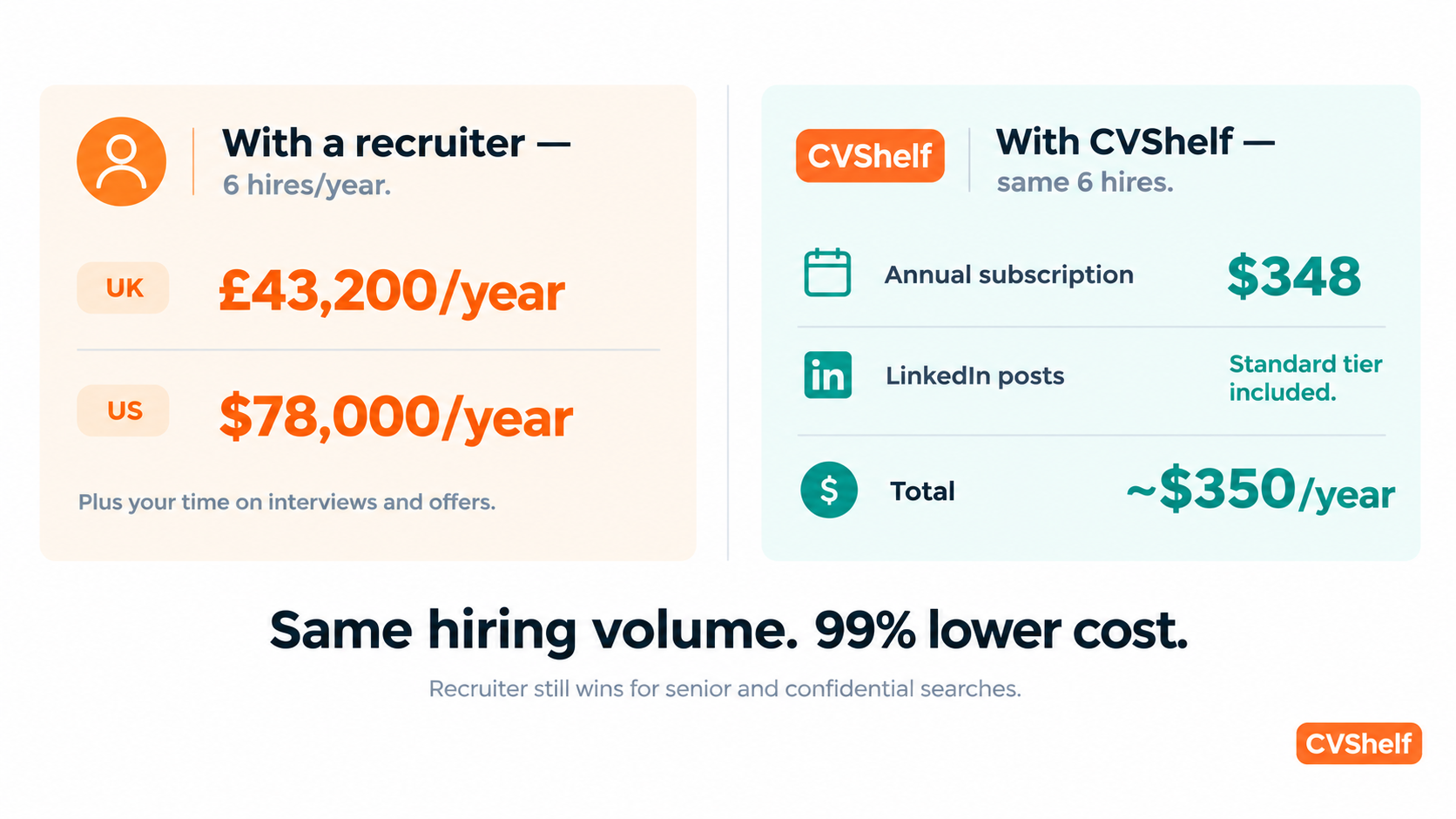
Contingency recruiters charge 15-25% of first-year salary for mid-level placements, that's $9,000 to $15,000 for a single account manager hire.
How Many Applicants For A Small Agency Job Posting
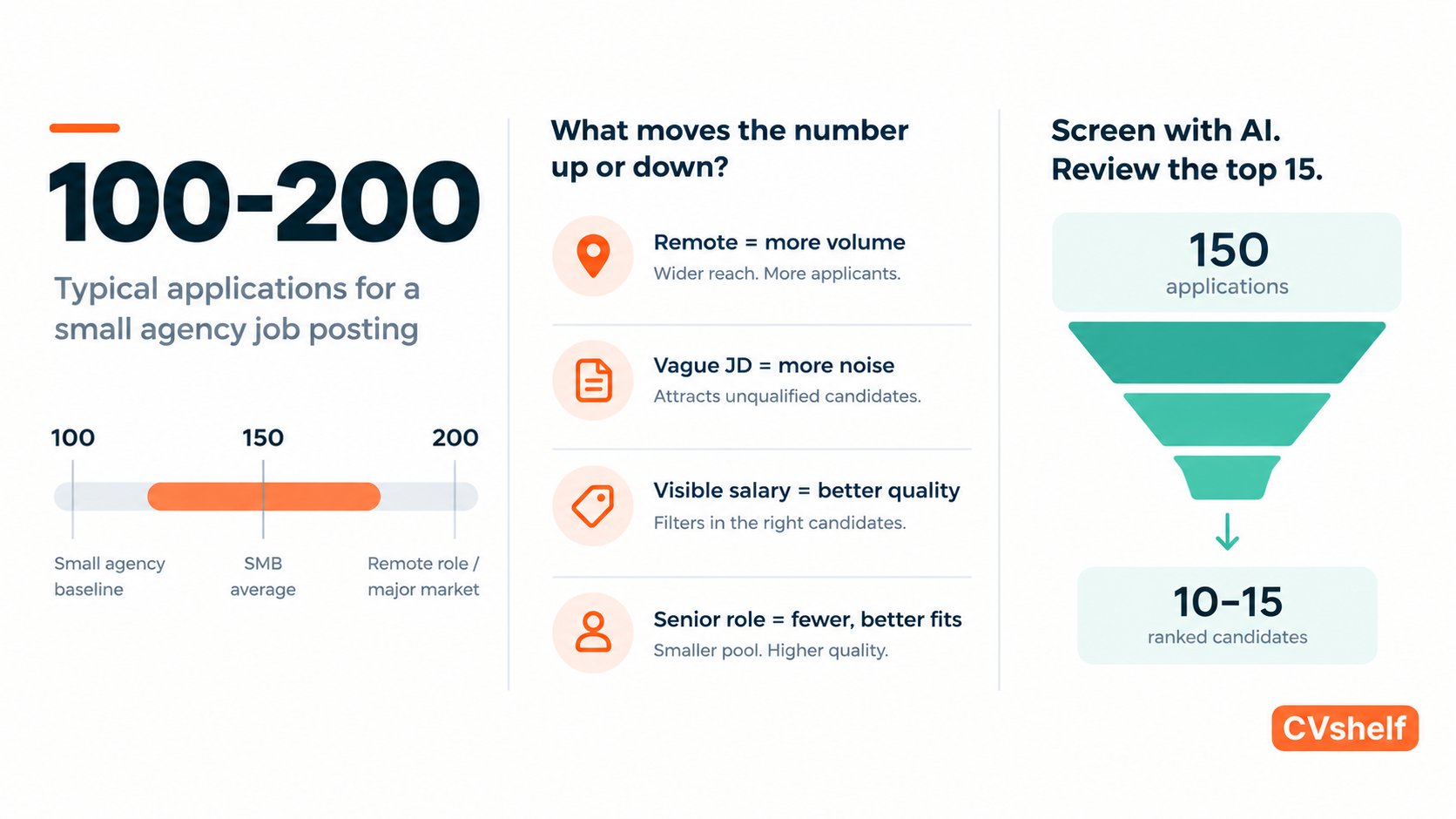
A small agency posting a mid-level role on LinkedIn or Indeed typically receives 100 to 200 applications within two weeks.