How to hire fast after landing a new client
The moment a client signs, a countdown starts.
The contract lands in your inbox on a Tuesday. Kickoff call is booked for three weeks out. You need an account manager, probably a strategist, possibly a project coordinator.
You open LinkedIn. You write a job post. By Thursday you have 190 applications and a deck to finish before Friday.
The pile sits there over the weekend.
Why This Keeps Happening
Agencies don't hire continuously. Hiring happens in bursts, usually triggered by new business, and because it's not continuous, there's never a standing process ready when the trigger fires.
Every time a role opens, you're starting from scratch. What to write in the JD. Where to post. Who screens the applications. How to get from 190 CVs to a shortlist of eight without spending a week on it.
The delay isn't laziness. It's the absence of a default process for something that happens four times a year.
What It Actually Costs You
The obvious cost is the empty desk. The real cost is what happens to the client relationship while that desk is empty.
When you win a new account, the client has expectations set in the pitch. They expect a capable team working their account from day one. When you're scrambling to hire in week two of the relationship, the first impression is understaffing, delayed responses, or your best people stretched across too many accounts to give the new client proper attention.
Early churn is almost never about the quality of the creative work. It's about the experience of working with you in the first 60 days. That experience is shaped by whether you had the right people in place before the kickoff call, not after it.
There's also the internal cost. An MD spending [VERIFY: hours estimate] reading CVs over a weekend is an MD not doing business development, not managing the existing client base, not thinking about the business.
A Better Way to Handle It
The framework is short. The discipline is in actually running it every time, not just when you have bandwidth.
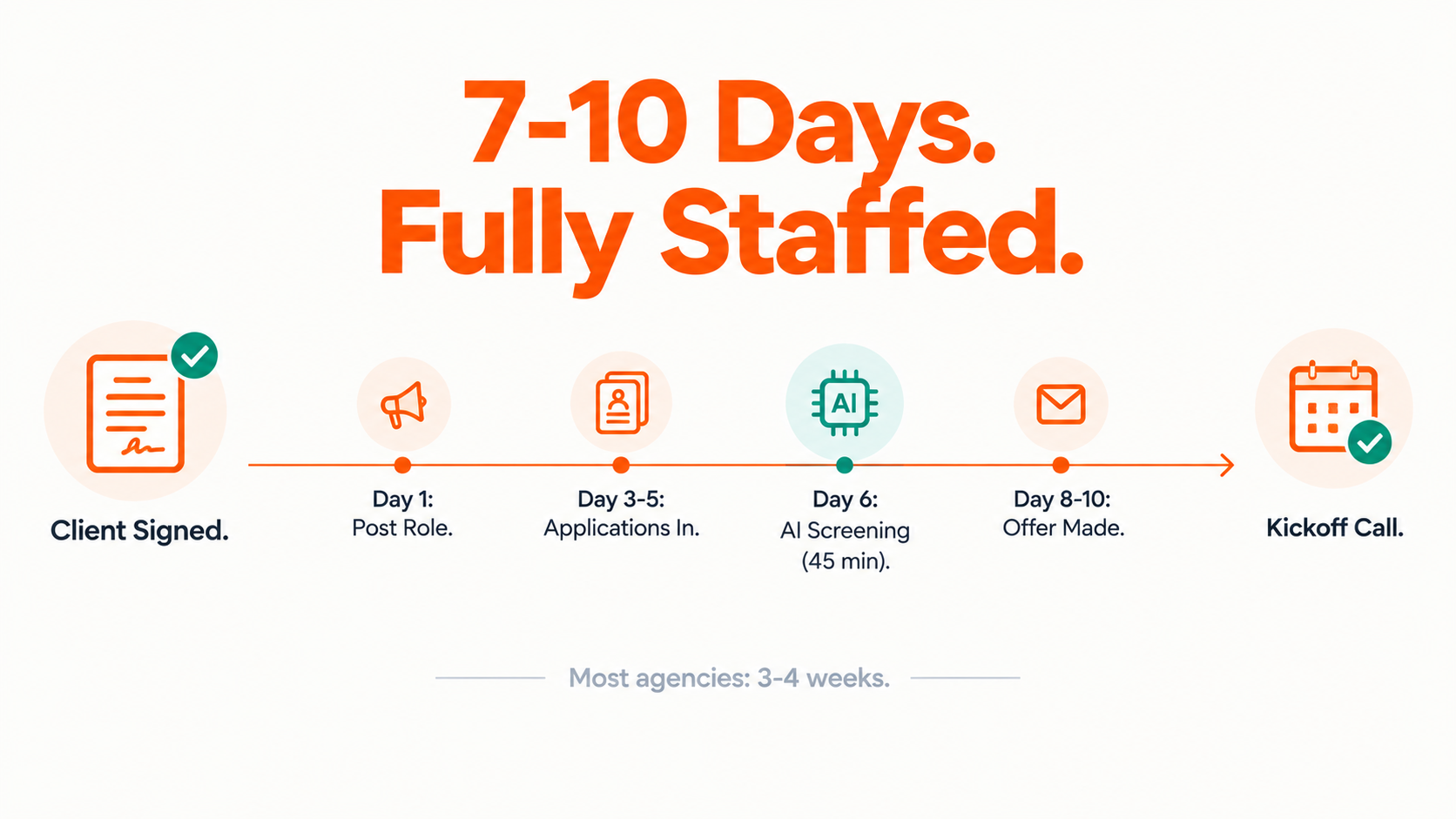
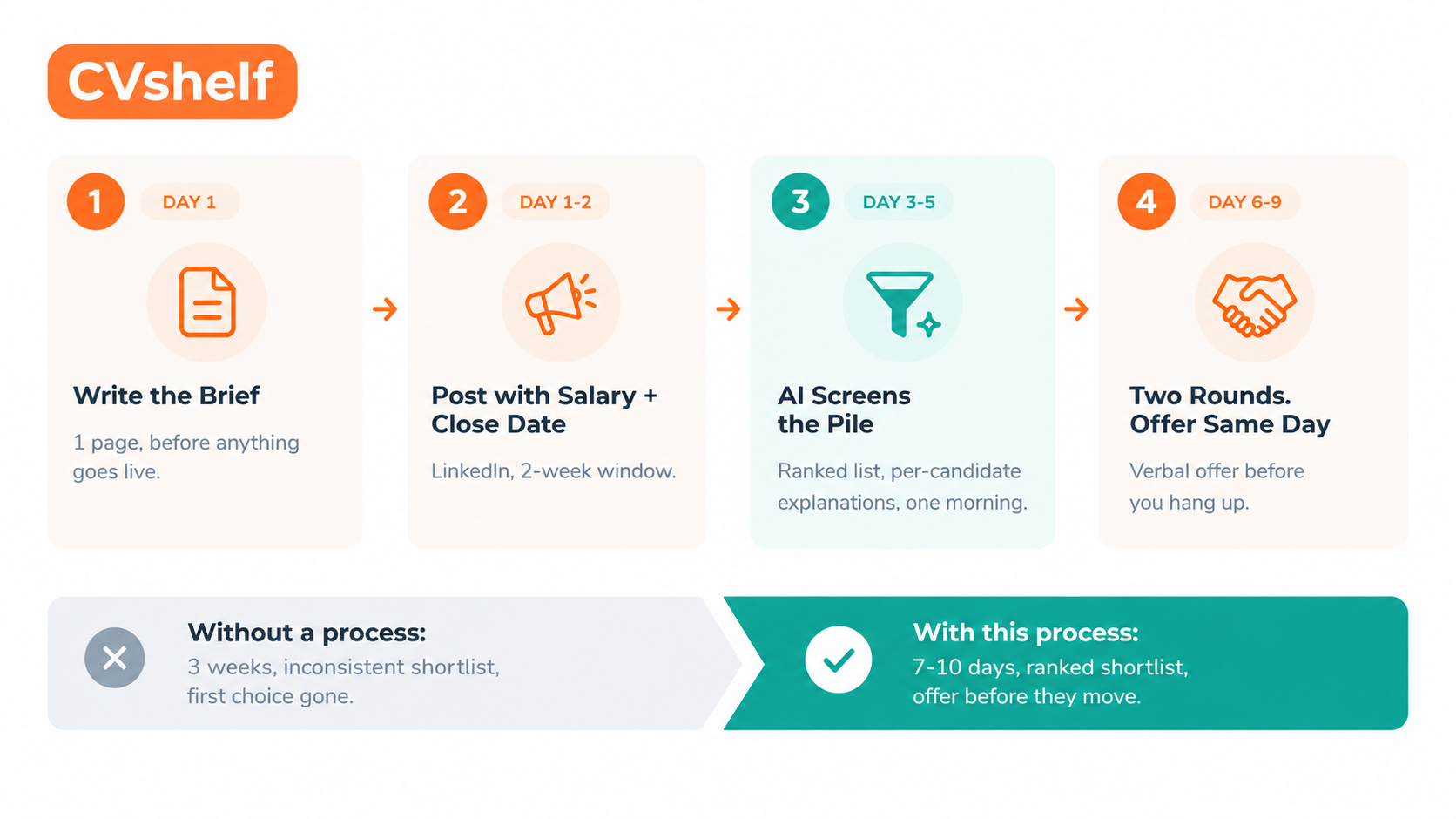
Day the contract signs: open a role brief. One page. What does this person do in the first 90 days? Three non-negotiables only. Salary range. That brief becomes your screening criteria.
Same day or next morning: post the role on LinkedIn with a two-week close date. Write the JD around the brief, not from scratch. Keep it under 350 words. Include the salary. Candidates who have to guess at pay skip the listing or accept elsewhere while waiting.
When applications arrive: run them through an AI screening tool rather than reading manually. Paste in the job description, upload the pile, get a ranked list with an explanation per candidate. You're reviewing the top ten to fifteen, not reading all 190.
First interviews: 30 minutes each, async video if possible to avoid scheduling overhead. Run five to eight. Score them the same afternoon.
Offer: make the verbal offer within 24 hours of the final conversation. Have the salary, start date, and key terms agreed internally before the final interview happens.
That's seven to ten days from contract to accepted offer if the screening stage doesn't stall. The screening stage is where almost all the time goes.
Where CVShelf Removes the Bottleneck
The step that eats the week is screening. CVShelf handles it.
You paste in the job description or pull it from the LinkedIn post directly. You upload your CVs as a bulk batch. CVShelf reads every application against the job criteria, ranks candidates by relevance, and returns a list with a short explanation per candidate covering what it found and what it flagged.
For a non-recruiter reviewing applications between client calls, that explanation layer matters. You're not interpreting a black-box score. You're reviewing a reasoned recommendation and applying your own judgment to the top of the list.
The screening stage that usually takes a week of scattered attention takes one focused morning. That's the difference between meeting the kickoff call fully staffed and scrambling through it short-handed.
For agencies that want to understand the full picture of AI hiring tools built for this context rather than enterprise HR teams, the breakdown is worth reading before you set up the next role.
CVShelf starts at $29 per month. No setup call required.
FAQs
Q1. How do I write a job description fast when I just won a client and need to hire immediately?
Start with the 90-day brief rather than a traditional JD. What does this person do in their first three months? What are the two or three things they must be able to do on day one? Write the JD from those answers. Keep it under 350 words and include the salary. A tight, specific JD attracts fewer but better-matched candidates, which reduces screening time and produces a stronger shortlist.
Q2. Is it realistic to hire an account manager in under two weeks?
Yes, with a structured process. Post with a close date rather than leaving the role open. Use AI screening to process the application pile in hours rather than days. Run two interview rounds rather than four. Make the offer the same day as the final interview. The three-week hiring timeline most agencies run isn't three weeks of evaluation. It's two days of evaluation spread across three weeks by delays that are mostly avoidable.
Q3. What should I do if I need someone to start immediately but I'm still screening?
Post the role and start the process, but also look at two parallel options: a freelancer or contractor to cover the account while you hire, and a direct outreach to two or three people in your network who might fit. Parallel tracking is not a sign the hiring process is broken. It's sensible risk management when client delivery is at stake. The permanent hire process should still run at full speed.
The contract is signed. The kickoff call is booked. The hire is the thing standing between a strong start and a rocky first month.
Start the process the same day you sign. Screen it in one morning. CVShelf makes the screening part fast, try it complimentary at cvshelf.com.
Keep Reading
More from AI Resume Screening.
Agency Hiring Without Recruiter Fees
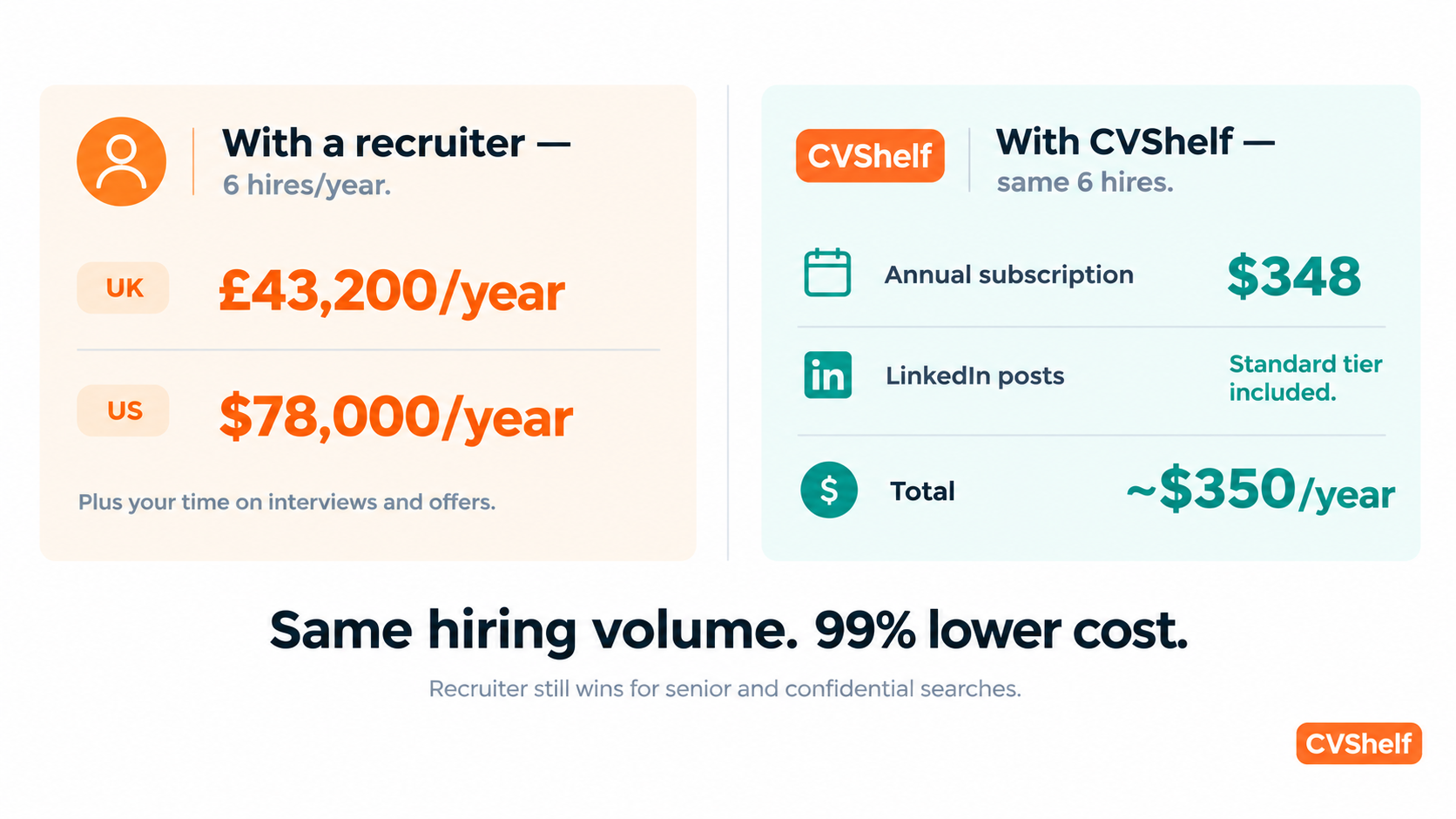
Contingency recruiters charge 15-25% of first-year salary for mid-level placements, that's $9,000 to $15,000 for a single account manager hire.
How Many Applicants For A Small Agency Job Posting
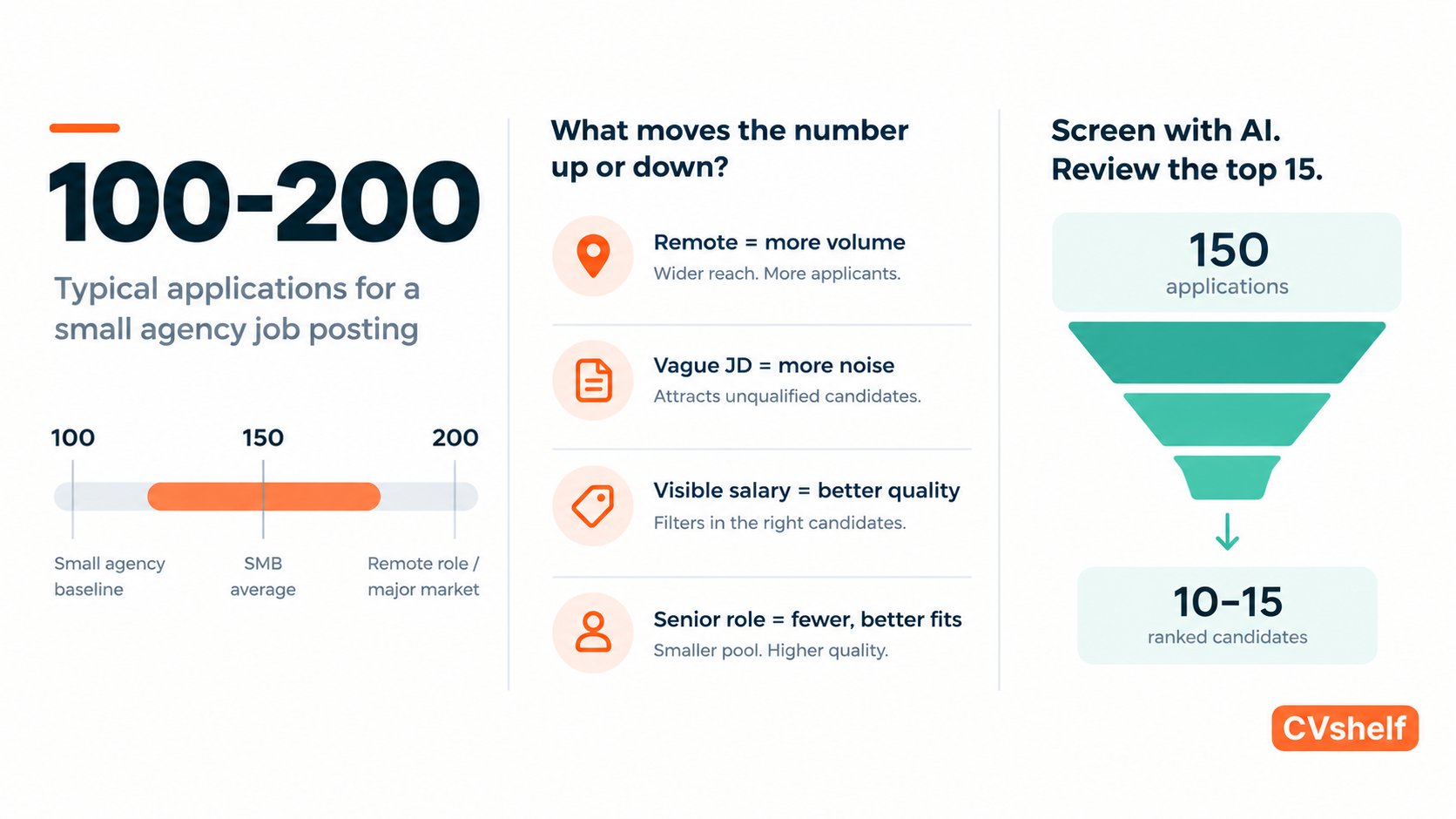
A small agency posting a mid-level role on LinkedIn or Indeed typically receives 100 to 200 applications within two weeks.
Hiring Without HR Department Small Business
Most small businesses handle hiring the same way: someone gets voluntold, reads a third of the CVs.