
Cost Per Hire: How to Calculate and Reduce It
The average cost per hire in the US is $4,700, according to SHRM. Most HR teams accept that number without interrogating it.

Cost Per Hire: How to Calculate and Reduce It
The average cost per hire in the US is $4,700, according to SHRM. Most HR teams accept that number without interrogating it. That's a mistake, because for many organisations, the real figure is higher, and it's hiding in places nobody's tracking.
Where the $4,700 Actually Goes
Cost per hire has two components: external and internal.
External costs are the visible ones:
Job board fees ($300–$600 per post on LinkedIn or Indeed)
Agency or recruiter fees (typically 15–25% of first-year salary, $9,000–$15,000 on a $60k role)
Skills assessments ($50–$200 per candidate depending on tool)
Background checks ($30–$100 per hire)
Employer branding spend, if tracked
Internal costs are where most teams undercount:
Recruiter salary time spent sourcing, screening, coordinating
Hiring manager time in interviews and debrief sessions
HR admin: offer letters, onboarding paperwork, system setup
Onboarding and ramp time, often excluded from CPH calculations entirely, even though a slow ramp is a direct cost
The formula is straightforward:
Cost Per Hire = (Total External Costs + Total Internal Costs) ÷ Number of Hires
Example: A company makes 20 hires in a year. External spend: $40,000 (job boards, assessments, background checks, no agency). Internal costs: $60,000 (recruiter salary allocation + hiring manager time). Cost per hire: $5,000.
That's without agency fees. Add one agency placement at 20% of a $60k salary and that single hire costs $12,000, pulling the average up sharply.
The Hidden Cost Most Teams Miss
Manual resume screening doesn't appear on any invoice, so it rarely gets counted. It should.
A recruiter spending 6 hours screening resumes for one role, at $30/hour fully loaded, is a $180 cost, per opening. Across 20 hires a year, that's $3,600 in recruiter time spent purely on first-round review. Not interviewing. Not closing. Reading PDFs.
That figure grows fast for high-volume roles. A role attracting 300 applications, common for any remotely visible posting in 2026, can push screening time to 15–20 hours. At $30/hour: $450–$600 per role, on screening alone.
This is the cost that AI screening tools actually address. [LINK: how AI resume ranking works]
6 Ways to Reduce Cost Per Hire Without Reducing Quality
1. Cut agency dependency. Agency fees are the single largest CPH driver for most organisations. Each avoided placement at 20% of a $60k salary saves $12,000. Investing in direct sourcing tools pays back quickly.
2. Fix your job descriptions. Vague JDs attract unqualified applicants, which increases screening volume and time. Better JDs reduce applicant noise before it starts.
3. Use structured interviews. Unstructured interviews require more rounds to reach a decision. Structured formats with defined scoring criteria shorten time-to-decision and reduce hiring manager hours per role. [LINK: reduce time to hire]
4. Automate first-pass screening. AI ranking tools process the full applicant pool and surface qualified candidates, cutting recruiter screening time by 70–80% without missing strong candidates.
5. Build a talent pipeline. Re-engaging previous silver-medal candidates for new roles eliminates sourcing costs entirely for a portion of your hires.
6. Track CPH by channel. Most teams average CPH across all hires. Segment it by source, job board, agency, referral, inbound, and the underperforming channels become obvious fast.
Where CVShelf Fits the CPH Equation
CVShelf targets the internal time component directly, specifically the resume screening hours that accumulate invisibly across every hire.
The workflow: bulk upload your full applicant pool, paste or link a job description, receive a ranked shortlist with AI-generated explanations for each candidate's placement. A screening task that takes 8 hours manually takes under an hour.
The ROI calculation is simple.
A recruiter at $30/hour saves roughly 7 hours per role by using CVShelf instead of manual screening. At 20 hires per year: 140 hours saved, worth $4,200 in recruiter time.
CVShelf costs $29–$99/month depending on volume. At the $99/month tier (20 roles, higher volume): $1,188/year.
Net saving: $3,012/year. On recruiter time alone. That doesn't include faster time-to-fill, reduced hiring manager burden, or the compounding value of not missing strong candidates who'd have landed on page 7 of a manual review stack.
Know Your Number. Then Cut It.
Most organisations don't know their actual cost per hire. They know the SHRM benchmark and assume they're somewhere near it. That assumption is expensive.
Calculate your real CPH. Include recruiter time. Then work backwards from the biggest line items.
Calculate your savings, try CVShelf free at cvshelf.com.
Keep Reading
More from AI Resume Screening.
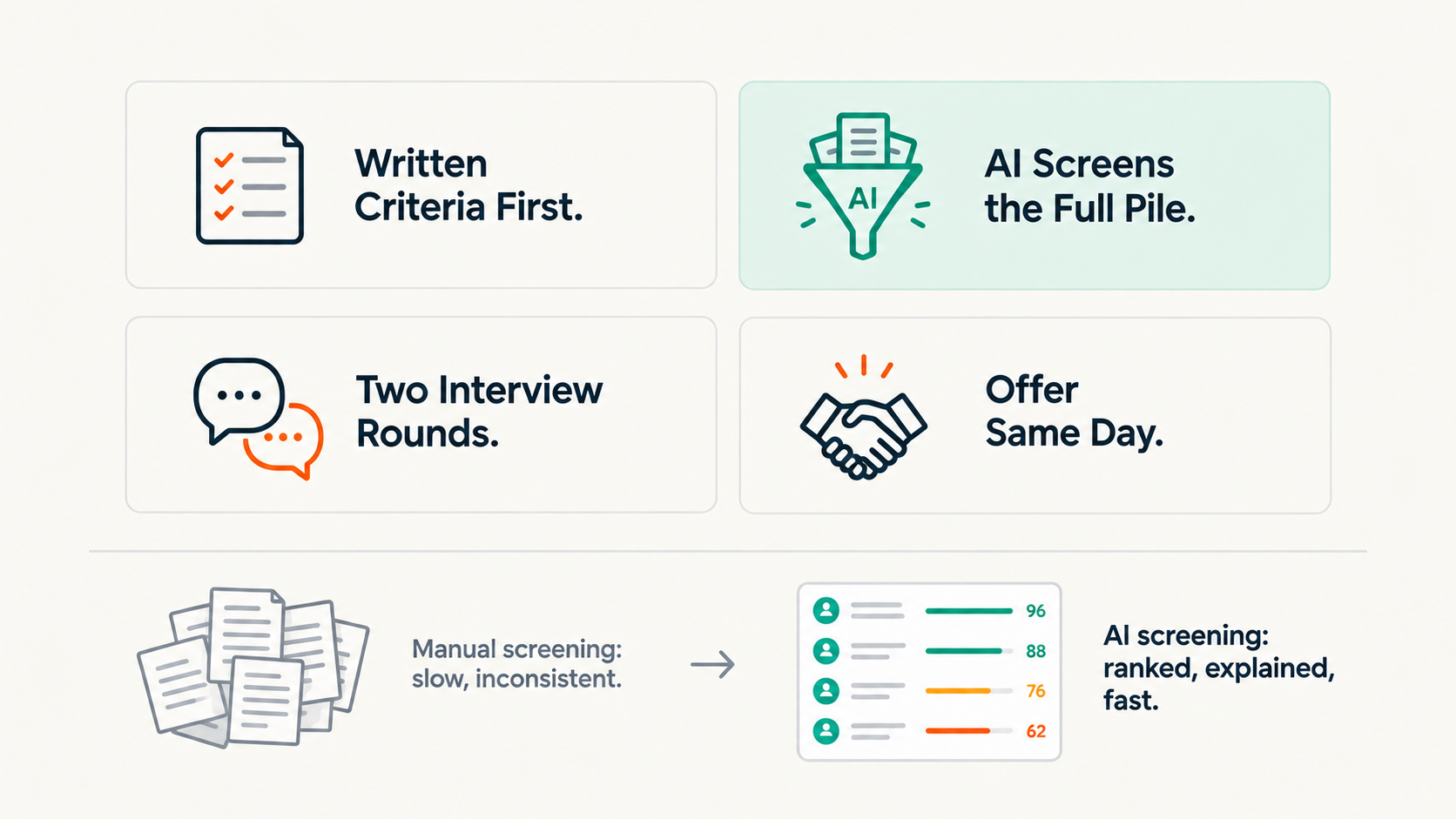
Hiring Software for Creative Agencies
Most hiring software was built for companies with full HR teams, continuous recruitment pipelines, and IT departments to manage integrations.
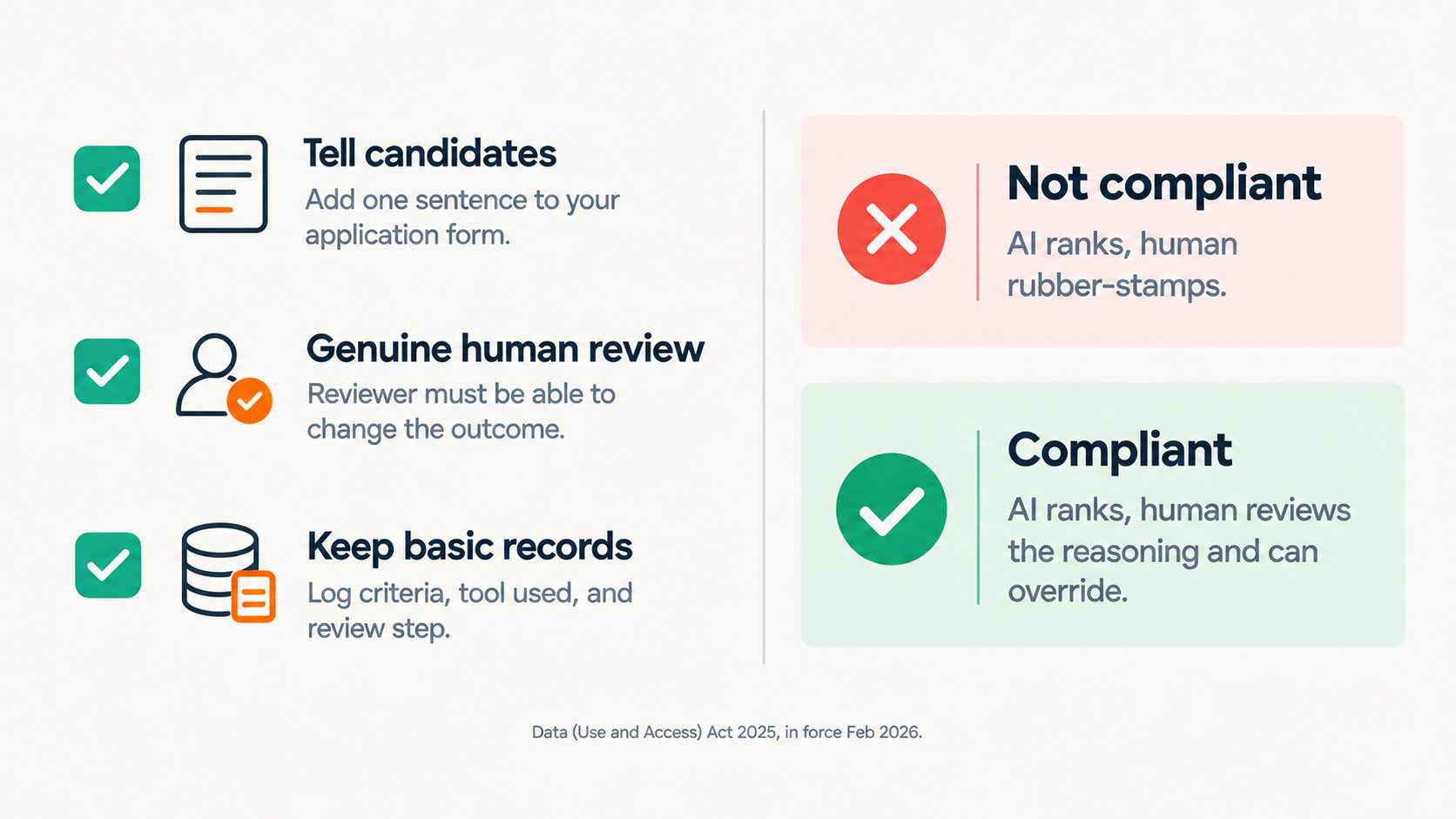
CV Screening Software and UK GDPR
Using CV screening software in the UK means operating under UK GDPR's rules.
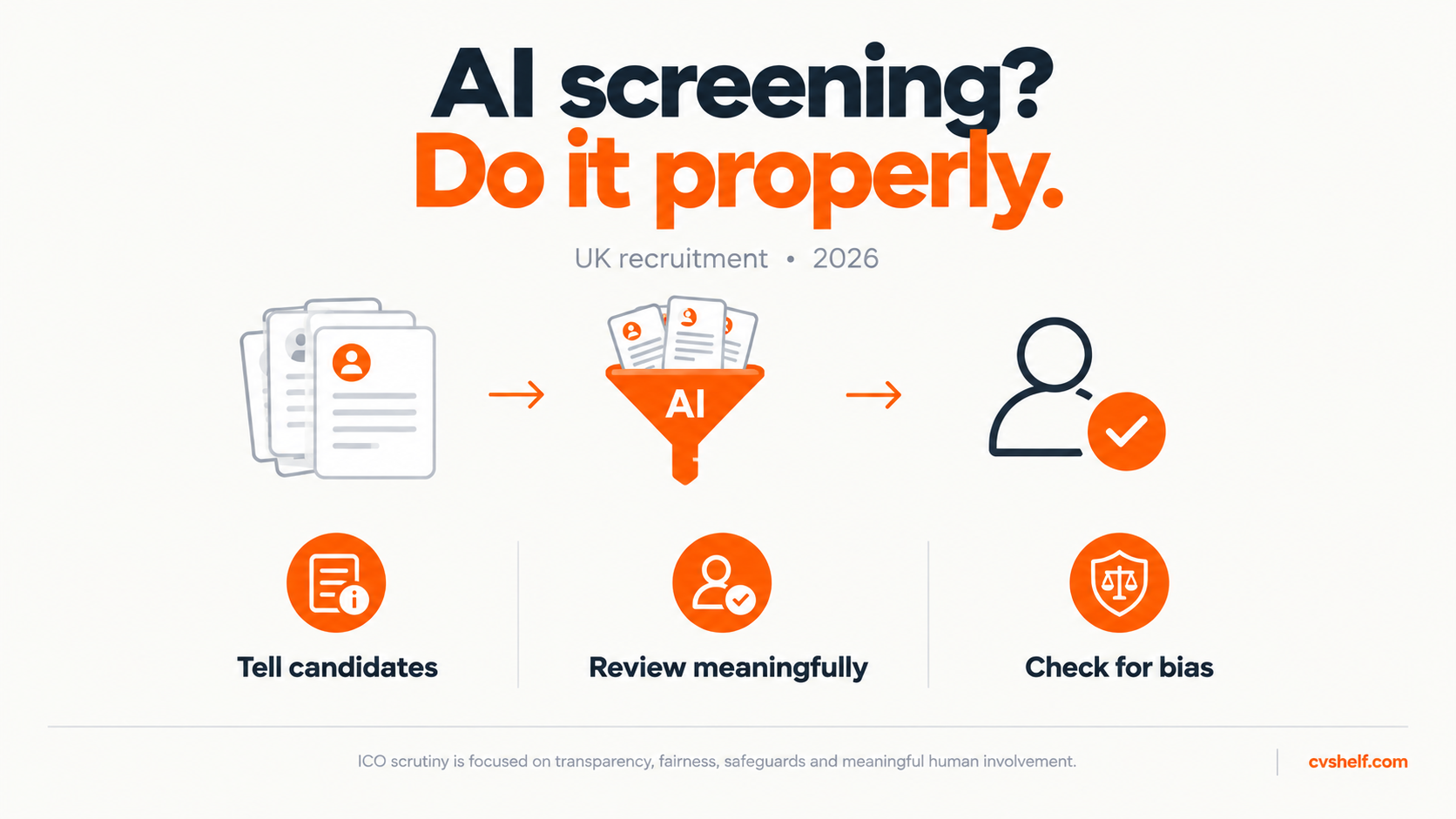
GDPR and AI Hiring for UK Marketing Agencies
Using an AI tool to screen CVs at a UK marketing agency brings you under UK GDPR's rules on automated decision-making.