Hiring Software for Creative Agencies
Most hiring software was built for companies with full HR teams, continuous recruitment pipelines, and IT departments to manage integrations.
Buy an ATS. Spend three weeks configuring it. Use it for two hires. Go back to the inbox.
That's the pattern at most creative agencies. Not because the tools are bad. Because they're built for companies with a dedicated recruiter whose entire job is running the hiring pipeline.
Creative agencies don't run continuous hiring pipelines. They hire in bursts, usually after winning a new client, sometimes after losing one person who turned out to be load-bearing. The process fires up, produces chaos, and goes quiet again. Enterprise hiring software assumes a steady state that doesn't exist at this scale.
The Real Problem at This Size
When a role opens at a creative agency, the application pile lands on whoever is available. That's usually the MD, the COO, a studio manager, or a department head who has three other things due that week.
That person is not a recruiter. They don't have a scoring rubric. They read the first 30 or 40 applications carefully, skim the next batch, and stop somewhere in the middle when something urgent interrupts. The shortlist reflects reading order and energy levels more than candidate quality.
Strong candidates buried in the bottom half of the pile don't get surfaced. The shortlist is thinner than it should be. Occasionally the hire doesn't work out and there's no documented rationale to learn from because nobody wrote the screening criteria down in the first place.
And because it only happens a few times a year, nobody fixes the process. They just absorb it.
What Good Actually Looks Like
Four components. All of them practical. None of them require a recruitment background to implement.
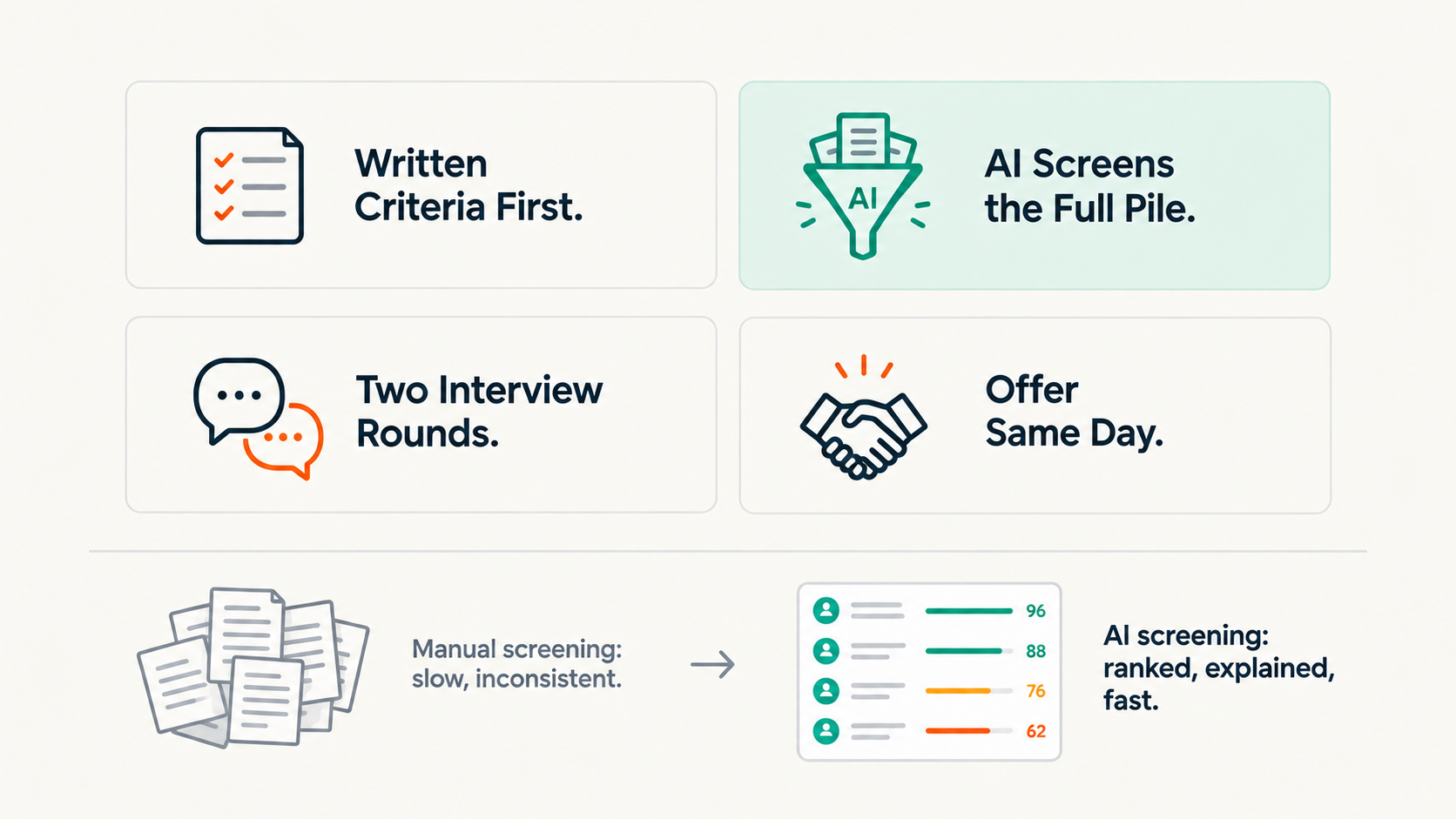
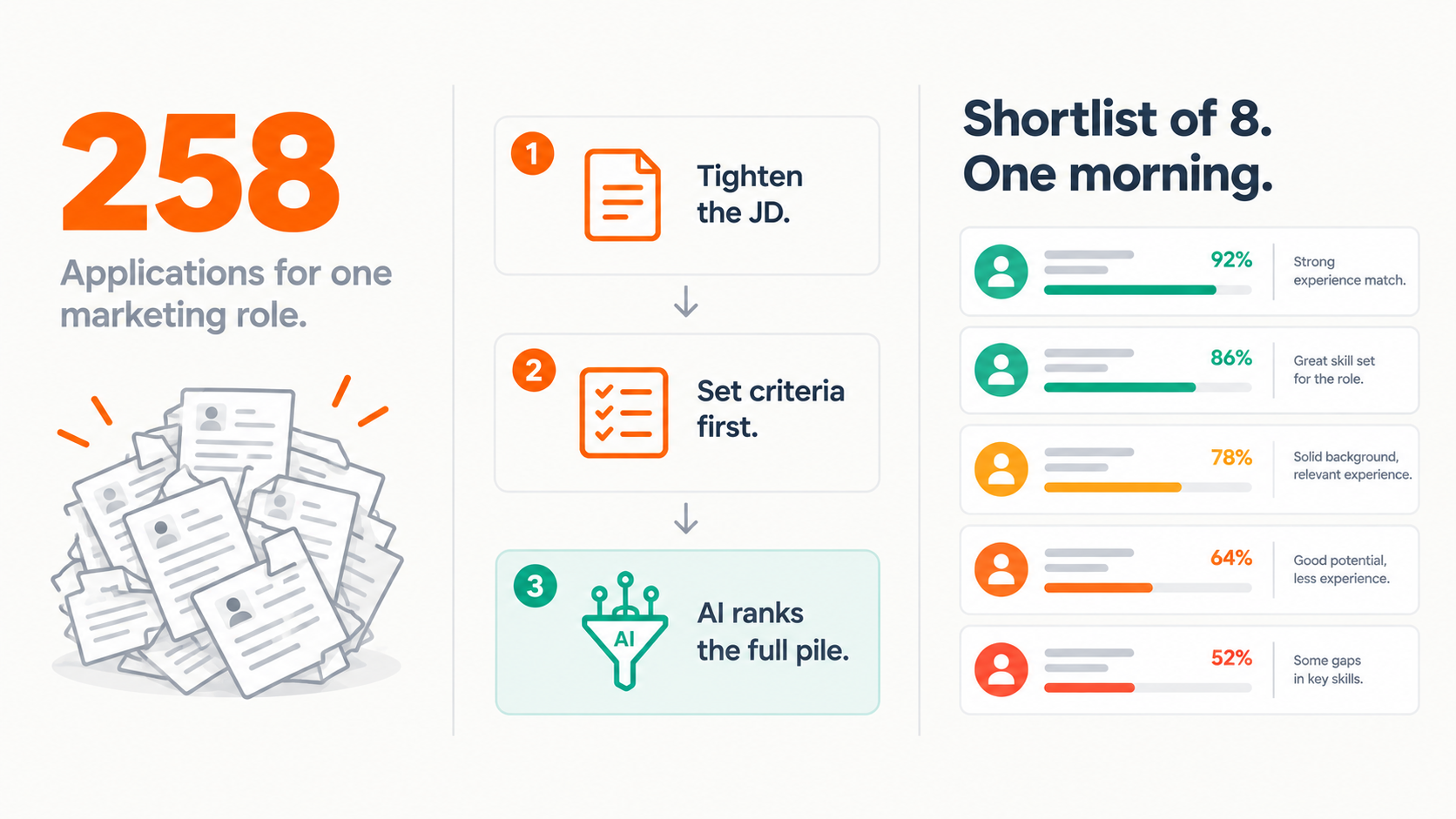
1. Written criteria before you open the pile. Three to five non-negotiables, defined before a single application is read. Agency or studio-side experience, required or not. Specific skills or tools if they're genuine dealbreakers. Minimum years in a directly relevant role. Writing these down takes 15 minutes and prevents the criteria drift that makes shortlists inconsistent.
2. AI screening to rank the full batch. This is where most of the time goes and where automation makes the biggest difference. CVShelf takes a job description, runs it against a bulk upload of resumes, and returns a ranked list with a per-candidate explanation, what the AI found, what it flagged, why the ranking landed where it did. You review the top ten to fifteen with real attention. The AI handled the full read-through against consistent criteria.
The explanation layer matters specifically for non-recruiters. You're not interpreting a score. You're reading a reasoned recommendation and deciding whether you agree with it. That's a different cognitive task, and it's one a studio manager or COO can do confidently without specialist training.
3. A two-round interview structure. Most creative agency roles don't need four rounds. A 30-minute first conversation to check basics and fit, a 60-minute second conversation with a practical element or portfolio review. Anything beyond that tests scheduling coordination rather than candidate quality.
4. A fast offer. Good mid-level creatives and account managers typically have two or three processes running simultaneously. They take the fastest reasonable offer. Make the verbal offer the day of the final interview. Send the written offer the same day.
The Most Common Mistake
Buying a full ATS.
For agencies doing fewer than 20 hires a year without a dedicated recruiter, a full ATS generates more overhead than it saves. It requires configuration, ongoing maintenance, and a consistent adoption across everyone involved in hiring, which at a small agency means wrestling multiple people with different schedules into a new workflow for something that happens four times a year.
The pattern is reliable: the tool gets bought, partially configured, used twice, and abandoned. The agency goes back to manual screening but now has a $200/month subscription for software nobody opens.
Start with the problem. The problem is that screening a large application pile manually is slow, inconsistent, and doesn't produce good shortlists. Buy a tool that solves that specific problem. Add pipeline management tools only when manual tracking becomes the actual bottleneck, which, for most agencies at this size, it isn't yet.
FAQ
Q1. What hiring software do small creative agencies actually use?
The honest answer is: most use a mix of LinkedIn Jobs for posting, email for receiving applications, and a spreadsheet for tracking. That works at very low volume. When a single role generates 150-plus applications, the inbox and spreadsheet approach collapses. AI screening tools like CVShelf sit between "posting on LinkedIn" and "buying a full ATS", they handle the screening and ranking step without requiring the infrastructure investment of a complete hiring platform.
Q2. Is there hiring software that doesn't require a long setup?
Yes. CVShelf takes under 10 minutes to run a first screening, paste in the job description, upload the resumes, get a ranked shortlist. No configuration process, no training required, no integration work. The tools that require long setups are almost always built for recruitment teams at companies that hire continuously. They're the wrong fit for agencies that hire occasionally.
Q3. Do creative agencies need an ATS?
Not usually, at 10 to 100 people. An ATS adds value when you're coordinating hiring across multiple people who need shared visibility, running several open roles simultaneously at high volume, or doing enough hires annually to justify the overhead of a standing system. Below roughly 20 hires a year with a small team, a screening tool plus a shared tracking document handles the actual friction without the cost of a full platform. Revisit the ATS question when coordination across the hiring team, not the screening itself, becomes the bottleneck.
Hiring at creative agency scale doesn't need enterprise software. It needs a screening process that a non-recruiter can run in a morning, a tool that explains its reasoning, and enough structure to produce a shortlist you can actually defend.
CVShelf handles the screening layer. Try it complimentary at cvshelf.com.
Keep Reading
More from AI Resume Screening.
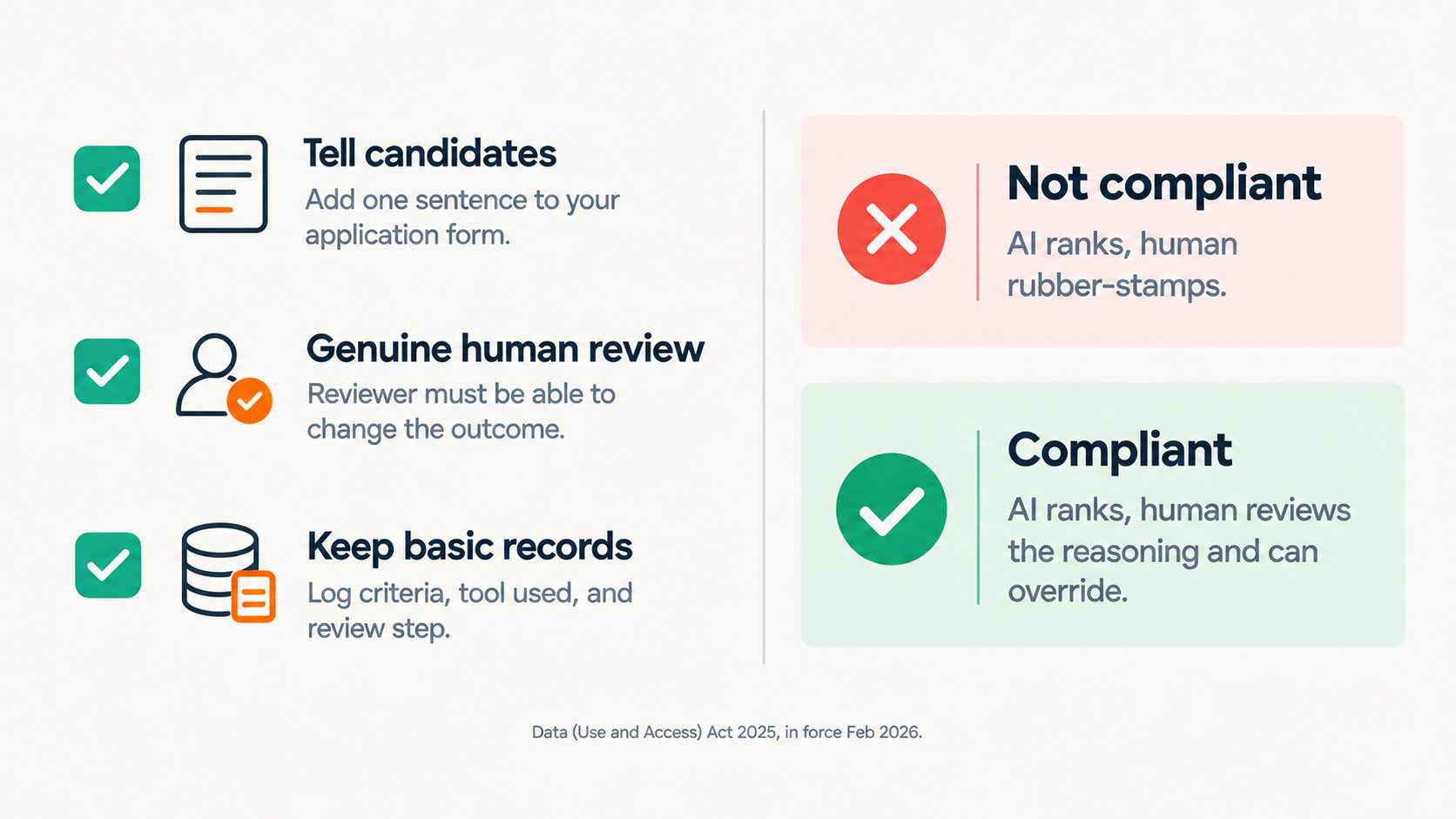
CV Screening Software and UK GDPR
Using CV screening software in the UK means operating under UK GDPR's rules.
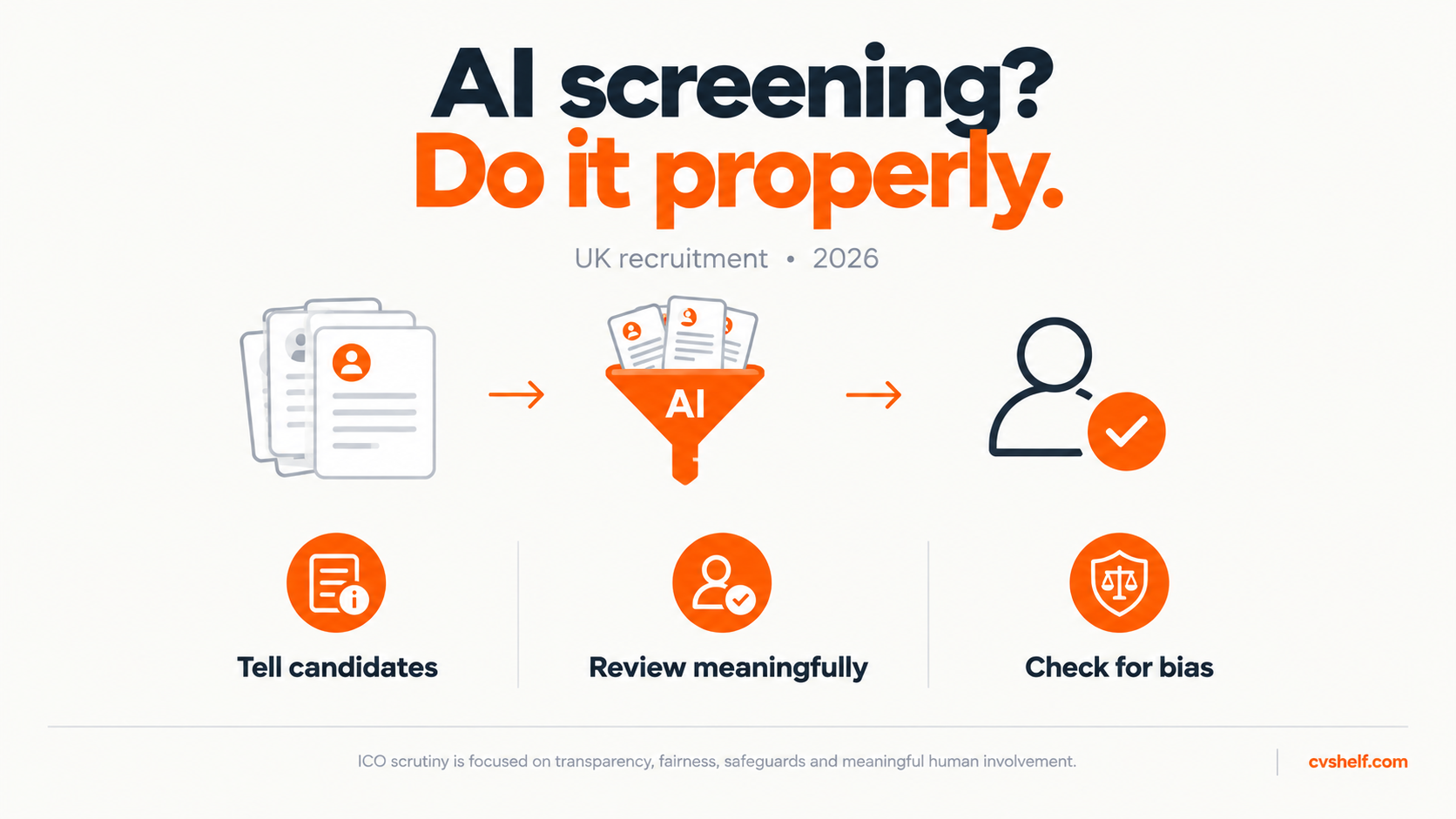
GDPR and AI Hiring for UK Marketing Agencies
Using an AI tool to screen CVs at a UK marketing agency brings you under UK GDPR's rules on automated decision-making.
Too Many Applicants for a Marketing Role?
Marketing job posts are getting 200+ applicants and most agencies can't screen them properly