
Building a Candidate Shortlist Hiring Managers
A recruiter's reputation lives and dies on the quality of their shortlist. Send a hiring manager 15 loosely matched candidates with no explanation and you lose trust.

The Shortlist Is Your Credibility
A hiring manager receives your shortlist. They open it, scan the first three names, and either think "this recruiter gets it" or "I'm going to have to re-screen these myself."
That moment happens within 60 seconds. And it shapes how much that hiring manager trusts your judgment for every future role.
A weak shortlist does more damage than no shortlist. It signals that you didn't understand the brief, that your process lacks rigor, or that you're padding the list to look busy. Hiring managers notice all three. They stop consulting you early. They override your calls. They start doing their own screening.
A strong shortlist does the opposite. It shows that you read the brief carefully, applied consistent criteria, and took the time to understand which candidates actually fit and why. That builds the kind of trust that makes hiring managers defer to your judgment rather than second-guess it.
The shortlist is not just a deliverable. It's a signal about how you work.
What Makes a Great Shortlist vs a Weak One
Most shortlists fall into one of two categories.
A weak shortlist is a list of names. Maybe 12 to 20 candidates. No ranking. No rationale. No signal about which ones the recruiter actually thinks are strong. The hiring manager has to do their own triage to figure out where to start.
A strong shortlist is a ranked, explained set of candidates aligned to the specific criteria of the role. It shows the hiring manager not just who made the cut, but why each person is there and what the recruiter's view is on their relative strength.
The specific differences:
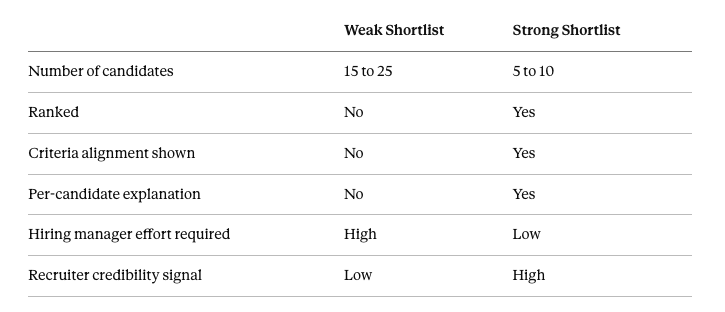
The number matters more than most recruiters think. Sending 20 candidates is not "giving the hiring manager options." It's outsourcing your judgment to them. Your job is to filter. A shortlist of 20 is an abdication of that job.
The 5-Step Shortlisting Process
Step 1: Define Must-Haves vs Nice-to-Haves Before You Screen
Before you open a single resume, write down two lists.
Must-haves are the non-negotiables. The role requires specific experience, a qualification, a right-to-work status, or a minimum level of seniority that cannot be substituted. If a candidate doesn't have these, they don't make the shortlist regardless of how strong the rest of their profile looks.
Nice-to-haves are the differentiators. These are the criteria that separate a good fit from a great one. Industry background, exposure to specific tools, experience at a certain scale.
Keep the must-have list short. Three to five items. Anything beyond that starts to filter out strong candidates on criteria that aren't actually deal-breakers.
Write these down before screening. Do not rely on memory mid-review. Criteria that exist in your head shift as you read resumes. Criteria that are written down stay consistent.
Step 2: Screen Every Candidate Against the Written Criteria
Apply your must-haves first. Every candidate who fails a must-have is out, regardless of how impressive the rest of their profile is. This is not the place for exceptions. If the role requires UK right-to-work and the candidate doesn't have it, they're out.
For the candidates who pass the must-haves, evaluate each one against your nice-to-haves using a consistent scoring approach. A simple 1 to 5 scale per criterion is enough. The goal is consistent, repeatable evaluation, not a complex formula.
At this stage you are reading, not ranking. Save the ranking for after you have scored every candidate.
Step 3: Rank by Score, Not Instinct
Once every candidate has a score, order them by total score. The highest scores go to the top of your list.
This is the step most recruiters skip. They review candidates sequentially, develop an instinct for who seems strong, and produce a list that reflects their reading order rather than a consistent evaluation. The first candidate reviewed gets more mental attention than the hundredth. Strong writers get rated higher than equally strong candidates who write plainly.
Scoring and ranking after all candidates are reviewed removes this bias.
Step 4: Write a One-Line Explanation for Each Shortlisted Candidate
For each candidate in your top 10, write one sentence explaining why they made the shortlist. Not a paragraph. One sentence.
"10 years in B2B SaaS sales, led a team of 8, consistently hit 120%+ of quota." That's enough.
This serves two purposes. It forces you to be able to articulate why someone is on the list, which catches candidates who drifted in on vague instinct. And it gives the hiring manager immediate context so they can orient to each candidate before reading the full profile.
If you cannot write one clear sentence explaining why someone is on your shortlist, they probably shouldn't be on it.
Step 5: Sense-Check the Top 10
Before you send the shortlist, read the top 10 as a set. Ask three questions.
Does every person on this list actually meet the must-haves? Does the ranking make sense when you look at the group together rather than in isolation? Is there anyone obviously missing because they came in late in the application window and got less attention?
This takes 20 minutes and catches the errors that make you look careless.
Common Shortlisting Mistakes
Too many candidates. Already covered above, but worth repeating. More is not safer. A list of 20 with no ranking does not protect you from a bad hire. It transfers the screening job to the hiring manager and signals that you couldn't or wouldn't make the call.
No scoring rationale. "I thought they seemed strong" is not a rationale. It doesn't hold up when the hiring manager pushes back, and it doesn't help you calibrate for the next role. Every shortlisting decision should be traceable to a criterion.
Ranking by instinct rather than data. Instinct is influenced by resume formatting, company name recognition, writing quality, and a dozen other factors that correlate loosely with actual job performance. Instinct is also heavily affected by reading order and fatigue. Score first, rank after.
Applying criteria inconsistently. Deciding that 5 years of experience is required, then letting a candidate with 3 years through because their other experience looks strong, then filtering out a different candidate with 3 years because you're tired. Inconsistent criteria produce shortlists that cannot be defended and that miss strong candidates arbitrarily.
Not updating criteria when the brief changes. Hiring managers change their minds mid-process. The must-haves shift. If your screening criteria don't update when the brief updates, your shortlist will miss the mark before you send it.
How CVShelf Automates This Process
CVShelf handles steps 2, 3, and 4 automatically.
You upload your resumes (PDFs, Word docs, or a bulk zip file) and import or paste your job description. CVShelf reads every resume, scores each candidate against the job criteria, ranks them by relevance, and generates a per-candidate explanation of what it found and what it didn't.
The output is a ranked shortlist with reasons. You review the top candidates, apply your professional judgment to override the ranking where context warrants it, and send a polished list to the hiring manager.
The time saving is significant. A 200-resume pile that would take 15 to 25 hours of manual screening takes under 30 minutes with CVShelf. But the quality benefit is just as important. Every candidate is evaluated against the same criteria with the same attention. Fatigue and reading order don't affect the ranking.
CVShelf starts at $29 per month. Setup for a new role takes under 10 minutes.
How to Present a Shortlist to a Hiring Manager
Format matters as much as content. Here's what a well-presented shortlist includes.
5 to 10 candidates, ranked. Number one is your strongest recommendation. The ranking signals your view, not just a list of options.
One-line summary per candidate. The sentence you wrote in step 4. Keep it factual and specific.
A brief note on methodology. Two sentences explaining what criteria you screened against. This builds confidence that the list is the result of a process, not a guess.
Your top recommendation called out explicitly. Tell the hiring manager who you think they should interview first. You're the recruiter. Own the recommendation.
What you excluded and why. A one-line note on the general shape of candidates you filtered out (for example: "Screened out candidates below 5 years in a relevant role and anyone without UK right-to-work") gives the hiring manager confidence the brief was followed.
A shortlist in this format takes less time for a hiring manager to process and signals professional rigor. It invites engagement rather than re-screening.
Build Better Shortlists in Minutes
The shortlisting process is not complicated. It's discipline. Written criteria, consistent scoring, ranked output, clear explanations.
The part that takes time is the manual screening. CVShelf removes that.
You define the criteria. CVShelf reads the resumes, ranks the candidates, and explains the reasoning. You sense-check the top 10, apply your judgment, and present a shortlist worth trusting.
Build better shortlists in minutes. Try CVShelf free at cvshelf.com.
FAQs
Q1: How many candidates should be on a shortlist?
For most roles, 5 to 10 candidates is the right number. Below 5 and you risk the hiring manager feeling the pool was too narrow. Above 10 and you're transferring your screening job to them. For senior or highly specialised roles, 3 to 5 is often appropriate. For high-volume entry-level roles, up to 15 can be justified if the role is genuinely competitive.
Q2: What criteria should I use for shortlisting candidates?
Start with your must-haves: non-negotiable qualifications, experience minimums, location or work authorisation requirements. Then layer in nice-to-haves: relevant industry background, specific tools or skills, seniority indicators. Keep the must-have list to 3 to 5 items. More than that and you start filtering out strong candidates on criteria that aren't genuine deal-breakers.
Q3: How do you shortlist candidates fairly without bias?
Write your criteria down before you start screening, not after. Apply them consistently to every candidate. Score first, rank after you have reviewed everyone. Use AI screening tools to apply criteria uniformly across the full application pool. Ensure criteria are job-related and not proxies for demographic characteristics (for example, "prestigious university" is a criterion that often functions as a socioeconomic filter with weak job performance correlation).
Q4: How long should a shortlisting process take?
For a role receiving 50 to 100 applications, a thorough manual shortlisting process takes 8 to 15 hours. With AI screening tools like CVShelf, the same process takes under an hour, with the majority of that time being the human review of the top-ranked candidates.
Q5: What is the difference between a longlist and a shortlist?
A longlist is the broader group of candidates who meet basic eligibility criteria, typically 15 to 30 candidates. A shortlist is the refined group you present to a hiring manager for interview consideration, typically 5 to 10. The longlist is an internal working document. The shortlist is the deliverable.
Q6: Can AI tools replace human judgment in shortlisting?
No. AI screening tools handle the volume and consistency problem. They read every resume against the same criteria, produce a ranked output, and flag candidates worth reviewing. Human judgment is still required to evaluate context the AI might miss (career transitions, non-traditional backgrounds, signals of high potential that don't map cleanly to the job description). The best shortlisting processes use AI for the initial sort and humans for the final review.
Keep Reading
More from AI Resume Screening.
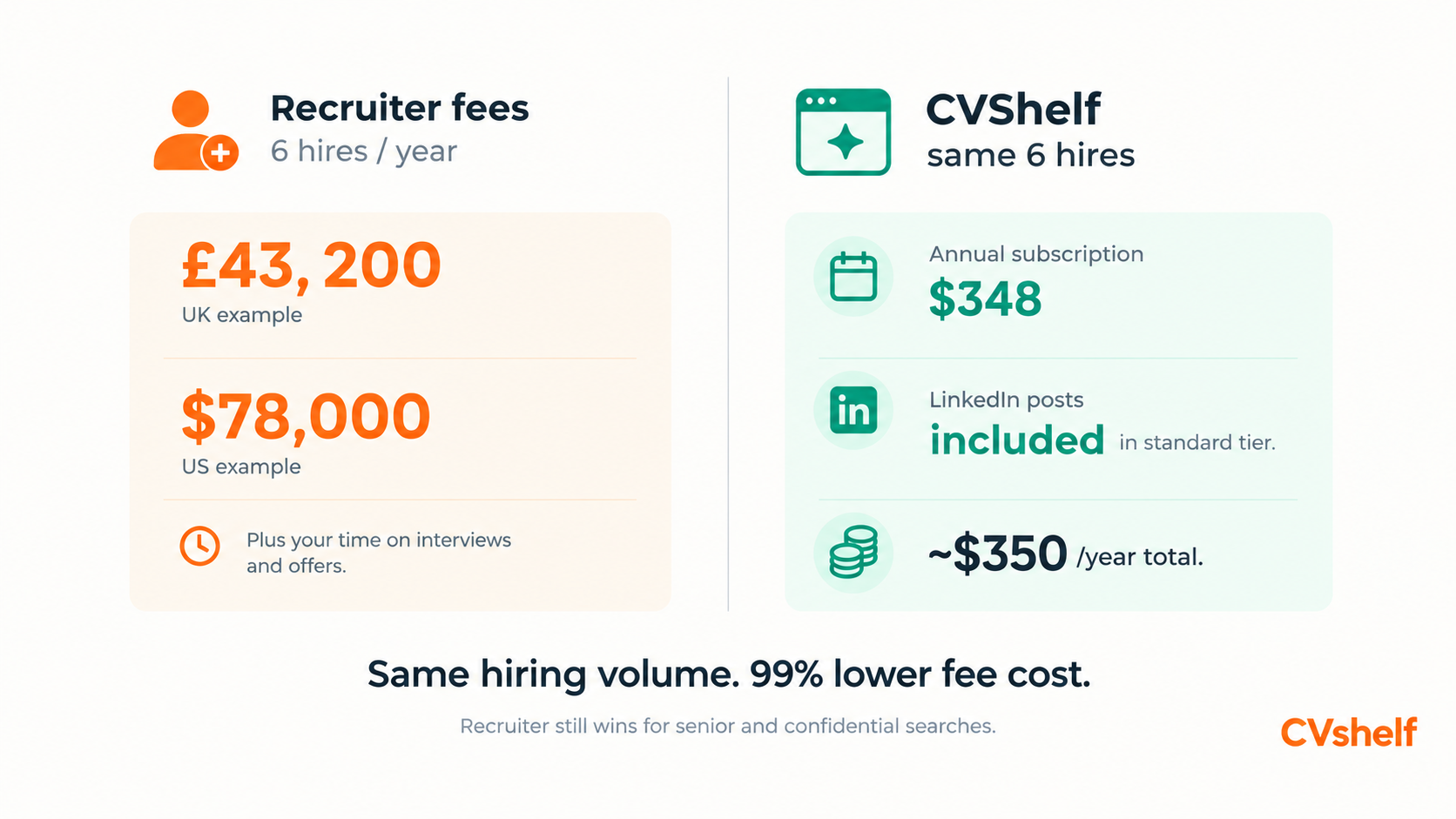
How Much Does A Recruiter Cost Vs AI Tool
A contingency recruiter placing a mid-level account manager or strategist typically charges 15-25% of first-year salary.
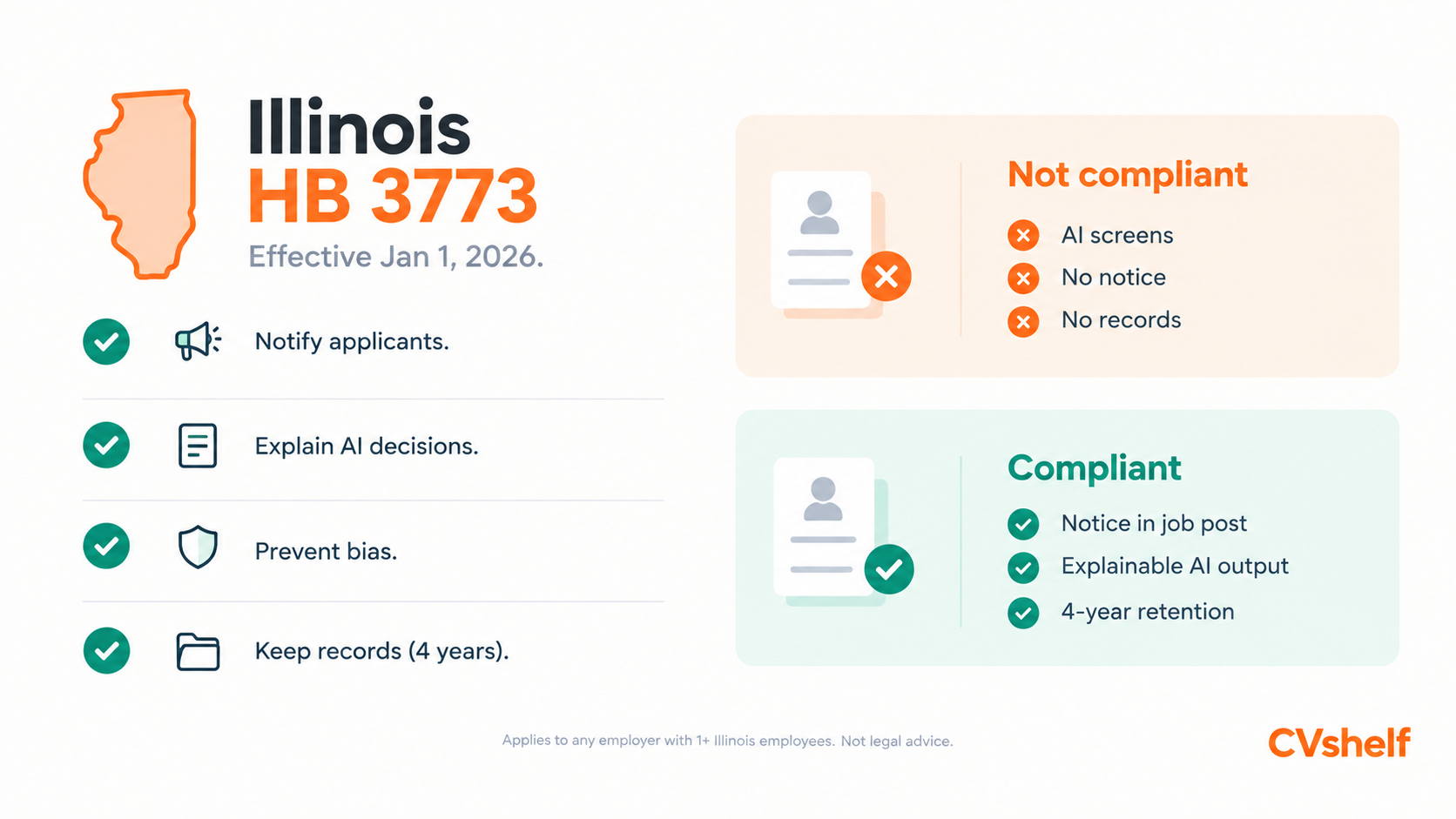
Illinois AI Hiring Law Resume Screening
Illinois HB 3773, effective January 1, 2026, amended the Illinois Human Rights Act to require employers to notify applicants.
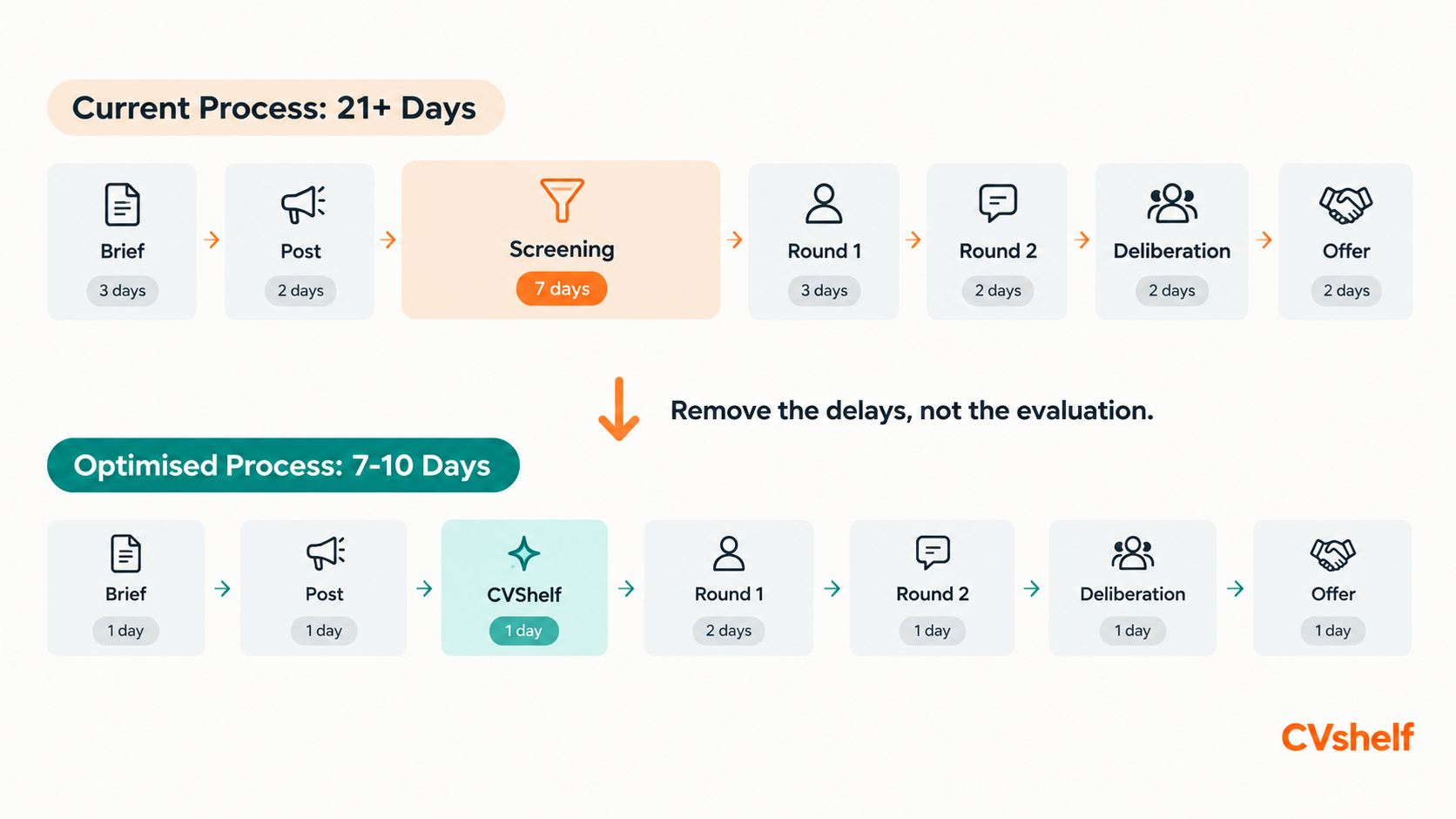
Reduce Time To Hire For Agencies
The average agency hiring process takes three to four weeks.