Reduce Time To Hire For Agencies
The average agency hiring process takes three to four weeks.
The contract was signed on Friday. The kickoff call is in three weeks.
You need an account manager.
You post the role Monday morning. By Wednesday, you have 190 applications. You're also finishing a pitch deck, covering a client call, and dealing with something that landed in your inbox at 7 pm Tuesday.
The folder sits there.
Two weeks later you're reading CVs. The role that should have been filled is still open. The new client is about to meet a team that isn't quite the one they expected.
Why Agency Hiring Runs Slow
The delay isn't usually one big thing. It's four small things that each add a few days.
The screening pile sits untouched. The person doing the screening has a full workload. Reviewing 190 CVs carefully takes serious time that doesn't exist in the gaps between client deliverables. So it gets deferred. Then deferred again.
There's no standing process. Every hire starts from scratch. What criteria to use, who's involved, how many rounds. These decisions get made while the role is open, which adds setup time to every hire.
Interview scheduling runs on email. Three rounds of back-and-forth to book a 30-minute call. Multiply that across five candidates, and you've added three to four days to the timeline for pure coordination.
The offer waits for a meeting. A final interview goes well. The hiring decision gets discussed at the next team standup, or over a call that takes two days to schedule. The offer goes out on day 21. The candidate signed elsewhere on day 16.
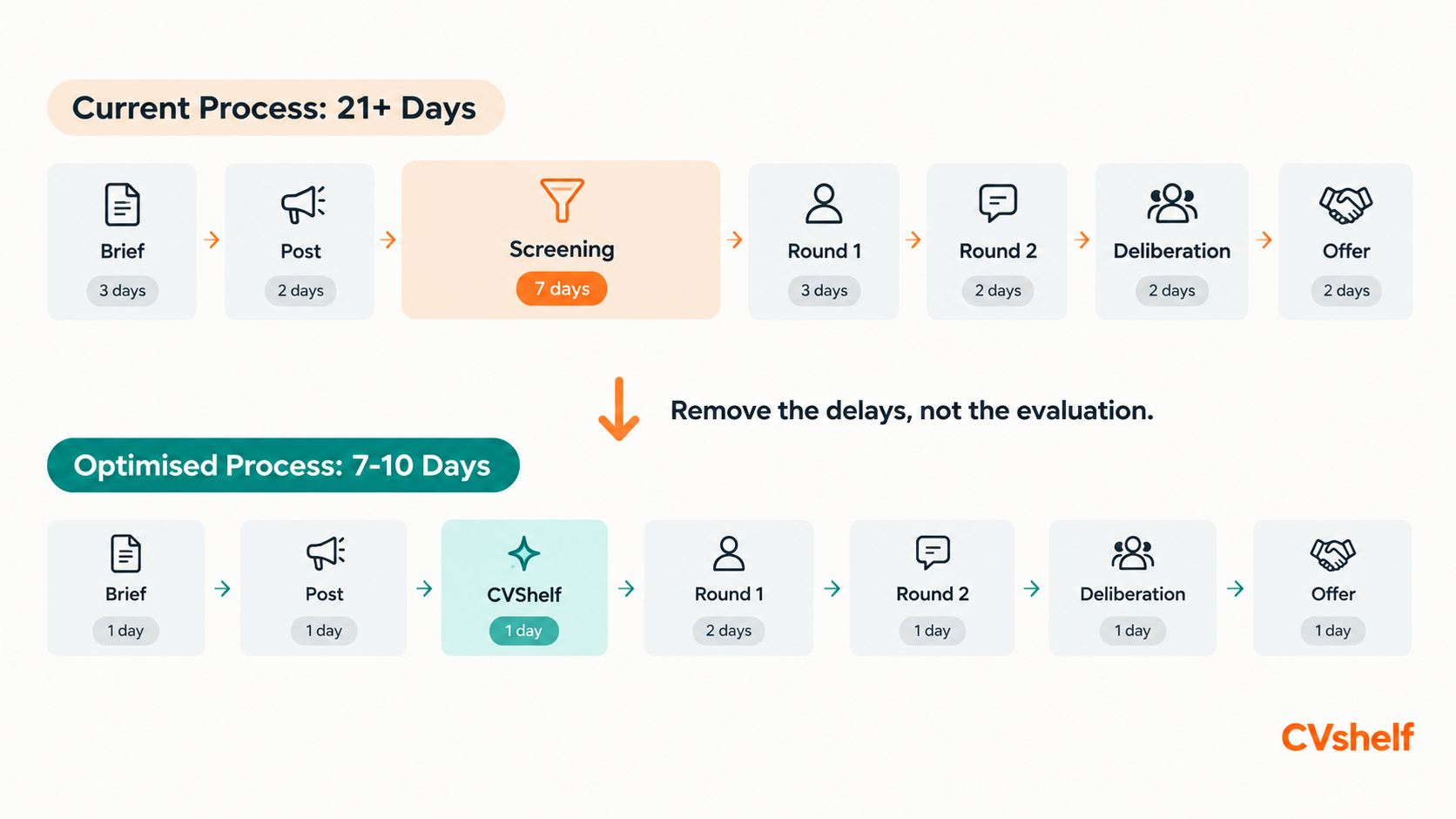
None of these are catastrophic individually. Together they turn a seven-day process into a three-week one.
What It Actually Costs
The obvious cost is an empty desk. The cost that hurts more is the client relationship.
When you win a new account, the client's expectations are set in the pitch. They expect a capable team on their business from day one. Three weeks into the relationship, if the AM role is still open and someone else is covering the account at 60% capacity, the client feels it. Response times slip. The strategy conversation gets delayed. The momentum from the pitch stalls.
Early client relationships are fragile. The first 60 days set the tone for the entire engagement. An understaffed account in that window is a retention risk, not just an operational inconvenience.
There's also the candidate side. Strong account managers and strategists at mid-level are typically in two or three processes simultaneously. They accept the first reasonable offer from a company that moved decisively. The agency that takes three weeks to reach an offer is competing for whoever is still available, which is a different candidate pool from the one that was available in week one.
A Better Way to Handle It
Five changes. All of them actionable this week.
Write the role brief before posting. One page. What does this person do in the first 90 days? What are the three non-negotiables? What's the salary? This brief takes 20 minutes and becomes the job description, the screening criteria, and the reference point for everyone involved in the decision.
Set a close date. Two weeks out. Collect applications, close the window, process the pile in one batch. An always-open listing generates a drip of applications that never produces a clean screening moment.
Screen with AI, not by hand. Upload the full pile to a screening tool, paste in the job description, get a ranked shortlist with per-candidate explanations. You review the top ten to fifteen. The rest is handled. For a deeper look at how to set this up properly for an agency role, the guide to CV screening tools built for small agencies covers the configuration in more detail.
Run two interview rounds, not four. A 30-minute first call and a 60-minute second with a practical element. Anything beyond that adds days without adding meaningful signal.
Make the offer the day of the final interview. Agree on salary and start date internally beforehand. If the final conversation goes well, make the verbal offer before you hang up. Send the written offer the same day.
That sequence- brief, post, screen, two rounds, same-day offer- runs in seven to ten days. The three-week process is almost entirely made of delays between those steps, not the steps themselves.
Where CVShelf Removes the Bottleneck
The screening stage is where most of the time goes. CVShelf is specifically built to collapse it.
Paste in the job description or pull it from LinkedIn directly. Upload the CV pile as a bulk batch. CVShelf reads every application against the criteria and returns a ranked list with a per-candidate explanation: what the AI found relevant, what it flagged, and why the ranking landed where it did.
A founder or ops manager with no recruiting background can work through the top fifteen candidates in one morning and produce a shortlist they can defend. That's the step that usually takes a week of fragmented reading. CVShelf makes it a single focused session.
Starts at $29 per month. No setup call required.
FAQs
Q1. What is a realistic time-to-hire for a marketing agency AM role?
Seven to ten days from job post to accepted offer is achievable with a structured process. Most agencies take three to four weeks because the screening stage runs in fragments over several days, interview scheduling adds back-and-forth, and the offer follows a deliberation period that adds more. Remove those specific delays and the timeline compresses without cutting any of the evaluation quality.
Q2. How do I speed up hiring without lowering my standards?
The delays in most agency hiring processes are between stages, not within them. Screening that takes a week of scattered reading can take one morning with AI screening. Scheduling that takes three days of email can take one day with a booking link. Offer deliberation that takes three days can happen the same afternoon as the final interview if the decision criteria are agreed in advance. Speed and quality are not in tension here. The slow process is slow because of coordination overhead, not because the evaluation is thorough.
Q3. Is it realistic to hire an account manager in 10 days?
Yes. The constraint is usually the screening stage; processing a large inbound pile without a dedicated recruiter takes time when done manually. With an AI screening tool handling the initial ranking, a two-round interview structure, and a same-day offer policy, a seven- to ten-day process is consistently achievable for mid-level roles generating strong inbound volume on LinkedIn.
The three-week hire isn't three weeks of evaluation. It's three weeks of delays between steps that each take a day or two.
Fix the steps and the timeline fixes itself. CVShelf handles the one that takes the most time.
Try it complimentary at cvshelf.com.
Keep Reading
More from AI Resume Screening.
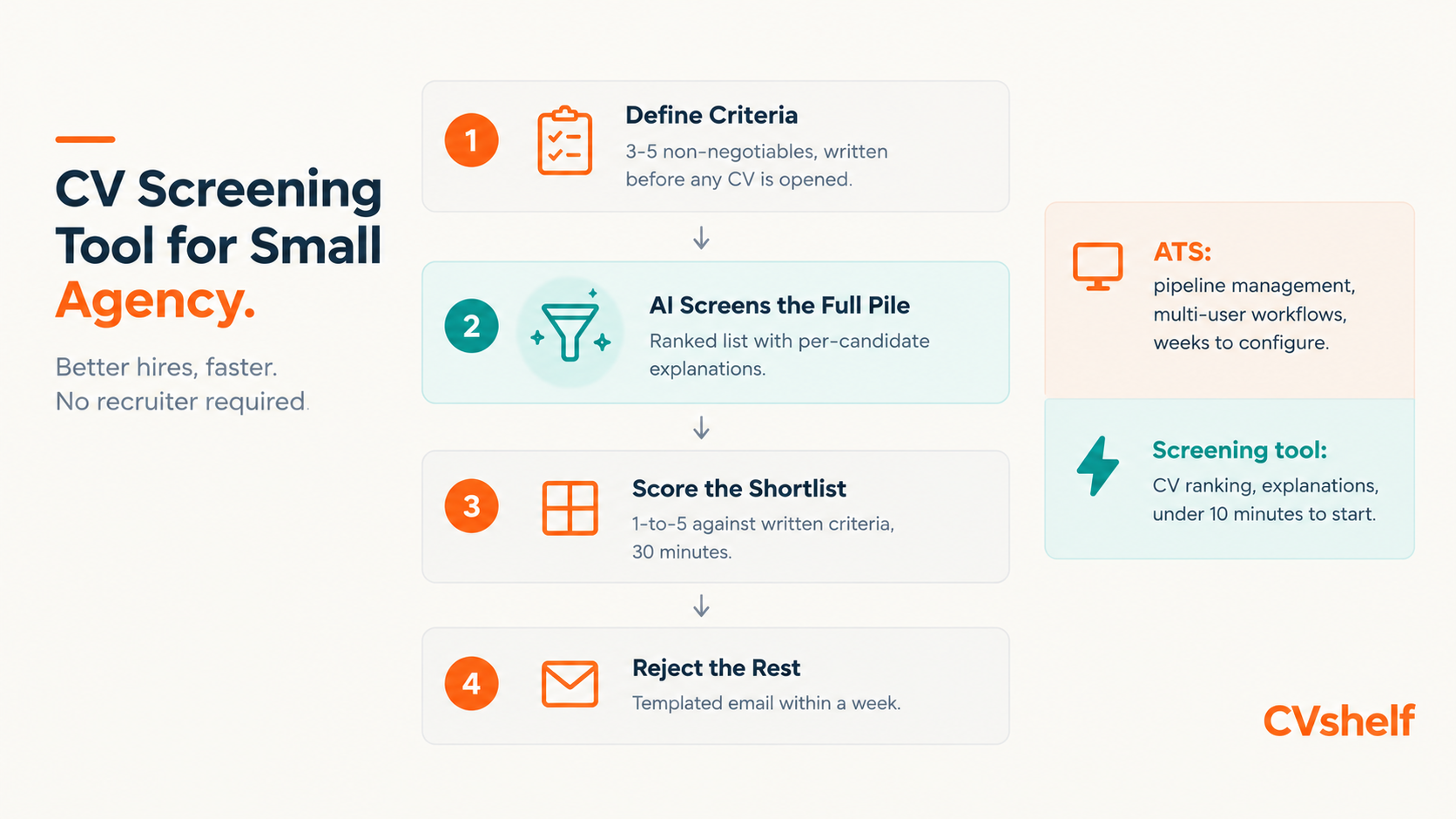
CV Screening Tool For Small Agency
Most CV screening tools were built for companies with dedicated recruiters and continuous hiring pipelines.
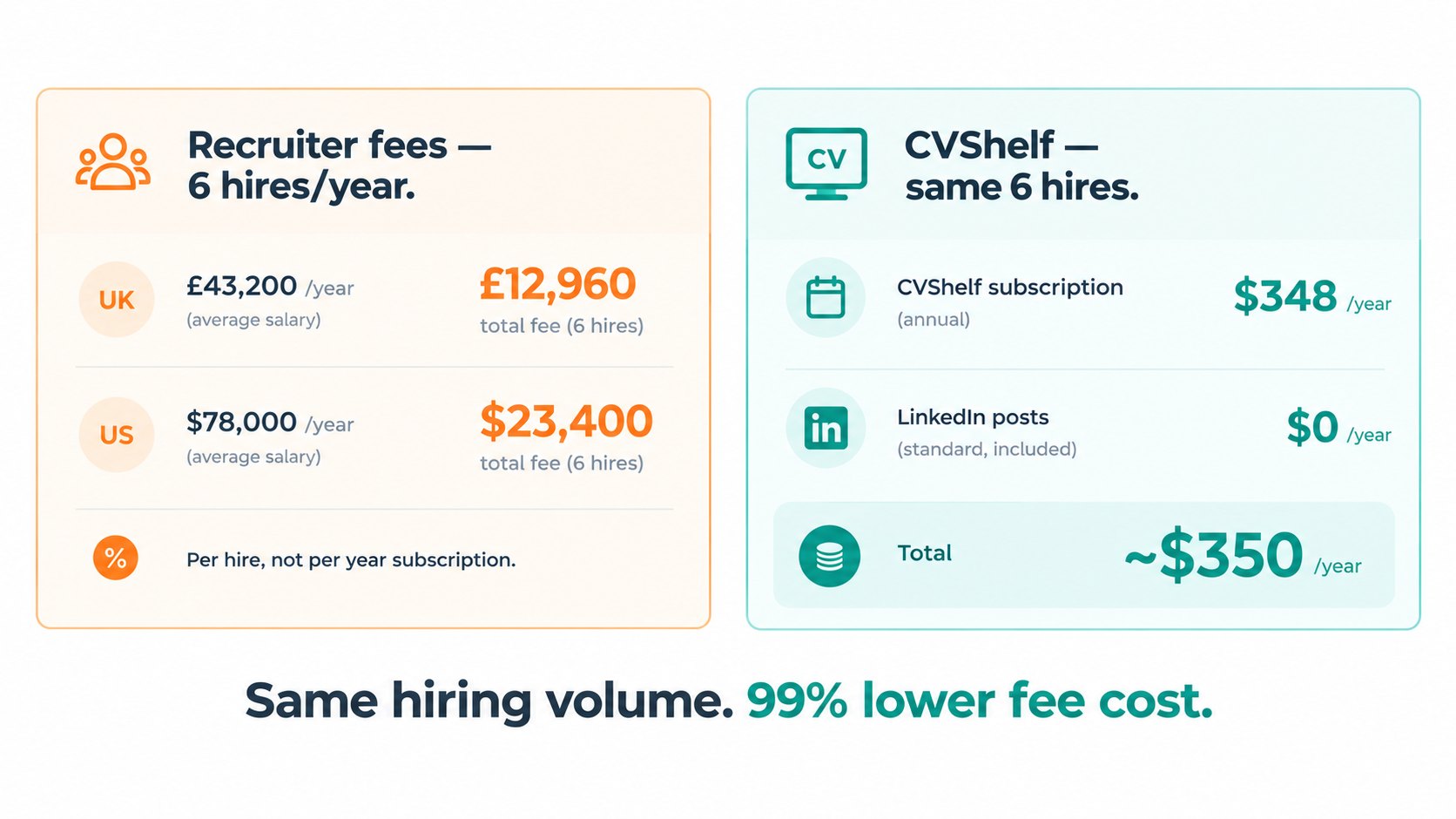
Agency Recruiter Fees Vs Software
A contingency recruiter placing a mid-level account manager.
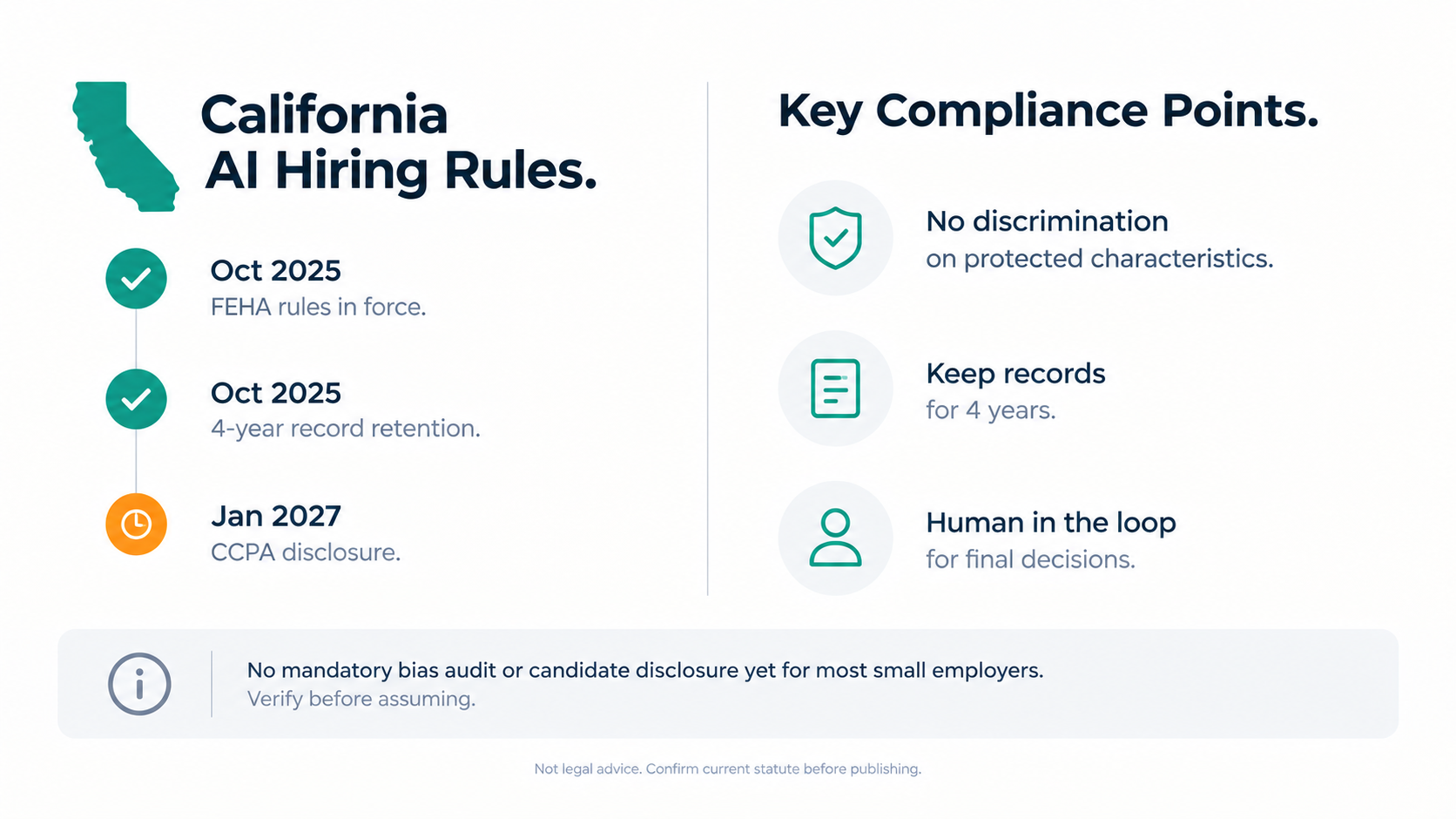
AI Resume Screening Disclosure Law California
California does not currently require employers to disclose to candidates that AI resume screening.