AI Resume Screening Disclosure Law California
California does not currently require employers to disclose to candidates that AI resume screening.
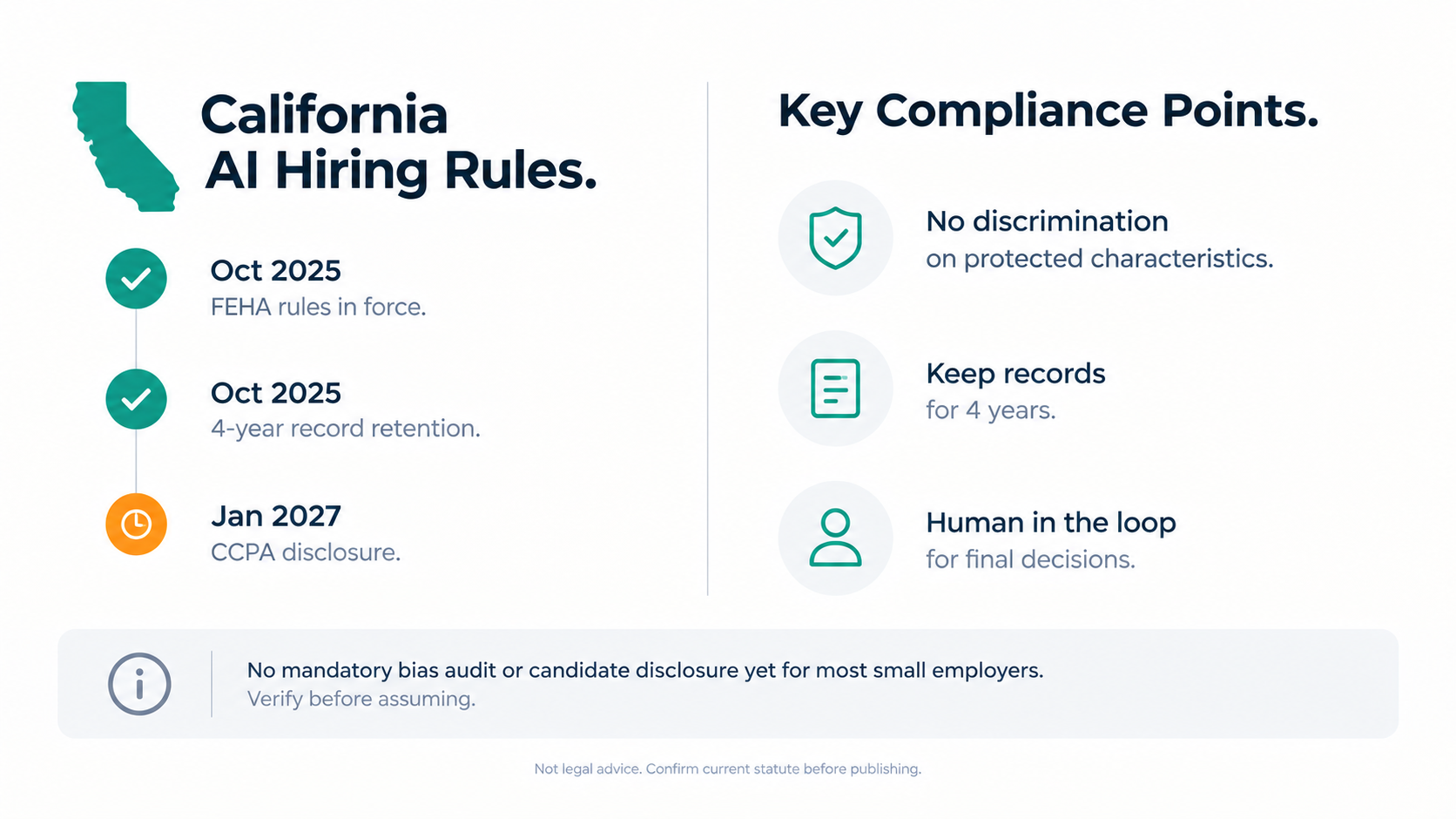
California does not currently have a general law requiring employers to tell candidates that AI is being used to screen their resumes. What it does have, in force since October 1, 2025, are regulations under the Fair Employment and Housing Act (FEHA) that bring AI screening tools directly under existing anti-discrimination law. If your AI screening tool produces outcomes that disadvantage candidates based on a protected characteristic, you are liable. That's the operative rule right now.
A separate disclosure requirement under the California Consumer Privacy Act takes effect January 1, 2027, for employers meeting specific revenue and data thresholds. Most small agencies will fall below these thresholds, but confirm before assuming.
The Fuller Context
The October 2025 FEHA regulations are the primary live requirement for California employers using AI in hiring. Key points:
Anti-discrimination obligation. Any automated decision system used in recruitment or screening, including keyword filtering, resume ranking, and candidate scoring, must not produce discriminatory outcomes based on race, gender, age, disability, or other protected characteristics. This applies whether the tool is fully automated or AI-assisted.
Record retention. Employers must retain employment records related to automated screening for four years (doubled from the previous two-year requirement). This covers data processed by the screening tool, not just final hiring decisions.
No mandatory bias audit for private employers. Unlike NYC, California does not currently require an independent bias audit before using an AI screening tool. You are not required to commission one, but you are expected to be able to demonstrate that the tool doesn't produce discriminatory outcomes if challenged.
The 2027 CCPA layer. For businesses meeting the CCPA coverage thresholds, a separate set of requirements takes effect January 1, 2027: conducting risk assessments before using AI for employment decisions without human involvement, providing notice to applicants, and honoring opt-out requests.
Pending legislation. A successor to the vetoed SB 7 (No Robo Bosses Act) passed the California Senate 29-9 in May 2026 and was sitting in the Assembly as of August 2026.
Related Questions
Q1. Do I have to tell job applicants in California that I'm using AI to screen their resumes?
Not under current law. The October 2025 FEHA regulations require that AI screening not produce discriminatory outcomes, but they don't require proactive disclosure to candidates. Disclosure requirements under the CCPA are coming for covered businesses from January 2027. Adding a brief disclosure now is low-effort and a reasonable precaution if a stricter law passes.
Q2. Does California require a bias audit for AI hiring tools?
No. Unlike NYC Local Law 144, California's current regulations do not mandate an independent bias audit for private employers. You are expected to be able to demonstrate non-discrimination if challenged, but there's no formal audit obligation in force now.
Q3. What records do I need to keep if I use AI screening in California?
Four years of employment records related to any automated decision system used in hiring. That covers data processed by the screening tool and decisions made using it. Check your screening tool's data retention settings and make sure records aren't being deleted before that window closes.
Q4. What happens if my AI screening tool discriminates against a protected group?
You're liable under FEHA regardless of whether the discrimination was intentional or came from the algorithm. California law treats AI-assisted decisions the same as human decisions for anti-discrimination purposes. The tool vendor's liability is separate from yours.
What This Means for Your Screening Process
Three practical steps that keep a small agency on the right side of California's current rules.
Choose a tool with explainable scoring. If your AI screening tool only gives you a score, you can't demonstrate how candidates were evaluated if challenged. A tool that shows per-candidate reasoning, what it found and why the candidate ranked where they did, gives you something to audit and defend.
Keep your screening records. California requires four years of retention. Make sure you know where the data from your screening tool is stored and that it won't be deleted automatically before that window closes.
Keep a human in the decision loop. California's FEHA regulations apply to AI-assisted human decisions as well as fully automated ones. The human review step isn't just good practice, it's the thing that lets you demonstrate oversight when you need to.
CVShelf produces a ranked list with a per-candidate explanation, which supports genuine human review and gives you a documented basis for shortlisting decisions. For agencies building out a compliant hiring process more broadly, the guide to account manager hiring software built for agency workflows covers the practical setup.
Try it complimentary at cvshelf.com.
California's AI hiring rules are live. The disclosure mandate isn't here yet for most small agencies, but the anti-discrimination and record-retention requirements already are. Get the process right now before the 2027 layer lands.
This post is not legal advice. Speak to an employment lawyer before making compliance decisions for your business.
Keep Reading
More from AI Resume Screening.
How To Screen Marketing Candidates Faster
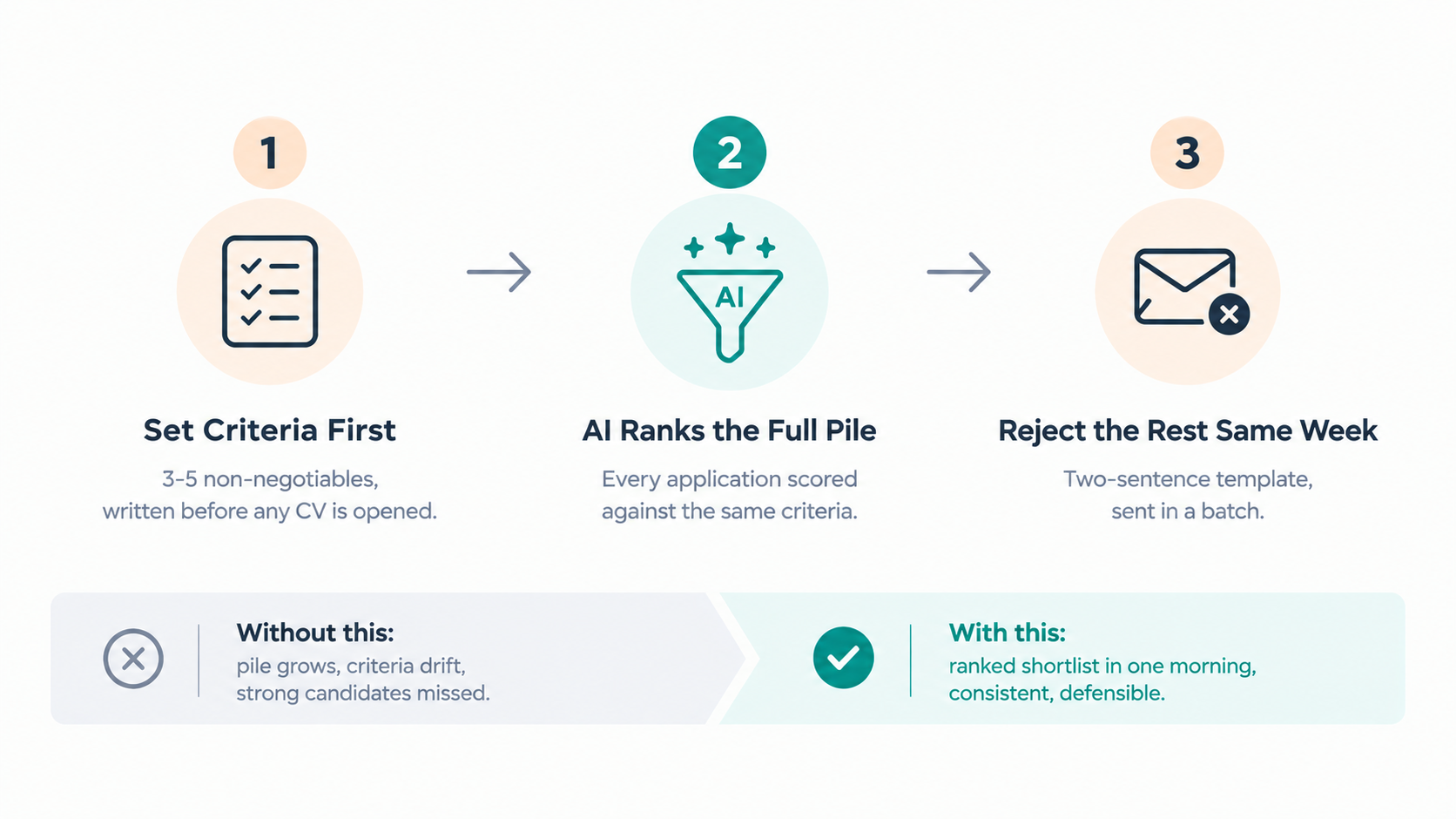
Marketing roles at agencies generate large application piles and land on whoever has the most available time that week.
Account Manager Hiring Software for Agencies
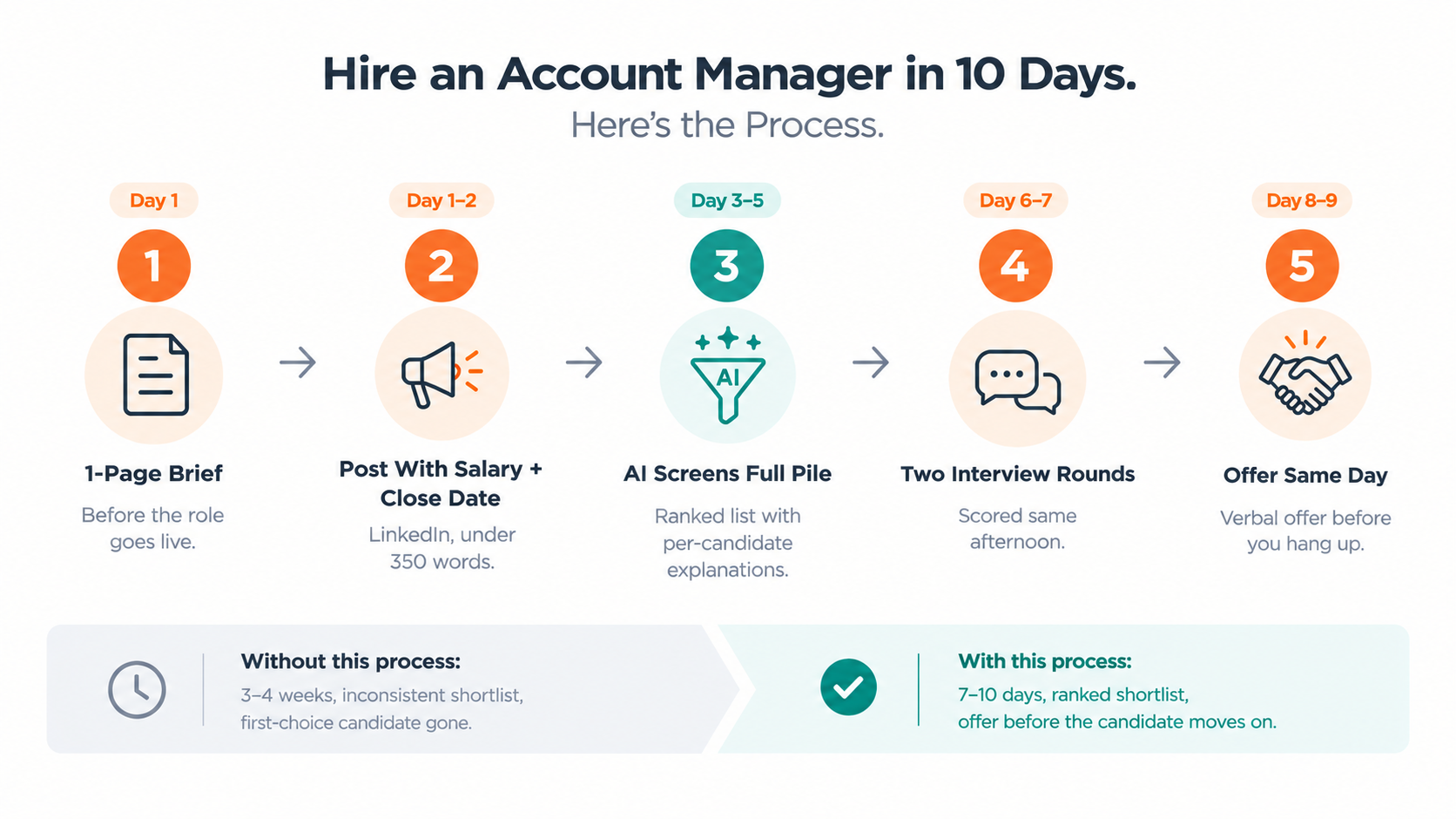
Account manager is the most common hire at a growing agency, and the one that most often goes wrong.
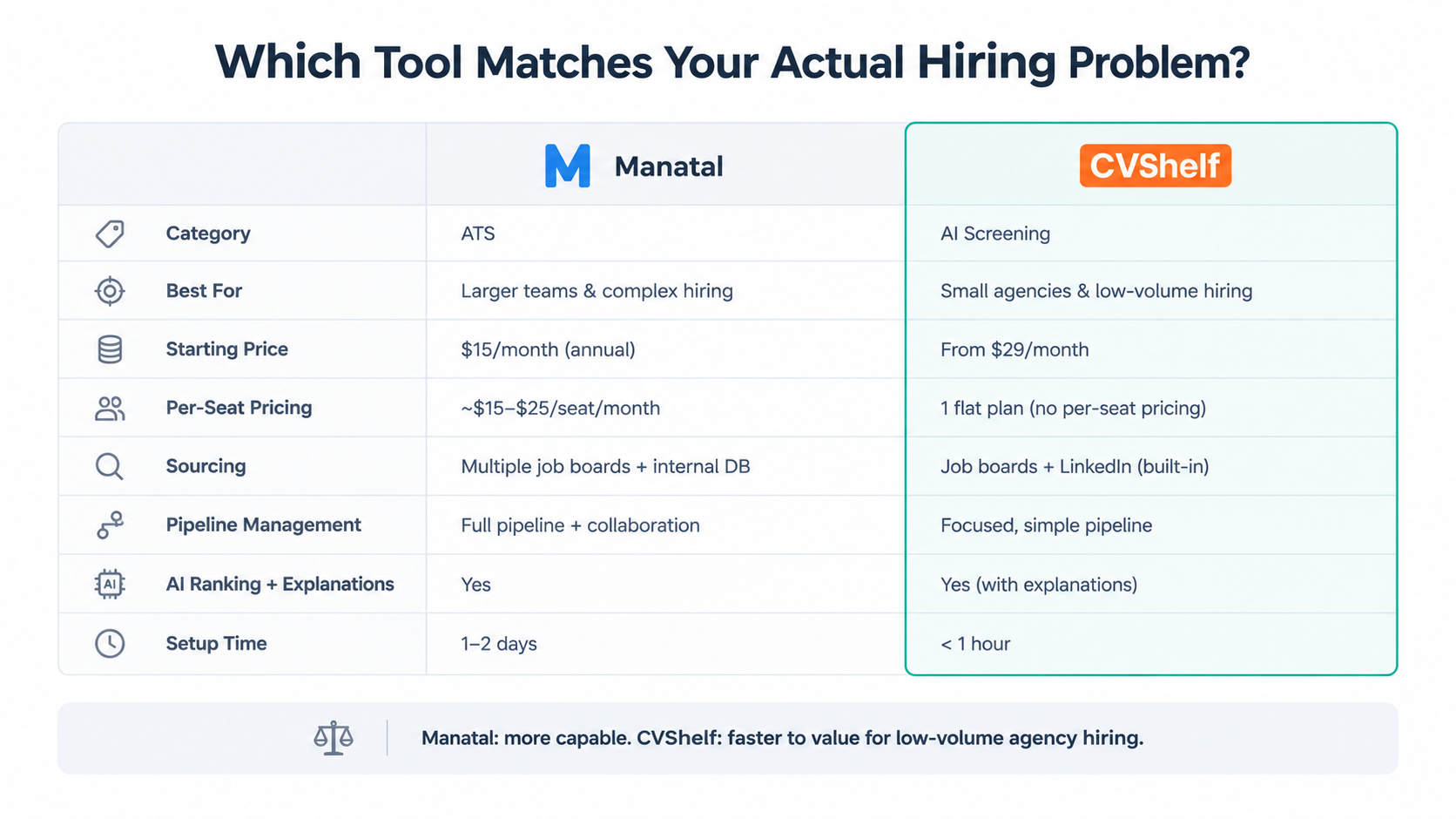
Manatal Alternative For Small Agency
This post is for founders and MDs at 10 to 100-person marketing or creative agencies who are considering Manatal, or trying to decide whether Manatal is the right fit at all.