
Screening Candidates Without An ATS
Screening candidates without an ATS is normal for agencies doing fewer than 15 to 20 hires per year.
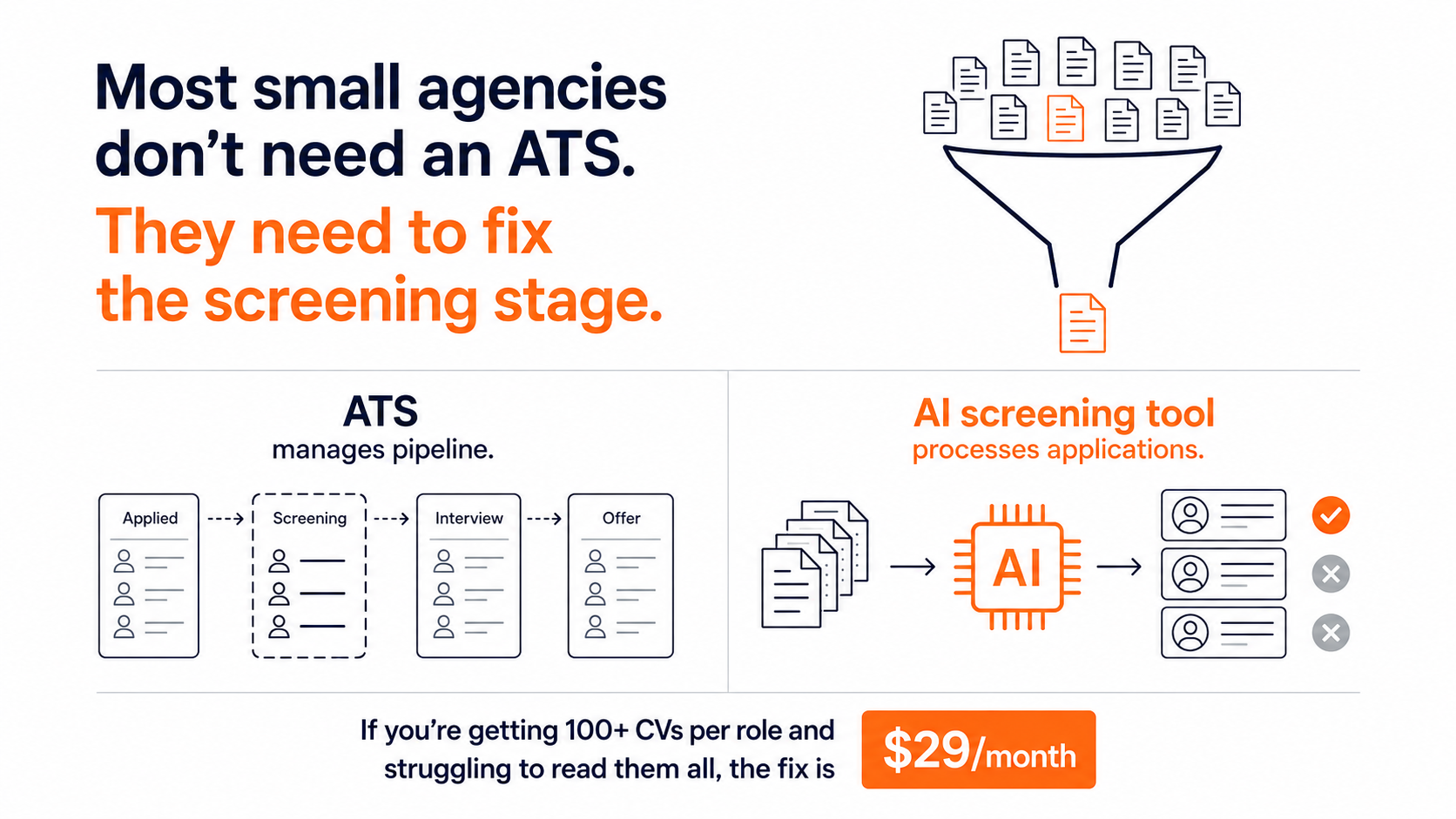
You don't need an ATS to screen candidates well. An ATS is a pipeline management tool, it handles stages, communications, and team visibility. The screening problem, evaluating a large pile of CVs against job criteria, is a different problem, and a dedicated AI screening tool solves it faster, cheaper, and with less setup than any ATS.
The combination that works for most small agencies: write screening criteria before the role posts, run the application pile through an AI screening tool on close date, review the ranked shortlist with explanations, score the top candidates, reject the rest with a template. No ATS required at any point.
The Fuller Context
Whether you need an ATS at all depends on which hiring problem you have.
The screening problem is what happens when too many applications arrive for one person to review properly. This is fixable without an ATS. AI screening tools process the full pile, rank candidates by relevance, and produce per-candidate explanations. CVShelf does this for $29/month with no configuration overhead.
The pipeline problem is what happens when multiple people need shared visibility into candidate stages, automated communications need to go out, and you're coordinating interviews across a team. This is where an ATS adds value. Most agencies doing fewer than 15 to 20 hires per year haven't hit this problem yet.
The mistake is buying an ATS to solve a screening problem, then using 10% of the features and abandoning it after two hires.
What changes with volume. Screening without an ATS works well at four to twelve hires per year. Above that, particularly when multiple roles are open simultaneously, the coordination overhead of a shared spreadsheet starts to create real friction. That's when an ATS starts earning its cost. Below that threshold, it doesn't.
What changes with team size. When two or three people are involved in every hiring decision, shared pipeline visibility becomes important. A solo decision-maker doesn't have that coordination problem. Most agency MDs and ops managers making hiring decisions independently don't need ATS pipeline management until the business is significantly larger.
Related Questions
Q1. What do you use to screen candidates if you don't have an ATS?
A combination of LinkedIn for posting, an AI screening tool for the application pile, and a shared Google Sheet or Notion doc for tracking shortlisted candidates through stages. This setup handles the actual friction for most agencies doing fewer than 15 hires per year without the configuration overhead of a full ATS.
Q2. How do you screen CVs without software? \
Manually, which is slow and inconsistent. Reading 150 CVs with full attention across a week of other work produces a shortlist that reflects energy levels and reading order more than candidate quality. An AI screening tool runs the same evaluation against every CV with the same criteria, no fatigue. The manual approach works at very low volume (under 20 applications). Above that, it doesn't.
Q3. Can you use AI to screen candidates without an ATS?
Yes. AI screening tools like CVShelf operate as standalone tools, they don't require ATS integration. You upload CVs, paste in the job description, and get a ranked output with per-candidate reasoning. The result can go into a spreadsheet, an email folder, or a lightweight tracking doc. No ATS needed at any point in that workflow.
What's the minimum setup for screening candidates at a small agency? Written criteria before the role posts. A close date on the job listing. An AI screening tool for the batch when the close date hits. A shared doc to track shortlisted candidates through two interview rounds. That setup takes an afternoon to build and works every time a role opens.
What This Means for Your Screening Process
Screening without an ATS isn't a compromise. For an agency doing six to ten hires a year, it's the right architecture.
The practical setup: write criteria, post with a close date, run the pile through a ranking tool, review the top fifteen, reject the rest with a template. For agencies that want to understand how candidate ranking tools fit into this workflow, the guide to candidate ranking tools built for agency hiring covers the evaluation criteria worth applying before choosing one.
CVShelf handles the ranking step. Try it complimentary at cvshelf.com.
No ATS required. The right tools for the problem you actually have.
Keep Reading
More from AI Resume Screening.
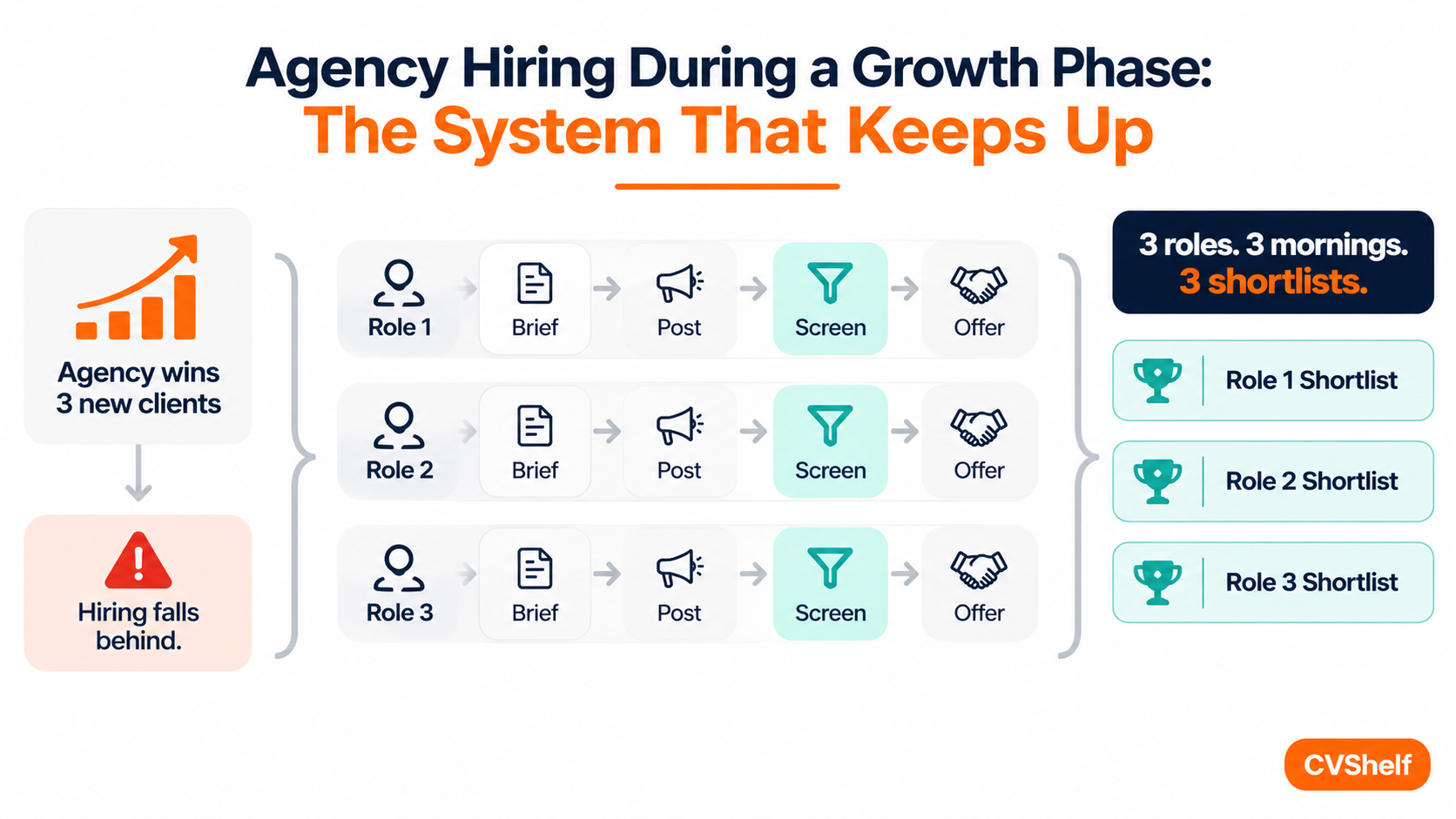
Agency Growing Pains Hiring
The hiring problems that hit a growing agency aren't random.
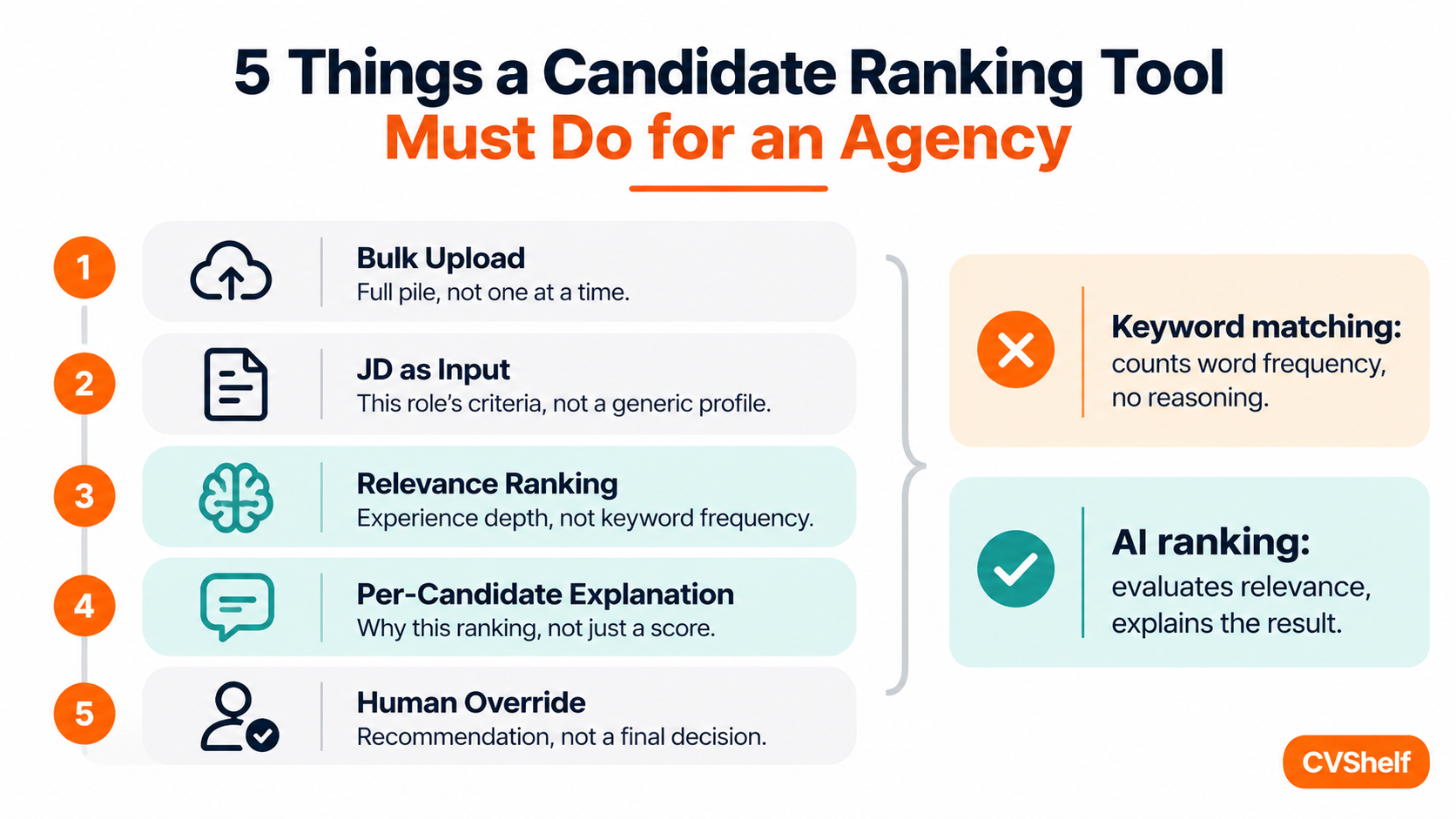
Candidate Ranking Tool For Agencies
A candidate ranking tool for agencies needs to do something most ATS screening features don't.
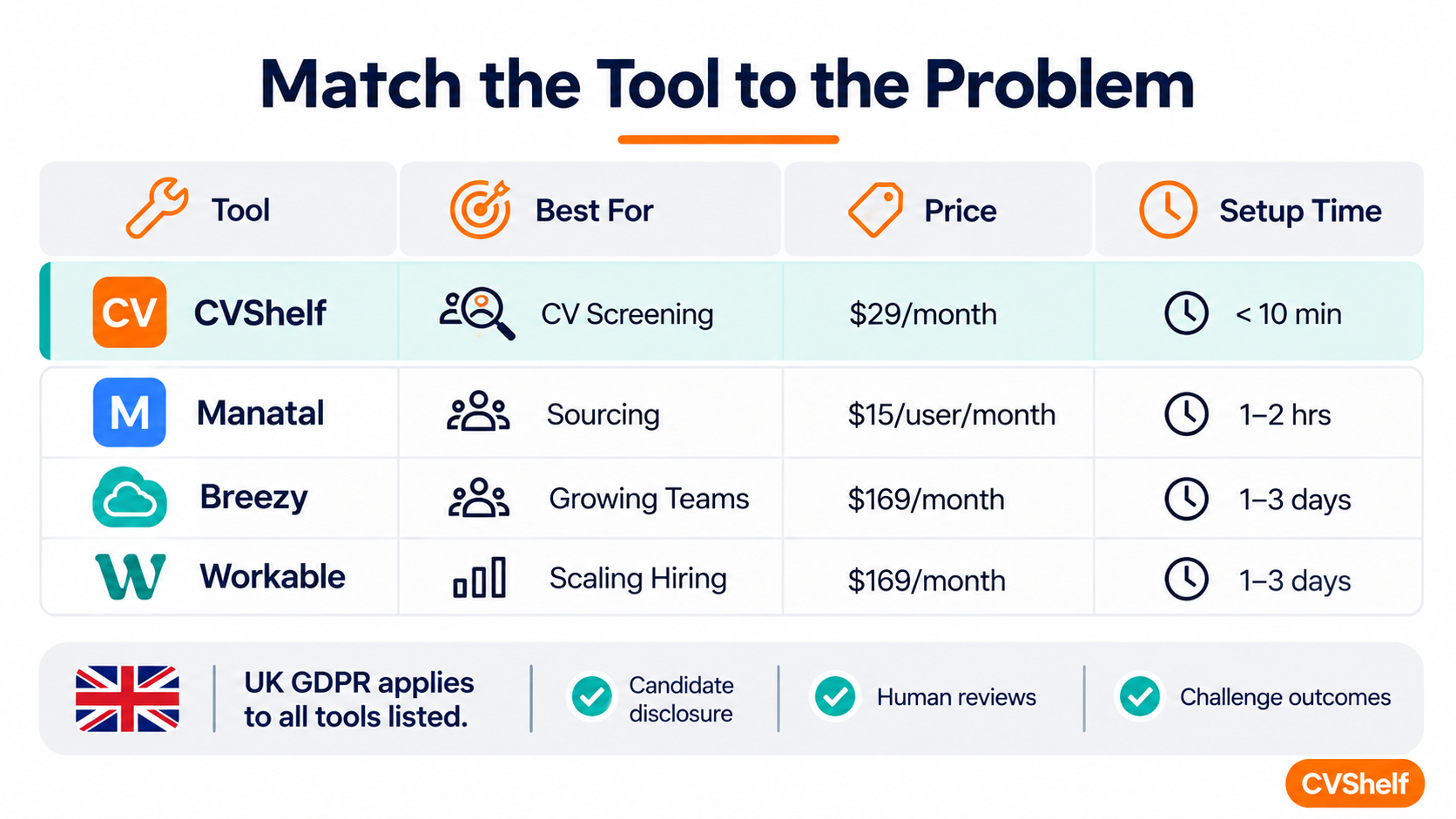
AI Hiring Tool UK Small Business
This post is for founders and MDs at 10 to 100-person UK agencies.